More than physics: transferable skills in ATLAS
19 August 2026 | By
There is a particular energy to an ATLAS Collaboration Week, and this June it came to Glasgow. Early-career scientists are the engine room of ATLAS: the students and postdocs who build the software, run the shifts, wrestle the data and, more often than not, drive the analyses that make headlines. As a member of the ATLAS Early Career Scientist Board, I was keen to make sure this week reflected that. Alongside the usual meetings and results, we worked to boost early-career involvement through a high-capacity poster session (this time with a whisky tasting, which did wonders for the atmosphere), a hands-on grant-writing workshop, and a careers-focused panel Q&A.
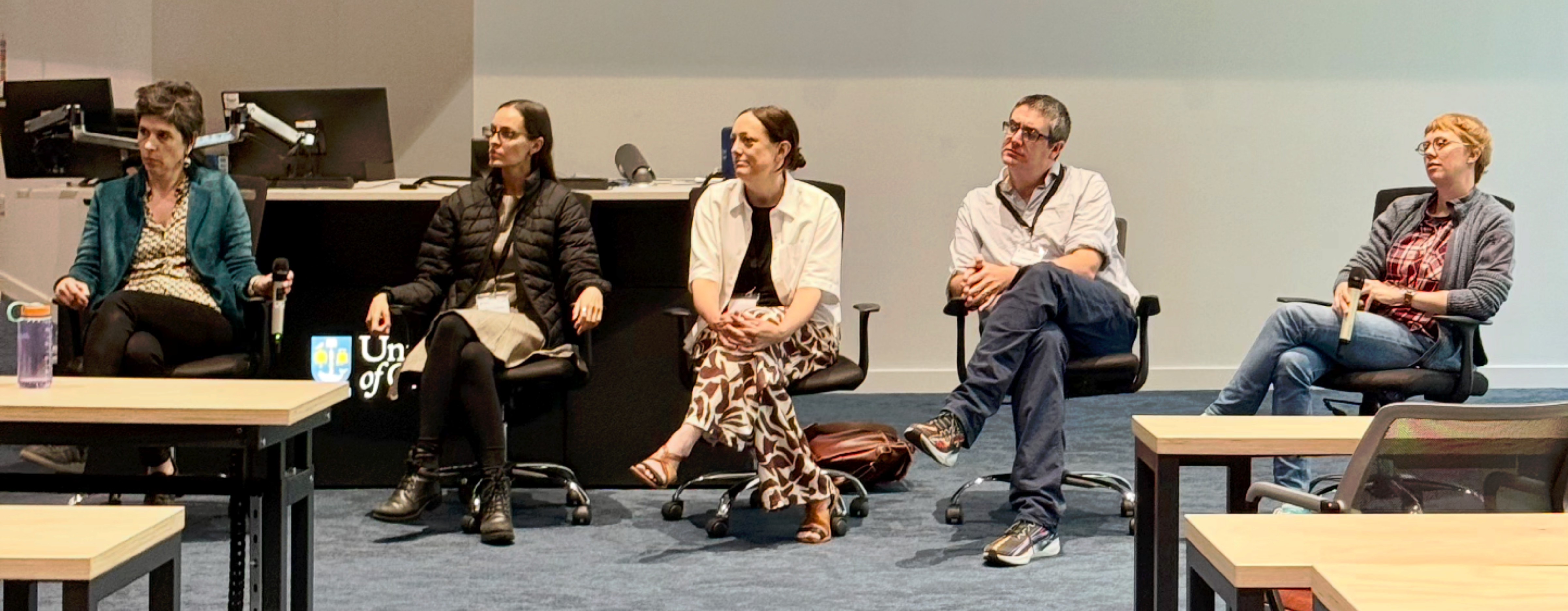
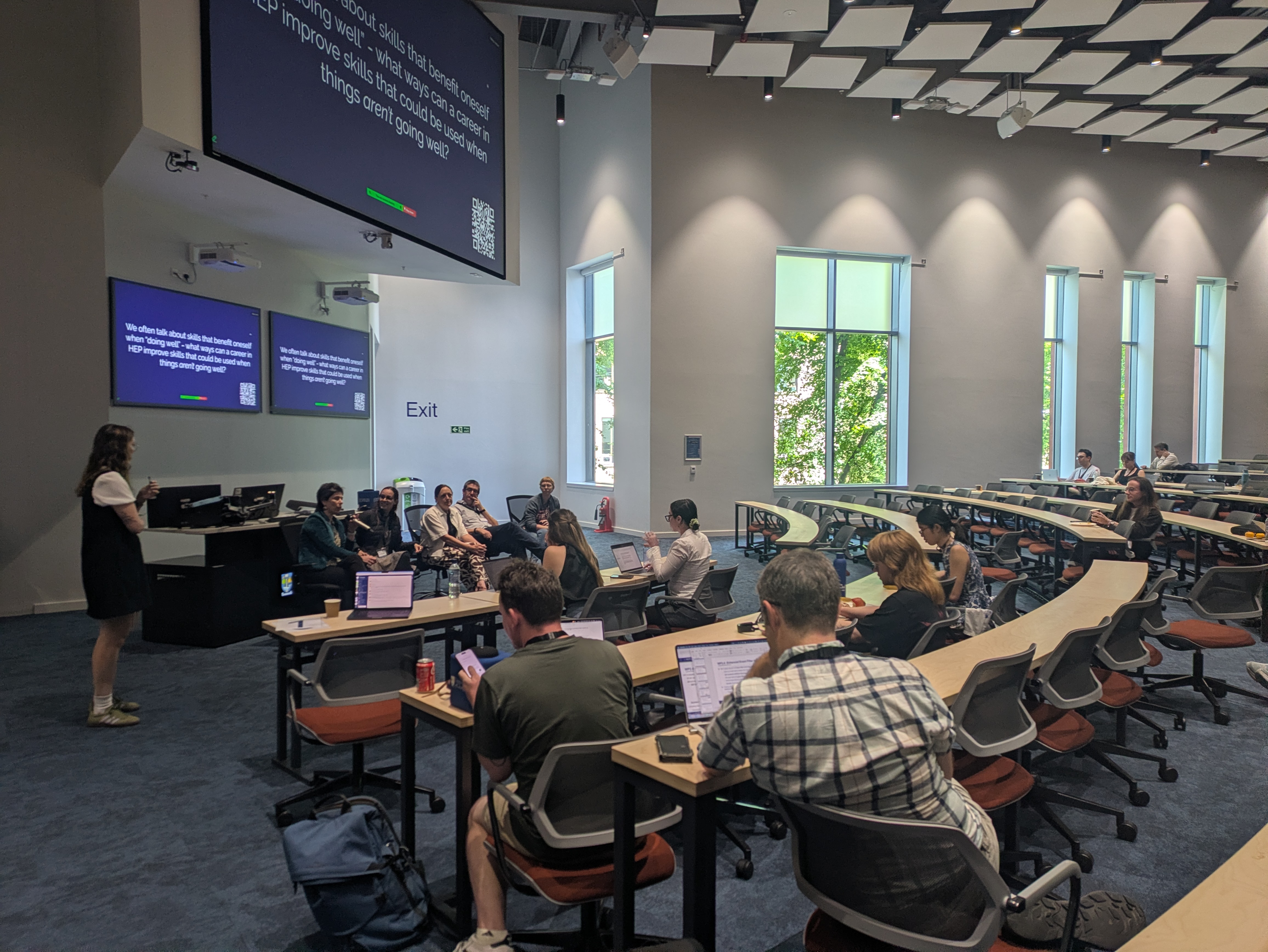
I had the pleasure of chairing one of the ECS focused sessions: a panel discussion on the transferable skills we build while working on ATLAS. Five panellists*, a room full of early-career researchers, and a conversation that ranged well beyond particle physics into persuasion, conflict management and, at one point, the value of amateur dramatics.
Chairing it gave me a front-row seat to some genuinely useful advice, the kind that changes how you see the work you already do every day. Here are the points that stood out.
The skills you don't realise you're learning
I opened with a deceptively simple question: which skill has had the biggest impact on your career so far? Tellingly, almost nobody named a technical one.
For Sarah Boutle, who now works in government, it was persuasion, meaning the ability to build an argument and defend it under scrutiny. Coming from a field where every result is picked apart by hundreds of colleagues, she said, you learn to anticipate the difficult questions before they are even asked. Craig Sawyer picked up the thread with listening: on an experiment spanning dozens of countries and working styles, the real skill is gathering all those perspectives and stitching them into something coherent.
Anna Sfyrla argued that trying to single out one "hard skill" misses the picture entirely. It is the sheer number of skills we juggle, from technical operations to data analysis to interviews, and our ability to combine them clearly, that sets us apart. Sara Alderweireldt added that much of our work happens at the edge of what has been done before: not making things simply run, but finding the bottlenecks and thinking our way around them. Flavia de Almeida Dias offered the most candid observation of the session, which was that careers rarely follow a plan. There is a lot of luck, and a lot of not quite knowing what you are doing.
I opened with a deceptively simple question: which skill has had the biggest impact on your career so far? Tellingly, almost nobody named a technical one.
The skills we wish we'd learned sooner
When the discussion turned to what the panellists wished they'd developed earlier, a clear pattern emerged, and it wasn't about physics.
Time management and prioritisation came up repeatedly. Sarah, once a physicist now senior civil servant for the UK government, said learning to prioritise ruthlessly would have saved her years. Flavia agreed: with so many interesting things competing for your attention, focusing on the one that matters is a discipline in itself. Sara framed it gently, noting that you don't have to do everything at once, and you'll often get further by doing fewer things really well.
Anna wished she'd learned conflict management sooner: how to work with colleagues when you disagree, so that different opinions lead to better outcomes rather than a fight. And Craig made a plea many PhD students would recognise, which was that we should build these soft skills alongside our technical training, rather than being handed a coordination role and left to figure it out.
Selling ATLAS to the outside world
This was the part the audience had really come for, and the advice was practical and, at times, refreshingly blunt.
Yes, "CERN" is a brilliant brand, and Sarah joked that nobody ever doubts you're smart. But that only gets you so far. The trick, she said, is to flip your CV upside down. The specific analysis you're proud of means little to an outside employer; what impresses them is the scale of what you've been part of. How often does someone apply for a job having worked in an organisation of six thousand people, across every timezone, with no shared boss, and still deliver? That is project management, software engineering and collaboration on a scale most industries never see.
Two qualities came up as especially prized: resilience and comfort with uncertainty. Employers actively want people who can cope when they don't know whether the result will come or the paper will be published. We live with that uncertainty every day, and it turns out to be genuinely desirable.
The panel also acknowledged a common challenge: we often struggle to translate terms such as "convener" or "trigger operations" into language a recruiter understands. Encouragingly, work is underway on a "skills dictionary" and supporting documents that translate ATLAS roles into transferable skills and responsibilities recognised beyond the collaboration.
Failure, and unexpected training
One of the more valuable exchanges was about things going wrong. Flavia put it plainly: you learn far more when things don't go well. Anna reminded us that the path to a published analysis is essentially one problem after another, and the success is just the visible bit at the end.
And the "training” the panellists had found most unexpectedly useful? Rarely anything on a physics syllabus. Sarah credited drama and public-speaking training for teaching her how to hold a room, and recommended simply asking colleagues, "how do you think that went?". Anna found that training as a CERN guide transformed her ability to give talks. Flavia highlighted how much of our work is actually writing (think theses, grants, reports), and how vital it is to explain your excitement to someone who isn't a physicist. She talks to her mum about her work; if you can get her excited, you can get anyone excited.
The takeaway
I came away from chairing the session with a clearer sense of something many early-career researchers underestimate: our skills are broad, resilient and genuinely valued, and we just need to learn to describe them. As Sara pointed out, moving into industry isn't so different from moving between experiments - the language changes but the skills underneath travel with you.
Whether you stay in physics or head somewhere new, the message from Glasgow was clear. Learn to listen, learn to prioritise, get comfortable with uncertainty, and don't underestimate what working on ATLAS has already taught you.
With thanks to the five panellists, and to everyone who joined us in Glasgow, and Katie Walkingshaw-Pass for help editing this blog.
*Sarah Boutle, Craig Sawyer, Anna Sfyrla, Sara Alderweireldt, Flavia de Almeida Dias
About the author(s)
Harriet Watson
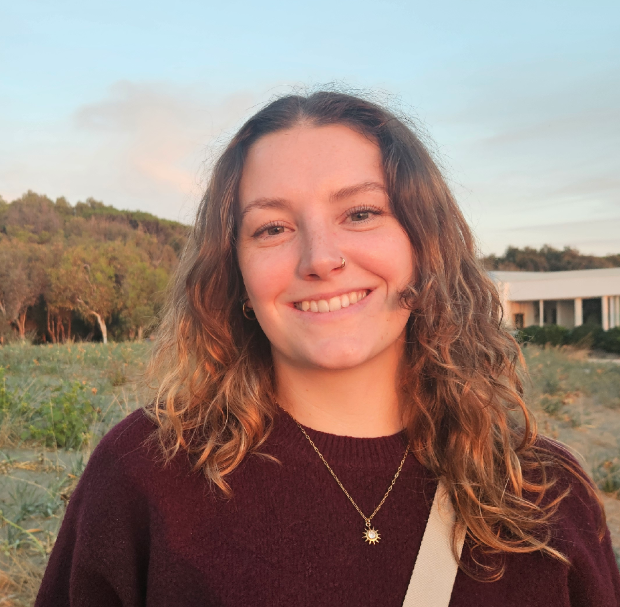
Dr Harriet Watson is a Postdoctoral Research Associate at the University of Edinburgh and a member of the ATLAS Early Career Scientist Board. She joined ATLAS in 2019 as a Masters student at the University of Manchester, before completing her PhD at the University of Glasgow in 2024. Harriet has focused on top quark and Higgs boson physics, as well as improving the ATLAS detector simulation. Alongside her research she has contributed to the European Strategy for Particle Physics as a representative of the UK early career community.