
We make them tougher in Texas
8 September 2026 | By
The most extreme radiation environments on Earth aren't hidden in some classified military bunker—they're inside a 17-mile ring buried on the Franco-Swiss border. It's called the Large Hadron Collider, and it’s the world's most powerful atom smasher.
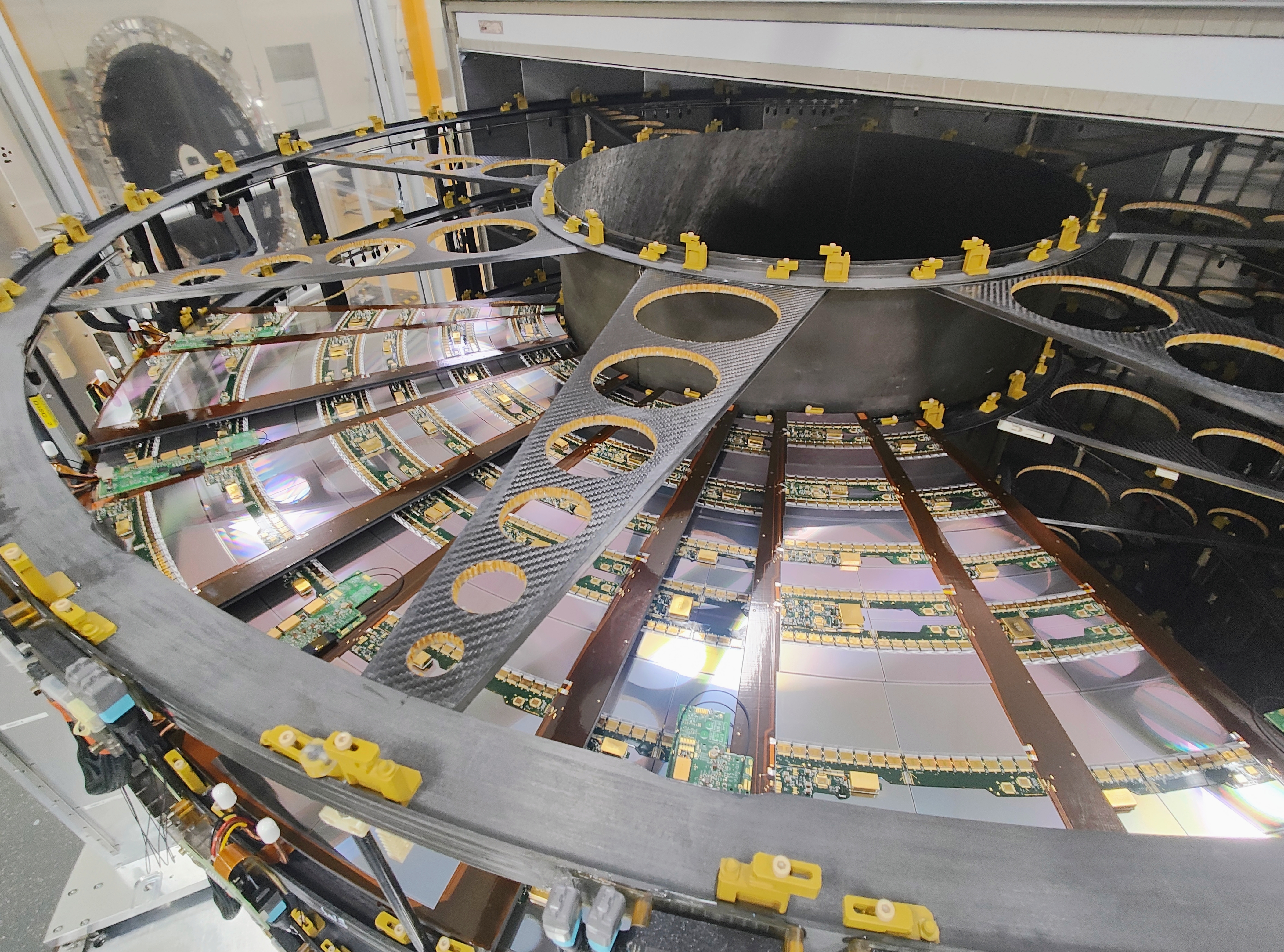
Right now, scientists and engineers are undertaking a massive upgrade that will dramatically boost the LHC's collision rate. This upgrade, called the High-Luminosity LHC, will give us a data “goldrush” and allow us to peer into the heart of matter more deeply than ever before.
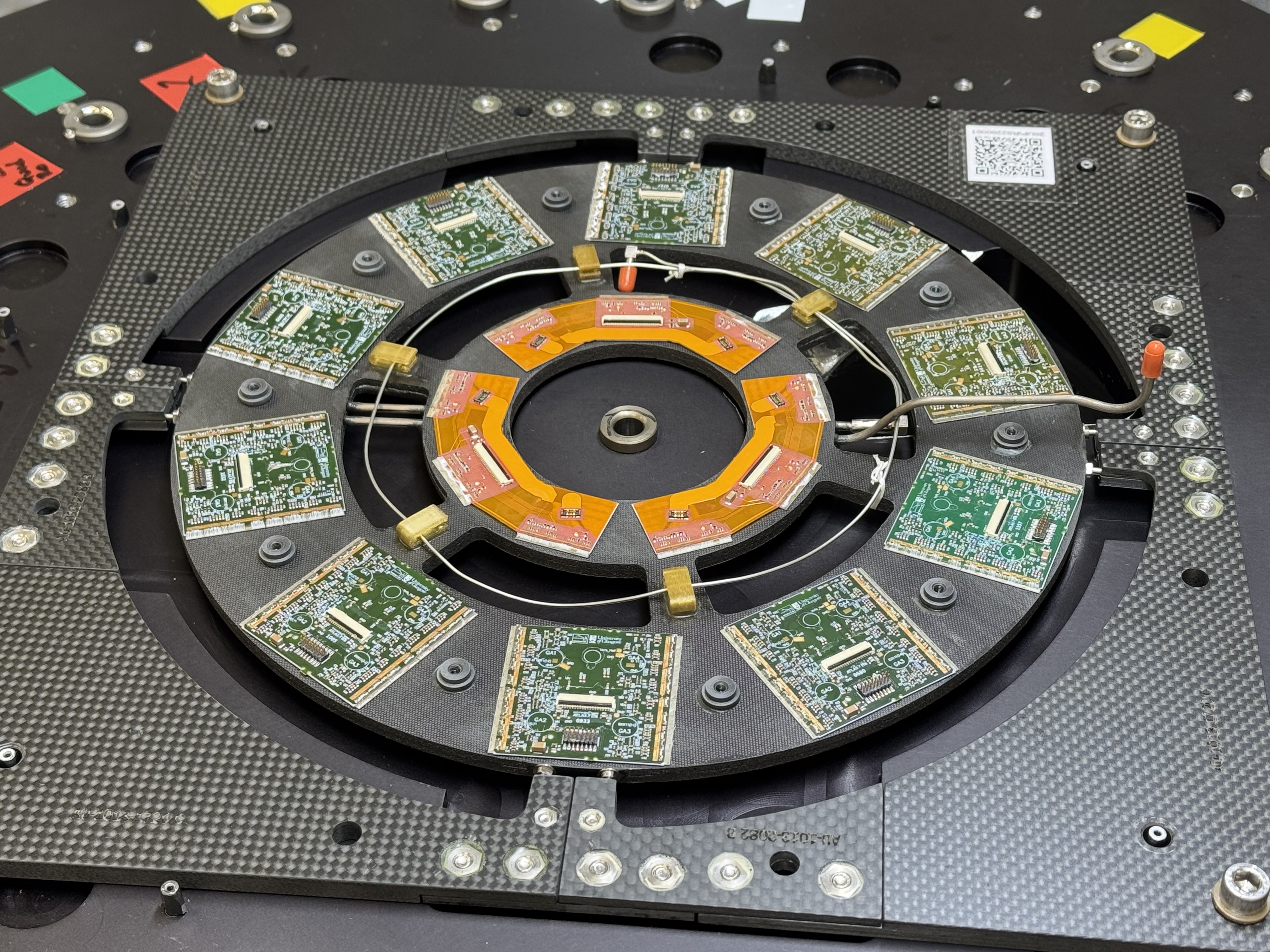
But that new window into the universe comes at a price: higher luminosity means far more radiation. Some regions of the upgraded detectors will face conditions harsher than anywhere in our solar system outside the Sun itself. Even the "gentler" regions exceed what standard space-qualified hardware can handle.
That means we can't just order new electronics off the shelf. The technology literally doesn’t exist.
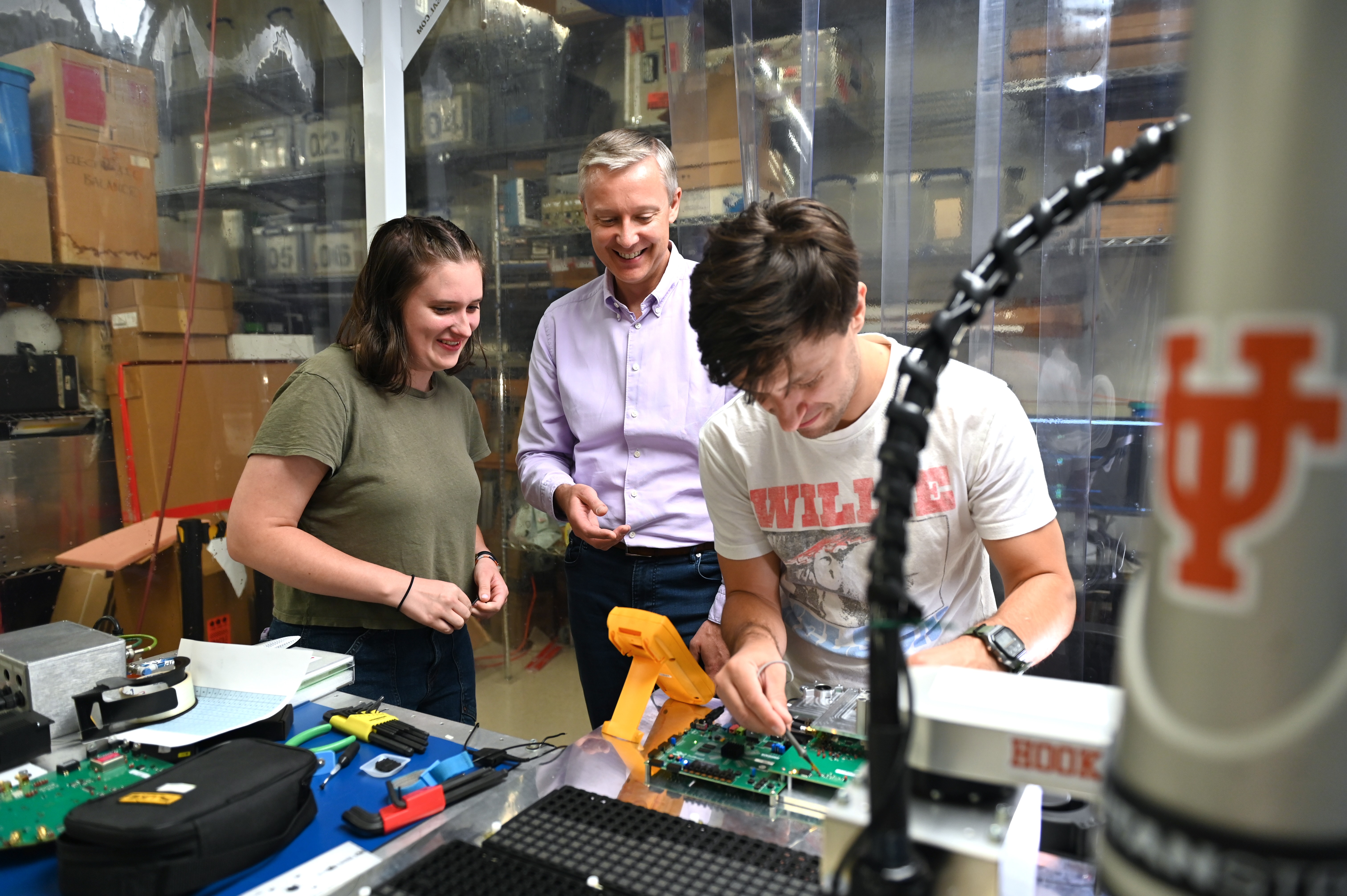
But my research group at the University of Texas at Austin runs on a simple philosophy: if you can't buy what you need, you build it yourself. And that’s exactly what we’re doing. Texas has one of the best ecosystems in the country for chip design and advanced manufacturing, which makes it the ideal place to push this technology to its absolute limit.
But building radiation-hard electronics isn't just about making them tougher—it's about making them smarter.
Need electronics that can survive the harshest radiation on Earth? Texas has got y’all covered.
Here's why: radiation doesn't just slowly degrade electronics. It can also flip a single bit, like a microscopic hacker quietly implanting a virus. Nothing visibly breaks, and the device keeps running. But the numbers it reports are wrong. For an experiment built on exquisitely precise measurements, that silent corruption is more dangerous than a chip that fails outright.
To meet that challenge (and many others), we built a collaboration between physicists and electrical engineers at UT Austin and Columbia University in New York. Our pitch to the engineers was simple: We need electronics that are fast, low-power, sensitive across a wide range of signals, radiation hard, and most importantly, high-fidelity. Basically, cutting-edge in every way. Our engineers’ response? Game on.
But to build some of the world’s toughest and smartest chips, we couldn’t just start with a standard design: we had to rethink everything from the ground up. We started with radiation-resistant components and clever circuit designs that minimize the damage caused by radiation and allow the electronics to keep working as they age. However, the fidelity requirement was trickier. How could we know for sure if a single bit had been corrupted? We landed on the solution of triple redundancy, which means every circuit is built three times over. That way, if radiation corrupts one circuit, the other two can fact check and outvote the error.
The design was completely new—so how could we know if it would work? One thing was certain: We needed physical prototypes. Unfortunately, prototypes are expensive and take roughly one year to build. Luckily, we have access to the Texas Advanced Computing Center, which is funded by the National Science Foundation, and were able to create, test, and refine digital mockups of the key parts of our chips before ever touching silicon. We had budgeted for five physical prototypes. Thanks to the computing resources at the Texas Advanced Computing Center, we managed to arrive at the final design in just four.
The toughest obstacle, though, turned out to be something we didn't expect: the global supply chain. Like most chips, ours are manufactured by TSMC in Taiwan, and supply disruptions there can mean months of delay. These delays ripple straight into our project timelines, which are already ambitious and cannot afford silly setbacks. That's why initiatives like the Texas Electronics Institute—a planned foundry right here in Austin—matter too. Domestic fabrication could cut our design-to-product lag from years to weeks, and dramatically lower costs.
Over the next four years, we will install these radiation-hard electronics directly into our detector. And when the HiLumi LHC launches in the 2030s, these chips will help us make major new discoveries about the subatomic world. But the payoff isn't just scientific. Industry has taken notice, and an aerospace company has already approached us about licensing our radiation-hard, high-fidelity chip technology.
What started as solving one of the hardest problems in modern physics instrumentation has turned into a budding Texas-driven industry that will not only help us understand the universe at a subatomic scale, but also strengthen the US domestic industrial base and power the next generation of space and aerospace innovation.
Published in collaboration with Beyond Standard. Banner illustration by Sandbox Studio, Chicago with Ana Kova.
About the author(s)

Tim Andeen
Tim Andeen is an associate professor of physics at the University of Texas at Austin and a member of the ATLAS Collaboration at CERN. His research focuses on searches for physics beyond the Standard Model and developing radiation-hard readout electronics for the LHC's next upgrade.