ATLAS breaks its own record with new search for double-Higgs production
5 August 2026 | By
Producing two Higgs bosons in a single proton-proton collision is among the rarest processes at the LHC. Yet these elusive events hold the key to one of the biggest unanswered questions: how does the Higgs boson interact with itself? The answer will help reveal the shape of the Higgs potential, deepening our understanding of electroweak symmetry breaking and the evolution of the early Universe.
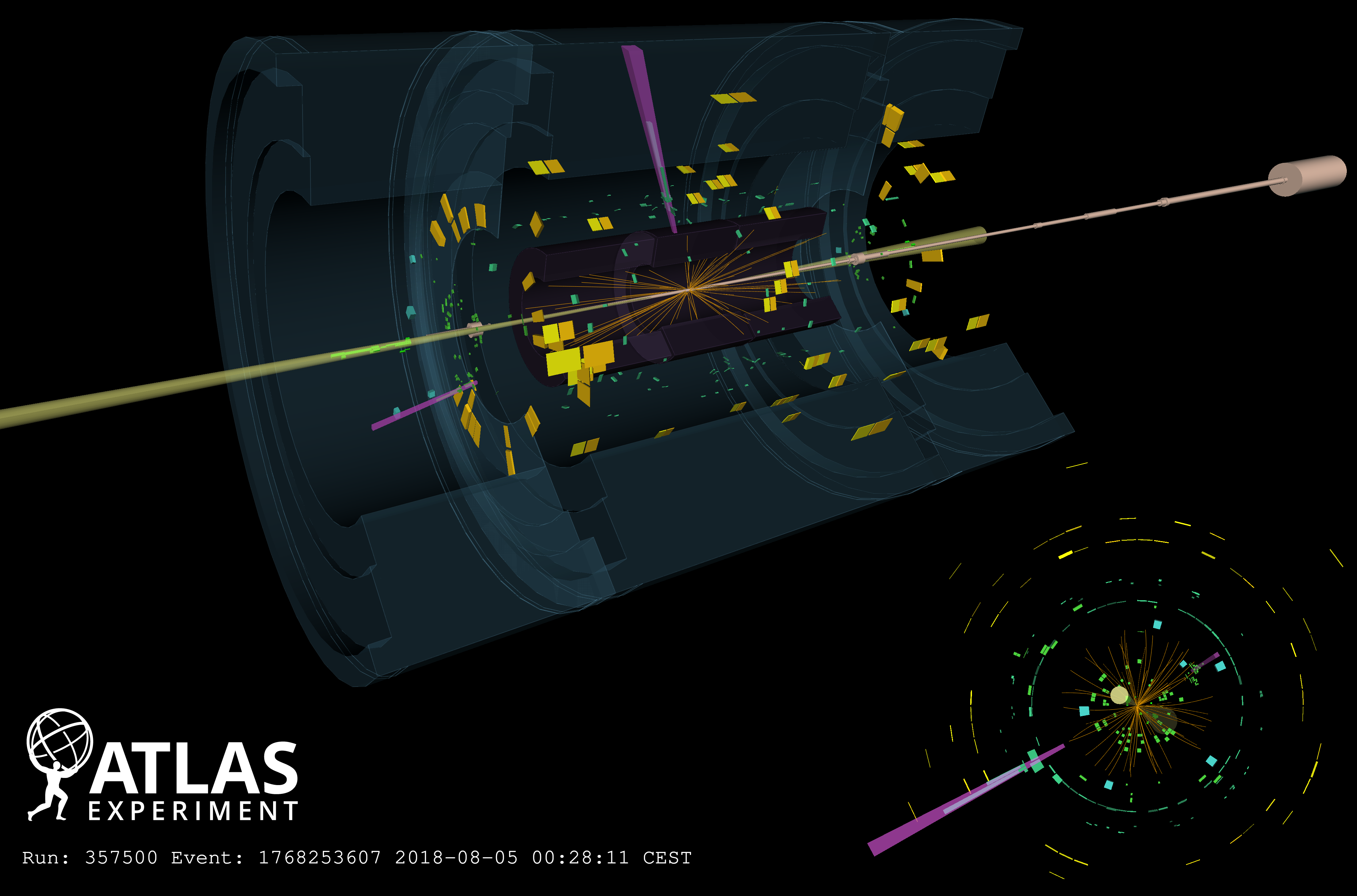
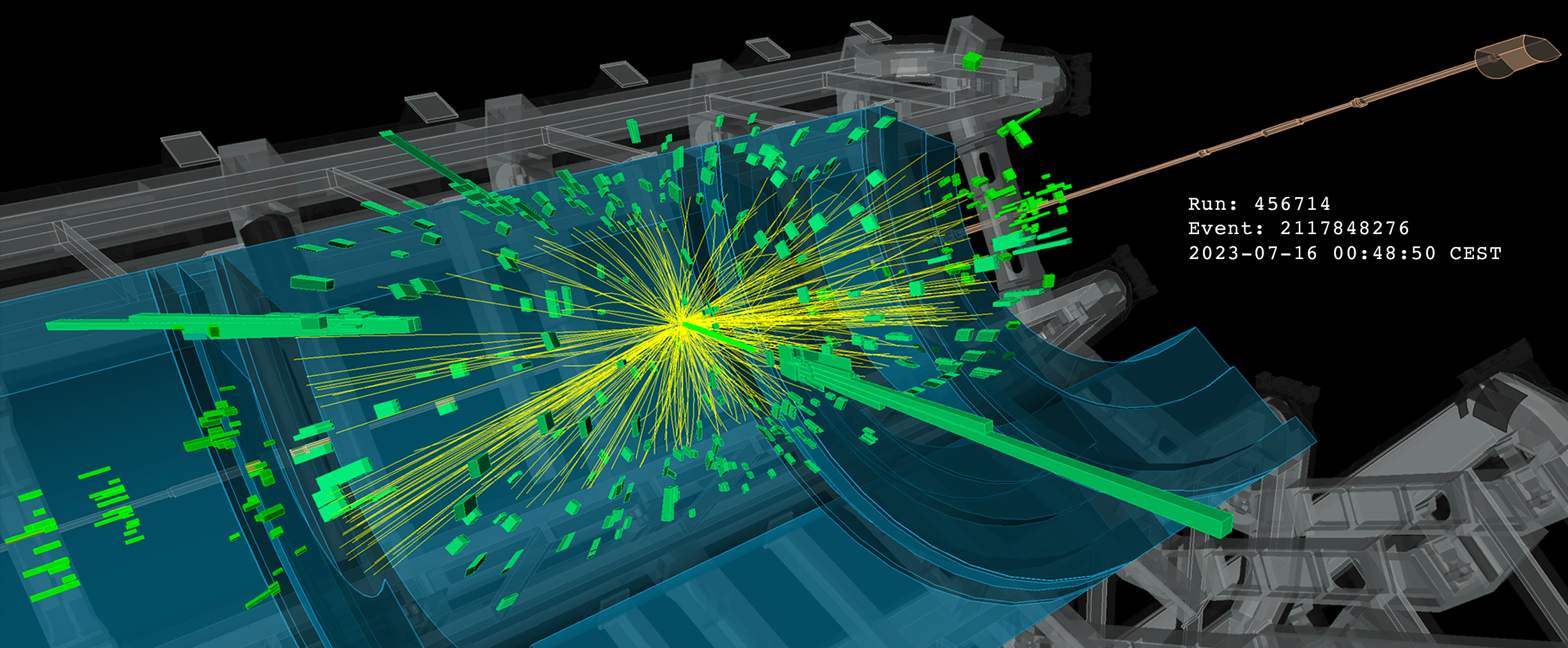
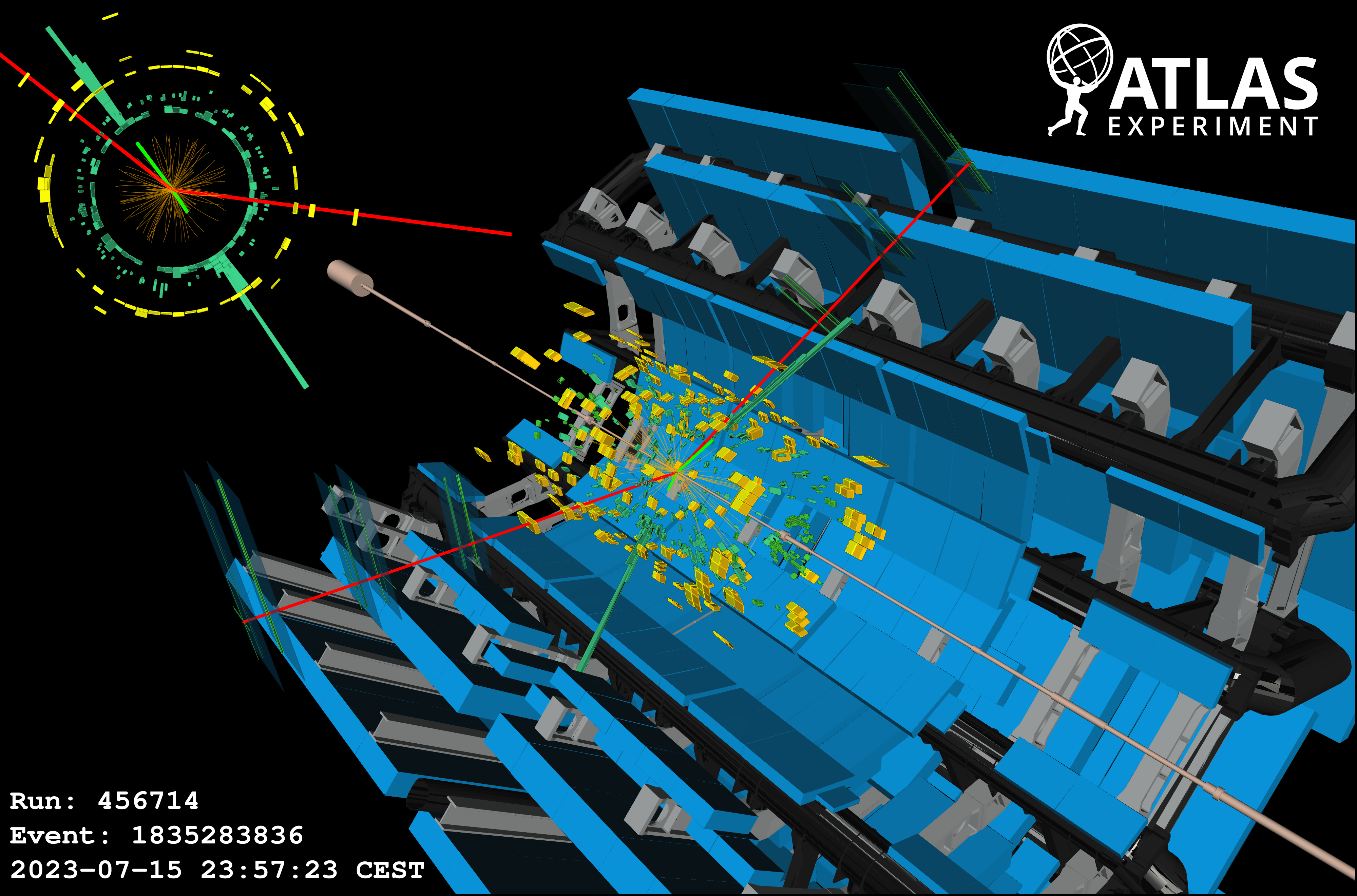
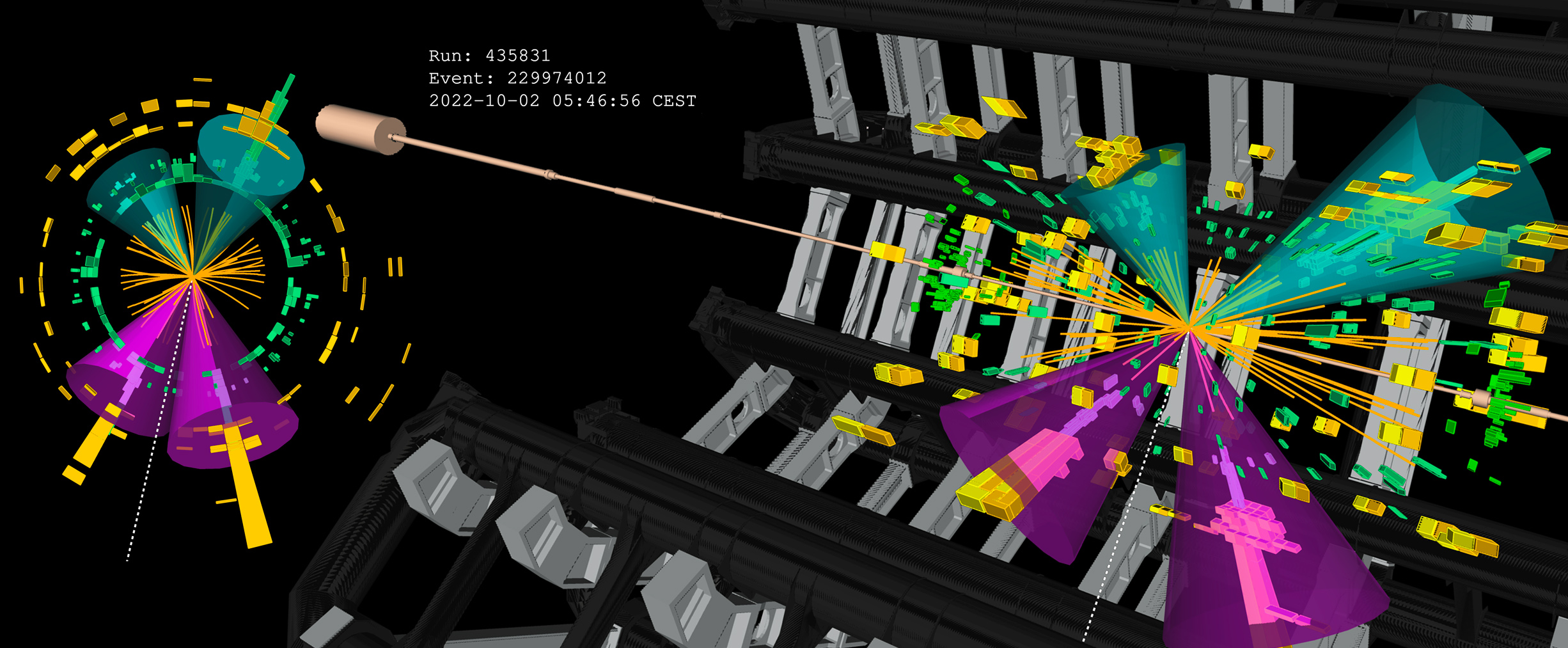
To hunt for these double-Higgs events, the ATLAS Collaboration has targeted the distinctive HH→bb̄τ+τ− decay channel, in which one Higgs boson decays into two bottom quarks and the other into two tau leptons. Their latest search, presented at the 2026 International Conference on High-Energy Physics (ICHEP 2026), is the most sensitive ATLAS analysis of this channel to date. It uses 196 fb⁻¹ of proton–proton collision data recorded between 2015 and 2023, combining the full LHC Run-2 dataset (140 fb⁻¹ at 13 TeV) with 56 fb⁻¹ of Run-3 data collected at 13.6 TeV.
The bb̄τ+τ− decay mode is one of the most sensitive ways to study double-Higgs production. It benefits from both the Higgs boson's dominant decay to bottom quarks – accounting for over half of all Higgs decays – and the distinctive experimental signatures provided by tau leptons. In their new analysis, ATLAS researchers considered two complementary tau signatures: events in which both tau leptons decay into hadrons (τhadτhad), and those in which one tau decays into hadrons while the other decays into an electron or a muon (τhadτlep).
Separating these exceptionally rare events from the background is a significant challenge. Tau lepton decays always produce neutrinos, which escape ATLAS undetected and make the events more difficult to reconstruct. To overcome this, the ATLAS team developed a new transformer-based machine-learning classifier, and took advantage of improved bottom-quark jet identification and additional trigger chains introduced during Run 3.


The new result demonstrates the experiment's growing sensitivity of the channel to double Higgs-boson production, bringing physicists one step closer to observing this rare process.

As shown in Figure 1, the double-Higgs production rate was found to be 2.6 ± 1.4 times the Standard-Model prediction, corresponding to a signal significance of 2.6 standard deviations relative to the background-only prediction. This measurement lies about 1.65 standard deviations above the Standard-Model expectation – for which a signal significance of 1.2 standard deviations is expected – and is therefore compatible with it. Compared with the previous ATLAS search for this decay mode, the expected sensitivity improves by about 60%. Figure 2 compares the data to the best-fit signal and background models, as a function of the signal-to-background ratio derived from the machine-learning discriminant. As shown in Figure 3, researchers also placed tight bounds on two critical parameters: the Higgs self-coupling multiplier, κλ, which measures how strongly a Higgs boson interacts with other Higgs bosons, and κ2V, the coupling modifier governing the interaction between two Higgs bosons and two vector bosons.
In a novel extension to this analysis, the ATLAS Collaboration also searched for two Z bosons (ZZ) and a Z boson with a Higgs boson (ZH) decaying into bb̄τ+τ−. Using the same analysis strategy and swapping machine-learning models to hunt for ZZ and ZH, researchers found the first evidence from ATLAS for ZH production in the bb̄τ+τ− final state, with a significance of 3.5 standard deviations. The ZZ and ZH production rates were found to be compatible with those predicted by the Standard Model, bolstering confidence in the analysis strategy used for the double-Higgs search.
This new HH→bb̄τ+τ− result demonstrates the growing sensitivity of the channel to double Higgs-boson production, bringing physicists one step closer to observing this rare process. It joins the recent search for HH→bb̄γγ, which has a similar expected sensitivity. Using the remaining Run 3 data and future datasets from the High-Luminosity LHC, ATLAS will continue to sharpen its study of the Higgs self-interaction and illuminate the origin of electroweak symmetry breaking.


Learn more
- Improved analysis of non-resonant Higgs boson pair production in the bb̄τ+τ− final state with 196 fb−1 of data collected at 13 TeV and 13.6 TeV with the ATLAS detector (arXiv:2607.26879, see figures)
- ICHEP2026 presentation by G. D'Anniballe: Study of HH→bb̄τ+τ− Process in ATLAS
- Combination of searches for Higgs boson pair production in pp collisions at 13 TeV with the ATLAS detector (Phys. Rev. Lett. 133 (2024) 101801, arXiv:2406.09971, see figures)
- Combination of ATLAS and CMS searches for Higgs boson pair production at 13 TeV (arXiv:2602.23991, see figures)
- Transforming jet flavour tagging at ATLAS (Nature Commun. 17 (2026) 541, arXiv:2505.19689, see figures)
- Two Higgs bosons are better than one, Physics Briefing, July 2021