Outstanding achievements of ATLAS members celebrated at CERN
23 October 2026 | By
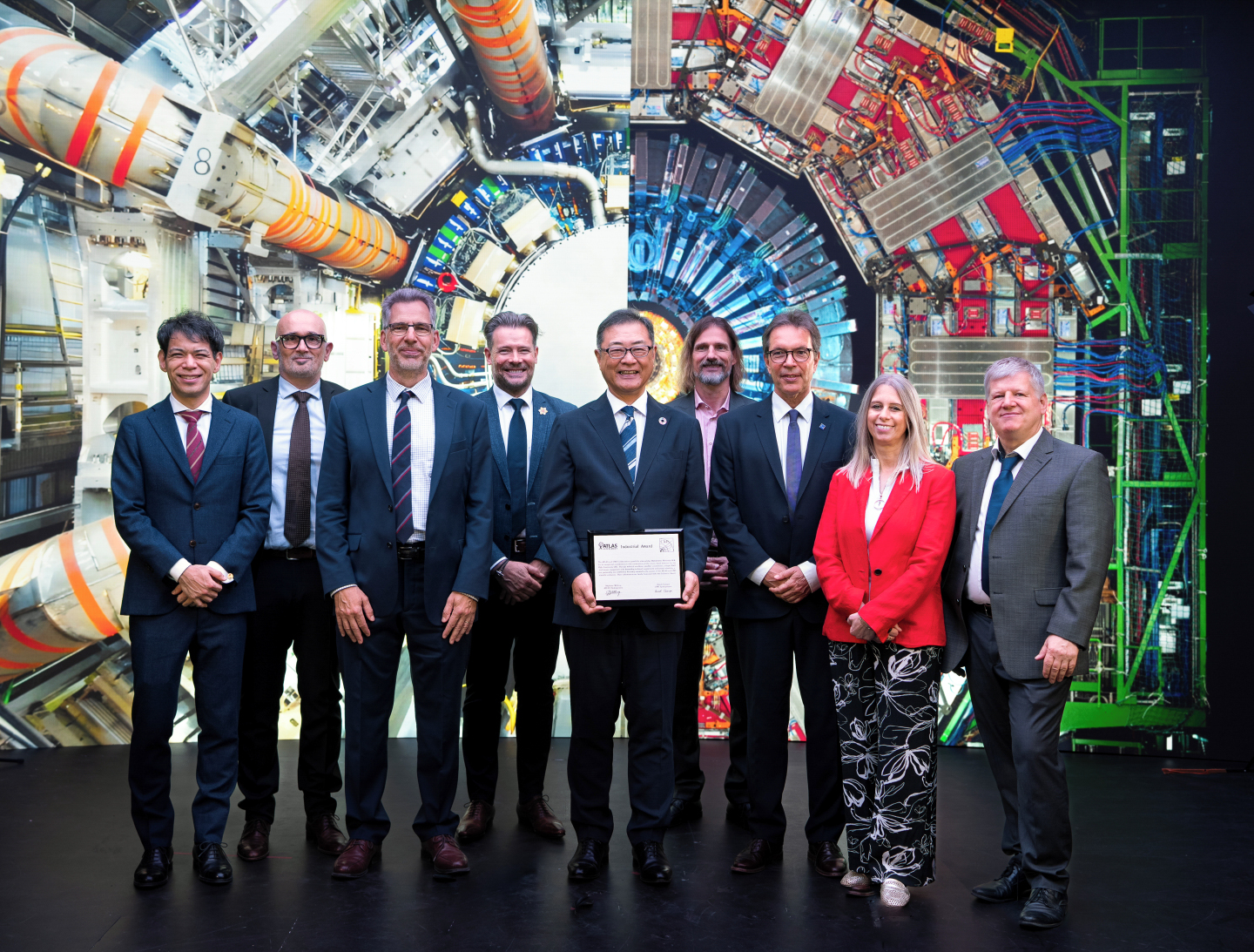
Great physics relies on great teamwork. The ATLAS Collaboration brings together over 6,000 scientists, engineers and other professionals worldwide, drawing on their wealth of experience to keep the experiment running and drive new discoveries. Since 2014, the ATLAS Outstanding Achievement Awards have celebrated these contributions, made outside the context of a physics analysis – shining a spotlight on the hard work that takes place behind the scenes.
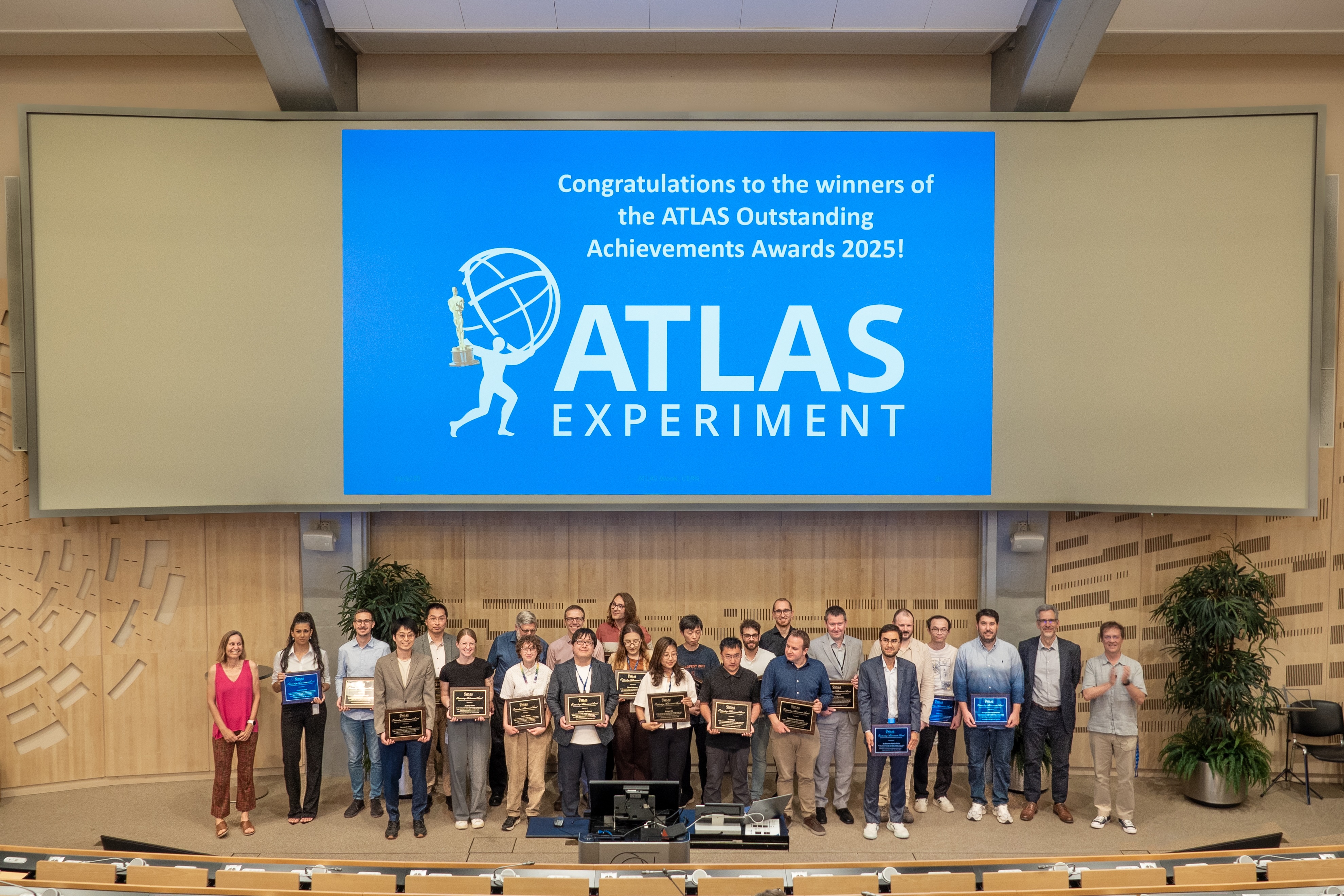
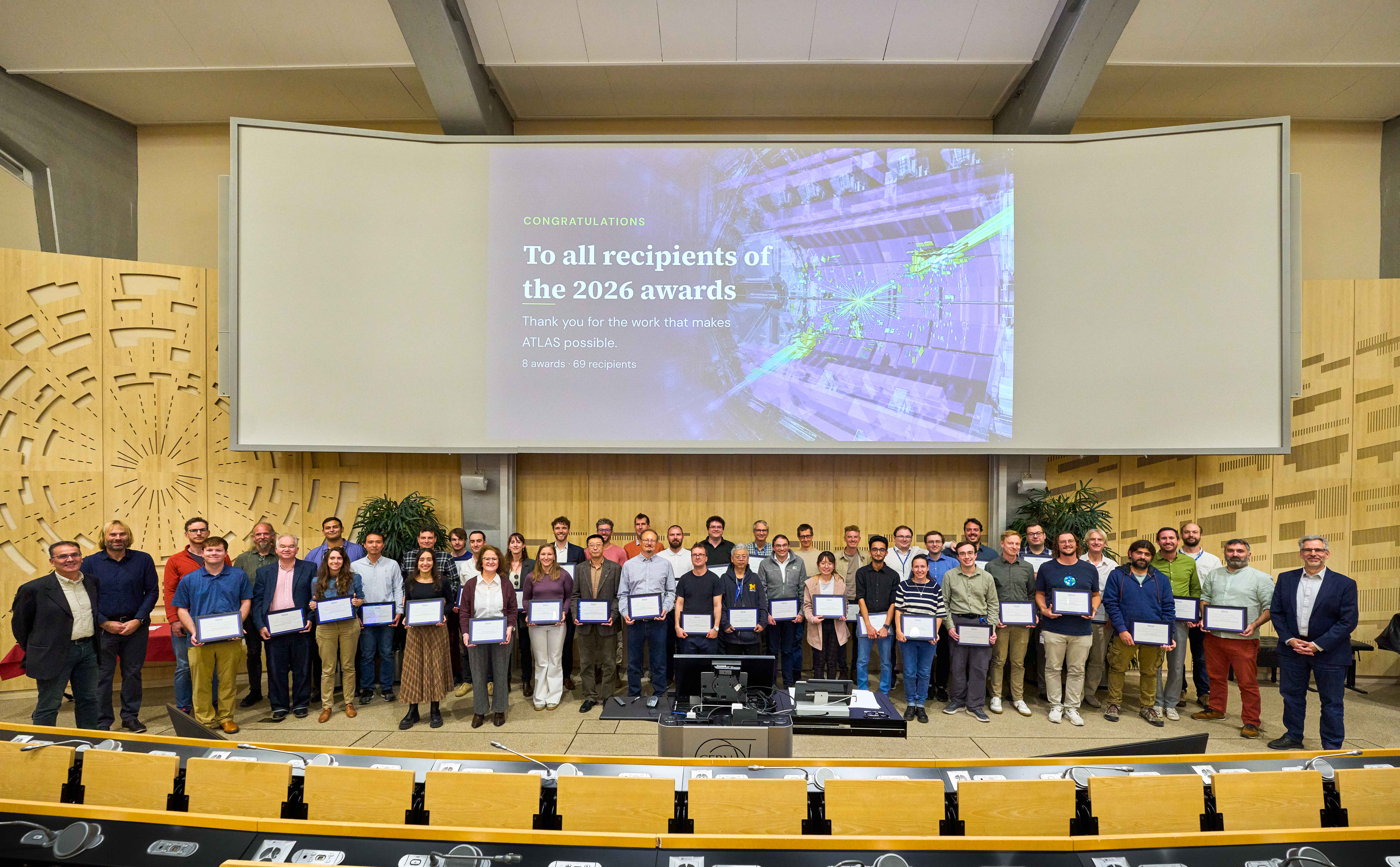
On 15 October 2026, the ATLAS Collaboration hosted the ninth edition of the awards, honoring one individual and seven teams. Many of this year’s recipients addressed critical, high-stakes challenges for ATLAS, from diagnosing upgrade electronics issues to repairing cooling-system leaks before beam operations were disrupted. Others helped maintain outstanding detector performance, expanded public access to ATLAS data and developed future-focused computing and trigger technologies.
“The achievements recognised this year span an extraordinary range of challenges,” said Martin Rybar, co-chair of the 2026 Awards Committee. “What unites these efforts is the collaborative spirit of the people involved. Their work keeps ATLAS running and makes the full breadth of our physics programme possible.”
A total of 88 nominations were submitted, reflecting the breadth of expertise and activity across the collaboration. Each was carefully evaluated by the ATLAS Collaboration Board Chair Advisory Group, serving as the Awards Committee, with input from experts in each category. “Choosing the recipients is never easy,” added Gordon Watts, co-chair of the 2026 Awards Committee. “The quality of the nominations reflect the remarkable work taking place across the Collaboration, and we warmly congratulate everyone recognised this year.”
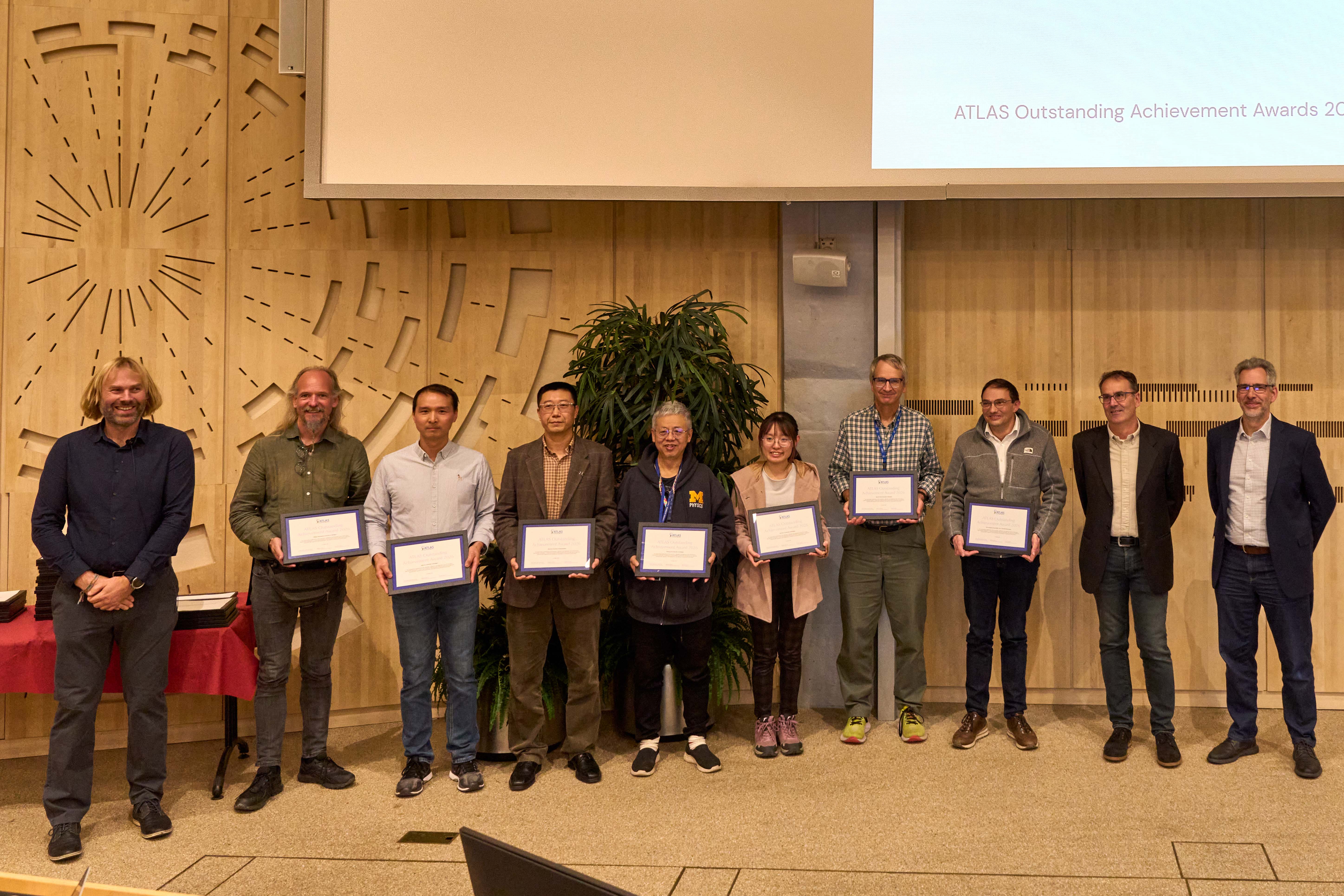
The awards were presented during the ATLAS Collaboration Week meeting at CERN's Main Auditorium. Awardees received framed certificates amidst warm applause from their colleagues, as well as congratulations from the Award Chairs, Collaboration Board Chair and ATLAS spokesperson.
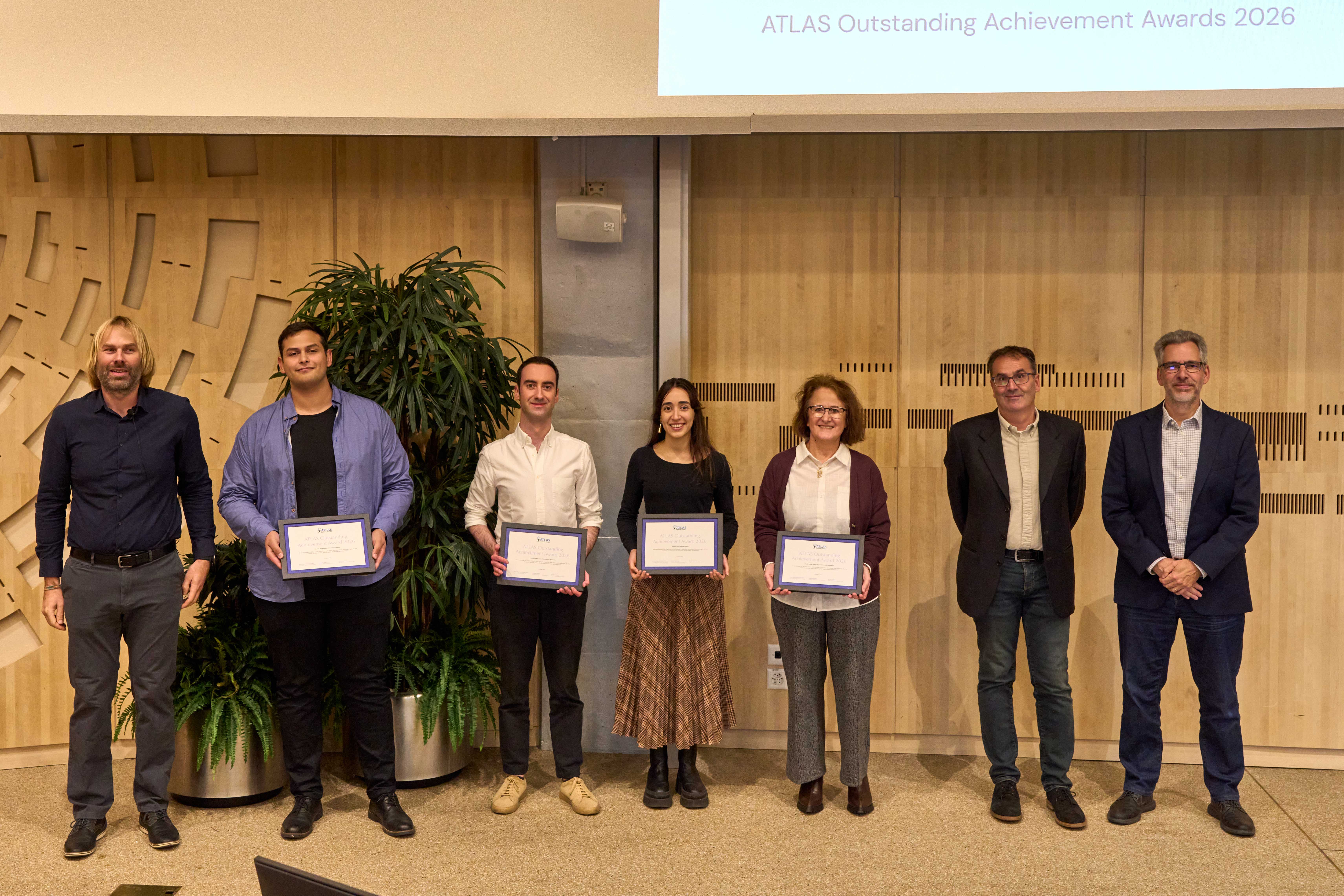
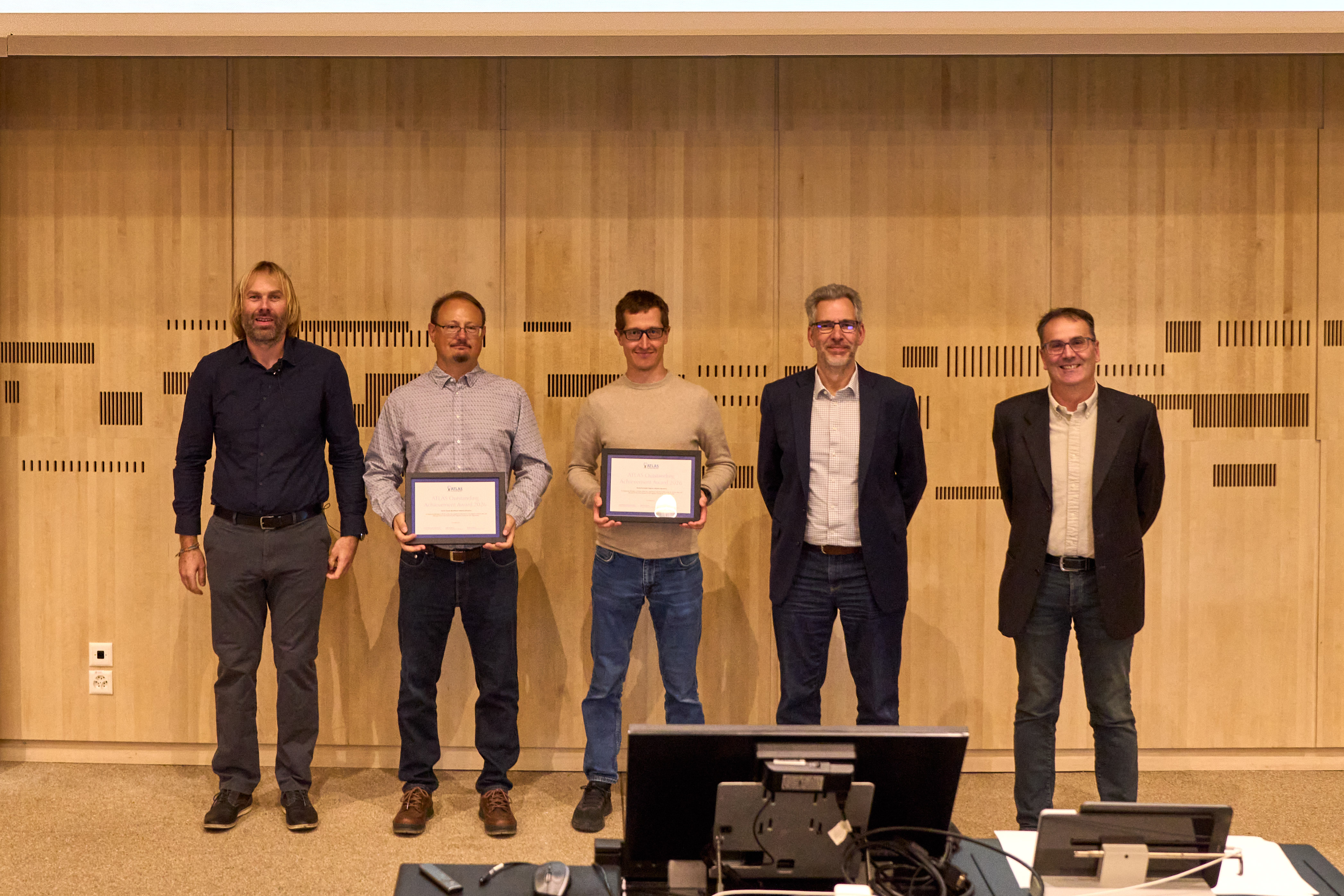
Meet the 2026 ATLAS Outstanding Achievement Award recipients
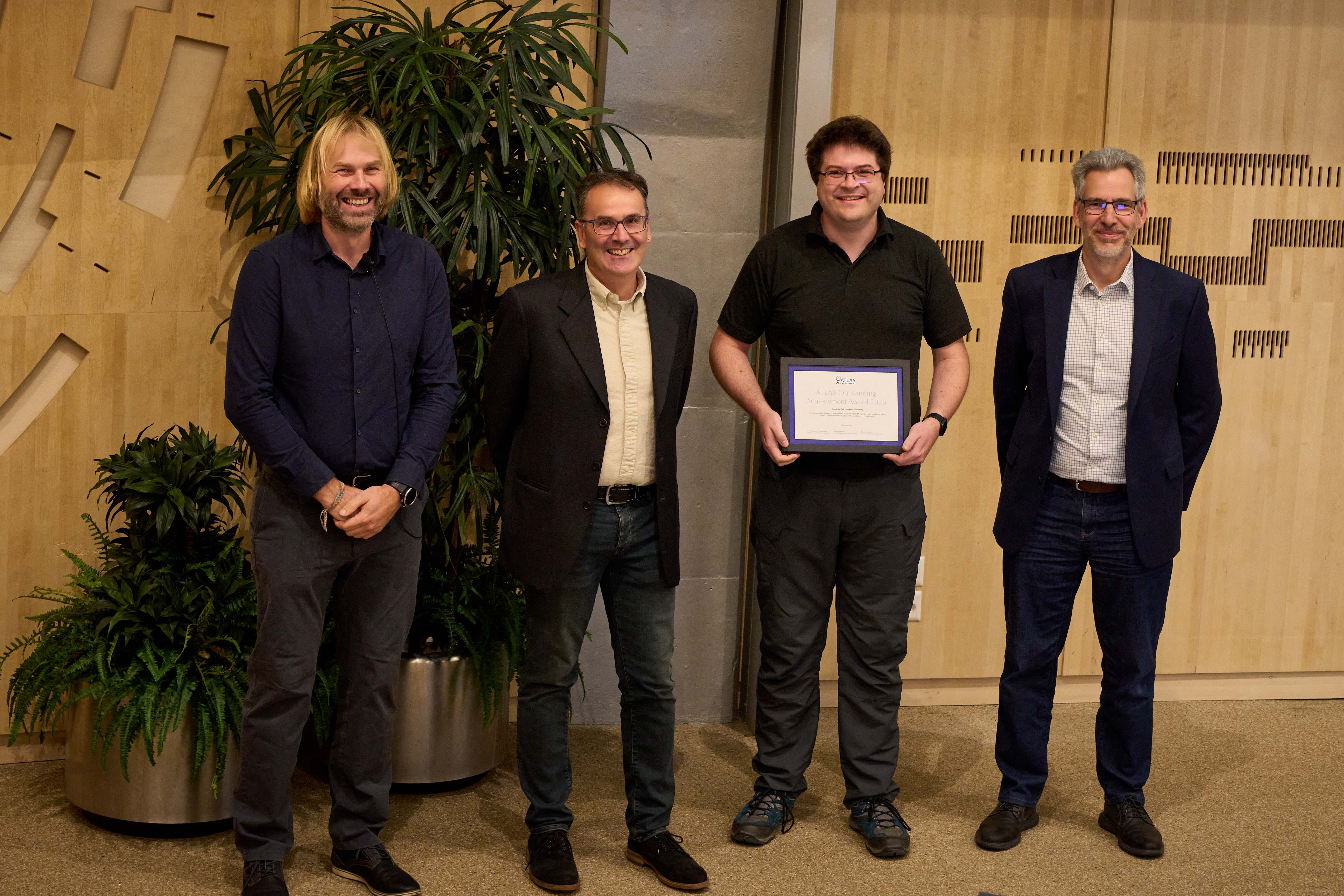
Dennis Sperlich (University of Freiburg)
For identifying the failure mode of the bPOL12V6 chip at cold temperature after irradiation, which posed a significant risk to ITk Strips and several other LHC subsystems.
––
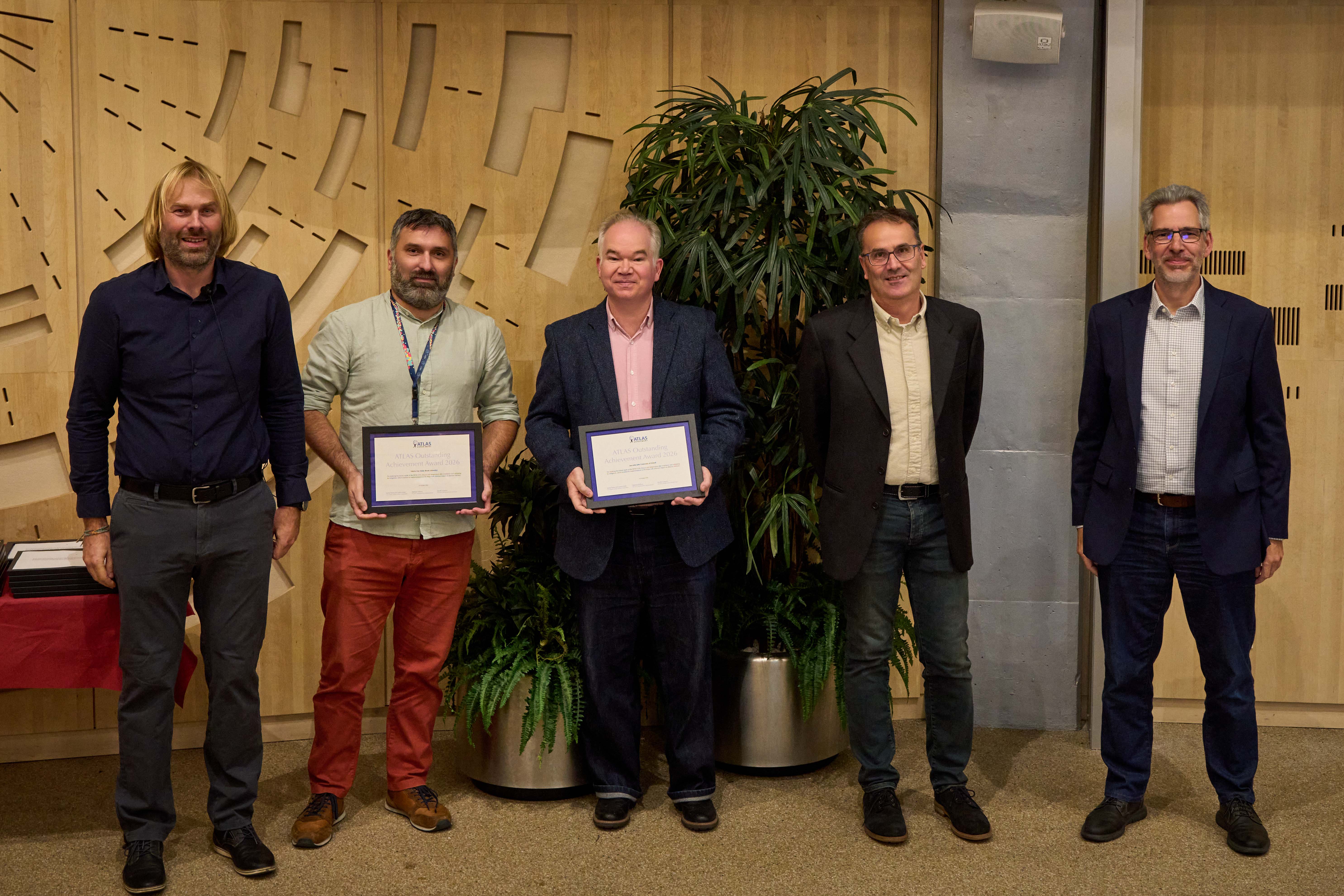
Gabriele D'Amen (Brookhaven National Laboratory), Valerio Dao (Stony Brook University), Debra Dewhurst (Rutherford Appleton Laboratory), Yajun He (DESY), Timon Heim (Lawrence Berkeley National Laboratory), Cole Helling (University of British Columbia), Jaya John John (University of Oxford), Matthew Kurth (Brookhaven National Laboratory), Madison Levagood (University of British Columbia), Botho Paschen (Lawrence Berkeley National Laboratory), Peter Phillips (Rutherford Appleton Laboratory), Stefania Stucci (Brookhaven National Laboratory)
For studying the failure mode of the bPOL12V6 chip at cold temperature after irradiation and validating its mitigation, which enabled its implementation in ITk Strips with minimal impact on detector delivery.
––
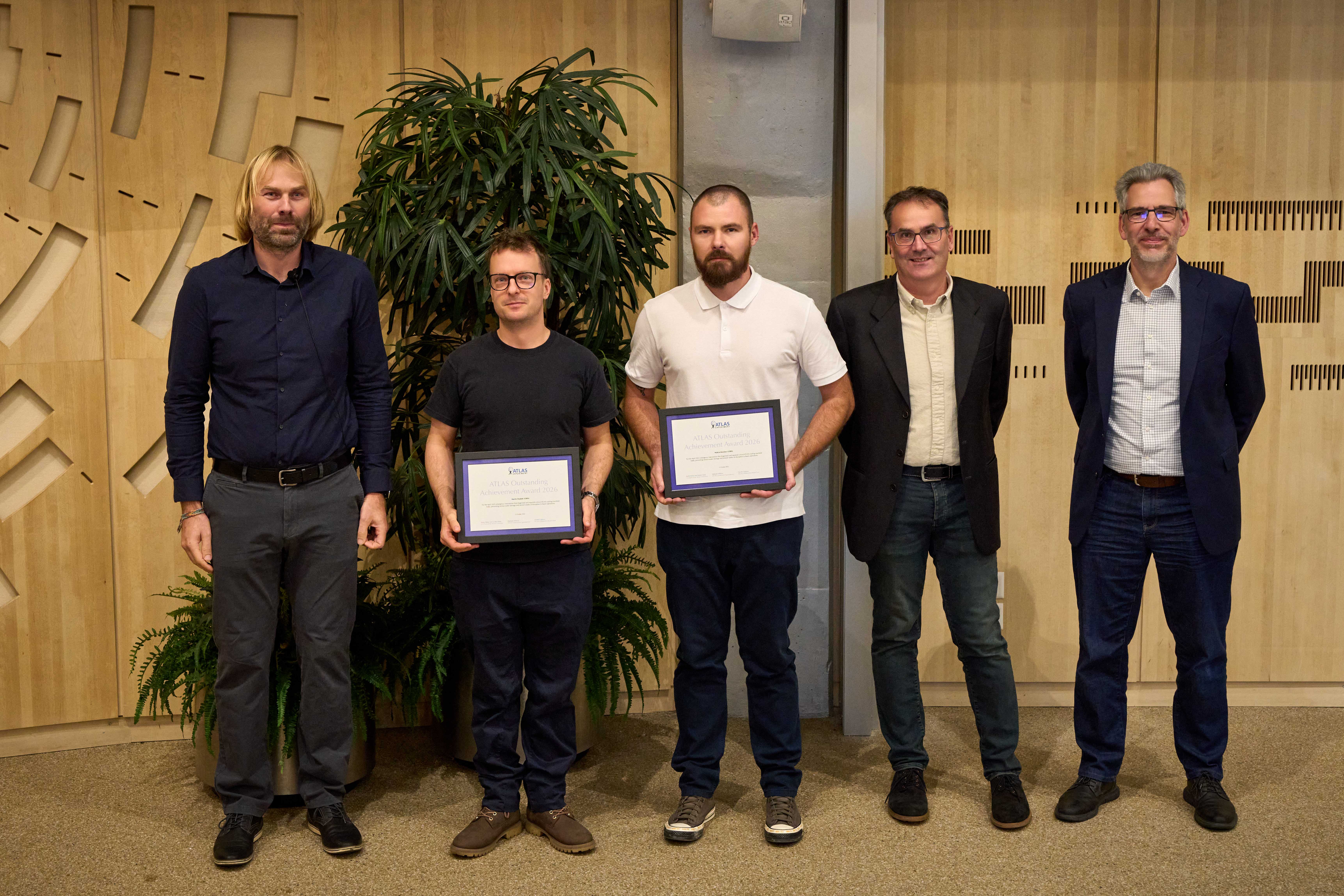
Martin Doubek (CERN), Mykyta Kravtsov (CERN)
For the April 2025 emergency intervention that diagnosed and repaired critical ATLAS cooling-manifold leaks, preventing serious water damage and several weeks of disruption to beam operations.
––
Tiesheng Dai (University of Michigan), Edward Diehl (University of Michigan), Philipp Fleischmann (University of Michigan), Jiajin Ge (University of Michigan), Pierre-François Giraud (IRFU, CEA, Université Paris-Saclay), Hui-Chi Lin (University of Michigan), Zhen Yan (University of Massachusetts)
For outstanding contributions to the operation, calibration and alignment of the ATLAS Muon Spectrometer during Run 3, achieving exceptional detector performance through precise alignment, sustained MDT operation and maintenance, and effective coordination of the teams.
––
Baida Achkar (Georg-August-Universität Goettingen), Antonio Jacques Costa (University of Manchester), Miguel Angel Garcia Ruiz (Universidad Nacional de Colombia), Eirik Gramstad (University of Oslo), Giovanni Guerrieri (CERN), Zach Marshall (Lawrence Berkeley National Laboratory), Ioannis Papadopoulos (University of Athens), Mariana Vivas Albornoz (DESY), Caley Yardley (University of Sussex)
For transforming ATLAS Open Data in 2025 through a major new data release, AtlasOpenMagic, the first tutorial for external users, and new public ntuple-making infrastructure.
––
Krzysztof Cieśla (AGH University of Krakow), Mateusz Dyndał (AGH University of Krakow), Ralf Gugel (Universitaet Mainz), Stephen Hillier (University of Birmingham), Rhys Owen (Rutherford Appleton Laboratory), Simone Sottocornola (Indiana University / CERN), Paul Thompson (University of Birmingham), Daniel Ulmes (Indiana University)
For creative and engaged commissioning of a robust solution for calorimetric Ultra Peripheral Collision signature triggers and mitigation of their adverse impact on the Phase-I L1 calorimeter system. For prompt implementation of numerous trigger variants to fuel the Heavy Ion Ultra Peripheral Collision programme in the trigger menu.
––
Haider Abidi (Brookhaven National Laboratory), Jahred Adelman (Northern Illinois University), Tim Adye (Rutherford Appleton Laboratory), Marco Aparo (Barcelona Institute of Science and Technology), Veronique Boisvert (Royal Holloway, University of London), Mark Brettell (University College London and Rutherford Appleton Laboratory), Jared Burleson (University of Illinois at Urbana-Champaign), Pierfrancesco Butti (CERN), Alessandra Camplani (University of Copenhagen), Viviana Cavaliere (Brookhaven National Laboratory), Sebastian Dittmeier (Heidelberg University), Dmitry Emeliyanov (Rutherford Appleton Laboratory), Paul Gessinger (CERN), Attila Krasznahorkay (University of Massachusetts), Fabrice Le Goff (University of Oregon), Elliot Lipeles (University of Pennsylvania), Stephanie Majewski (University of Oregon), Ioannis Maznas (Northern Illinois University), Joana Niermann (CERN), Federica Piazza (University of Oregon), Neza Ribaric (Duke University), Ben Rosser (University of Chicago), Andreas Stefl (CERN), Priya Sundararajan (University of California, Irvine), Stephen Nicholas Swatman (CERN), Benjamin Michael Wynne (University of Edinburgh)
For four years of innovation in CPU-, GPU- and FPGA-based tracking, culminating in the December 2025 reports that enabled ATLAS’s Event Filter technology choice.
––
Alaettin Serhan Mete (Argonne National Laboratory), Marcin Nowak (Brookhaven National Laboratory), Maciej Szymanski (Argonne National Laboratory), Peter Van Gemmeren (Argonne National Laboratory)
For deploying RNTuple in ATLAS, achieving a significant reduction in disk usage for analysis data and placing ATLAS at the forefront of this migration among the LHC experiments.