We are solving an astrophysics mystery with a cosmic collider
9 October 2026 | By
When the James Webb telescope launched in 2021, astronomers got a much clearer view of the distant cosmos than ever before. But light is not the only messenger from distant stars and galaxies: they are also constantly spitting out particles (called cosmic rays) that slam into the Earth’s atmosphere and shower us with secondary particles that we can “photograph” with ground-based detectors, such as the Telescope Array Observatory in the Utah desert. These cosmic rays can reach incredible energies: Millions of times more than what we can reach inside the Large Hadron Collider, the world’s largest particle accelerator. Astronomers think these ultra-high energy cosmic rays are messengers from exploding stars and maybe even carry information about supermassive black holes deep in outer space. But to unlock their secrets, we need to understand exactly what happens when they collide with Earth’s atmosphere so that we can accurately interpret the fragments we recover.
Unfortunately, atmospheric cosmic ray collisions are extremely difficult to simulate. The predictions from various models can disagree with each other by up to a factor of 100. If we can’t understand what happens in the upper atmosphere, how can we possibly interpret the data we collect on Earth?
But when there is a problem in physics, there is also a huge opportunity. I work on the ATLAS Experiment at CERN, which is like a high-speed camera that takes pictures of particle collisions. And this cosmic ray puzzle gave our team an idea: What if instead of wrestling with imprecise modeling of cosmic protons colliding with atmospheric oxygen, we simply collide protons and oxygen inside the LHC and record what happens?
Cosmic rays carry secrets from the depths of the universe. A special run at the LHC is now helping us decipher their messages.
While the idea is simple, the LHC was not designed for these kinds of cosmic experiments and required scientists to think outside the box. We knew oxygen nuclei were readily available at the LHC, but did not know if it was safe to accelerate to record-breaking energies and needed to perform many tests in advance. Additionally, identifying collisions that mimicked cosmic ray showers required thinking about how we process and filter the collisions data. But the hard part was finding time for this special run in the LHC schedule. When a tree fell on some powerlines and put the LHC out of operation for a few weeks in 2023, this special proton-oxygen run was cut from the program. Luckily, the community rallied, and in July 2025, physicists injected oxygen nuclei into the collider for the very first time.
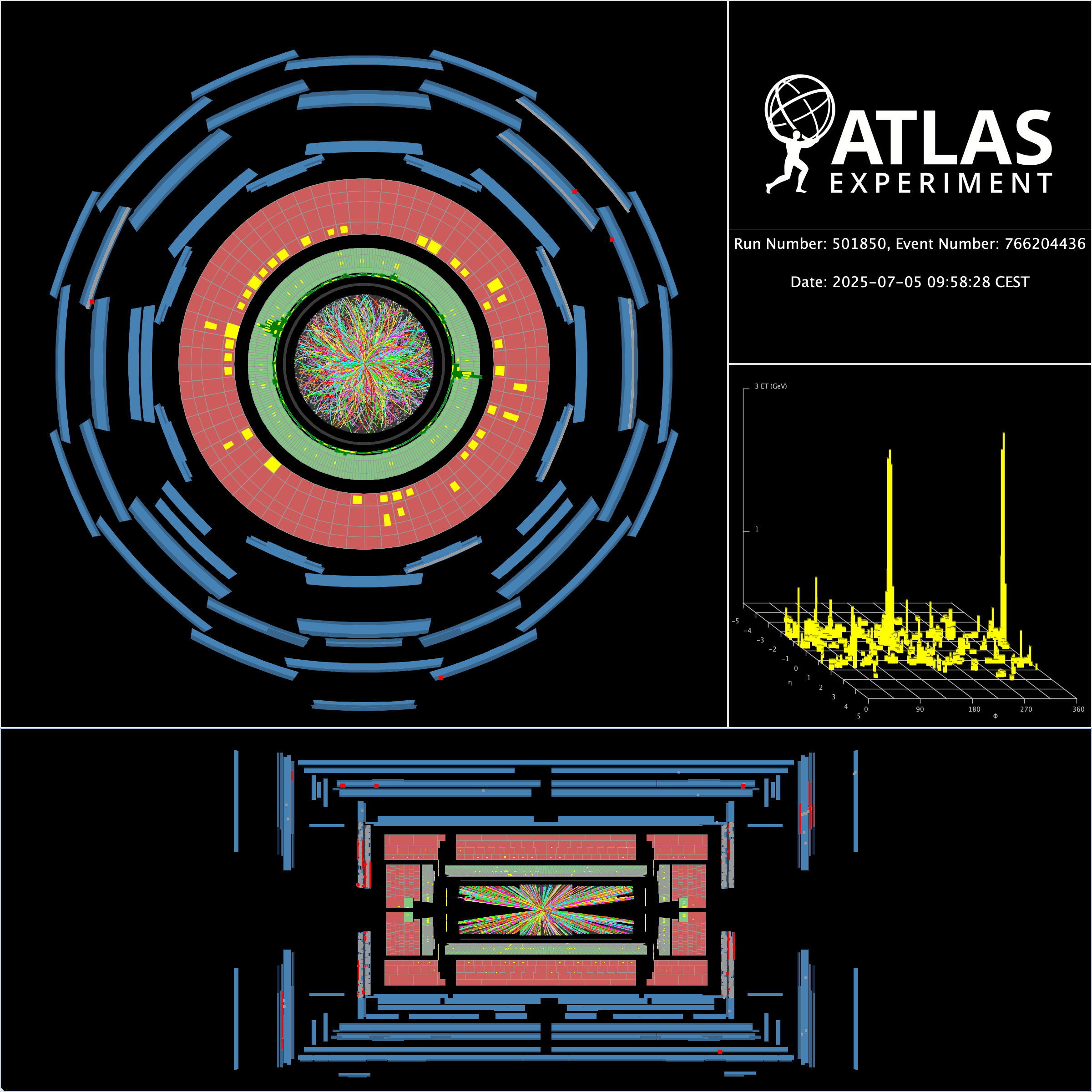
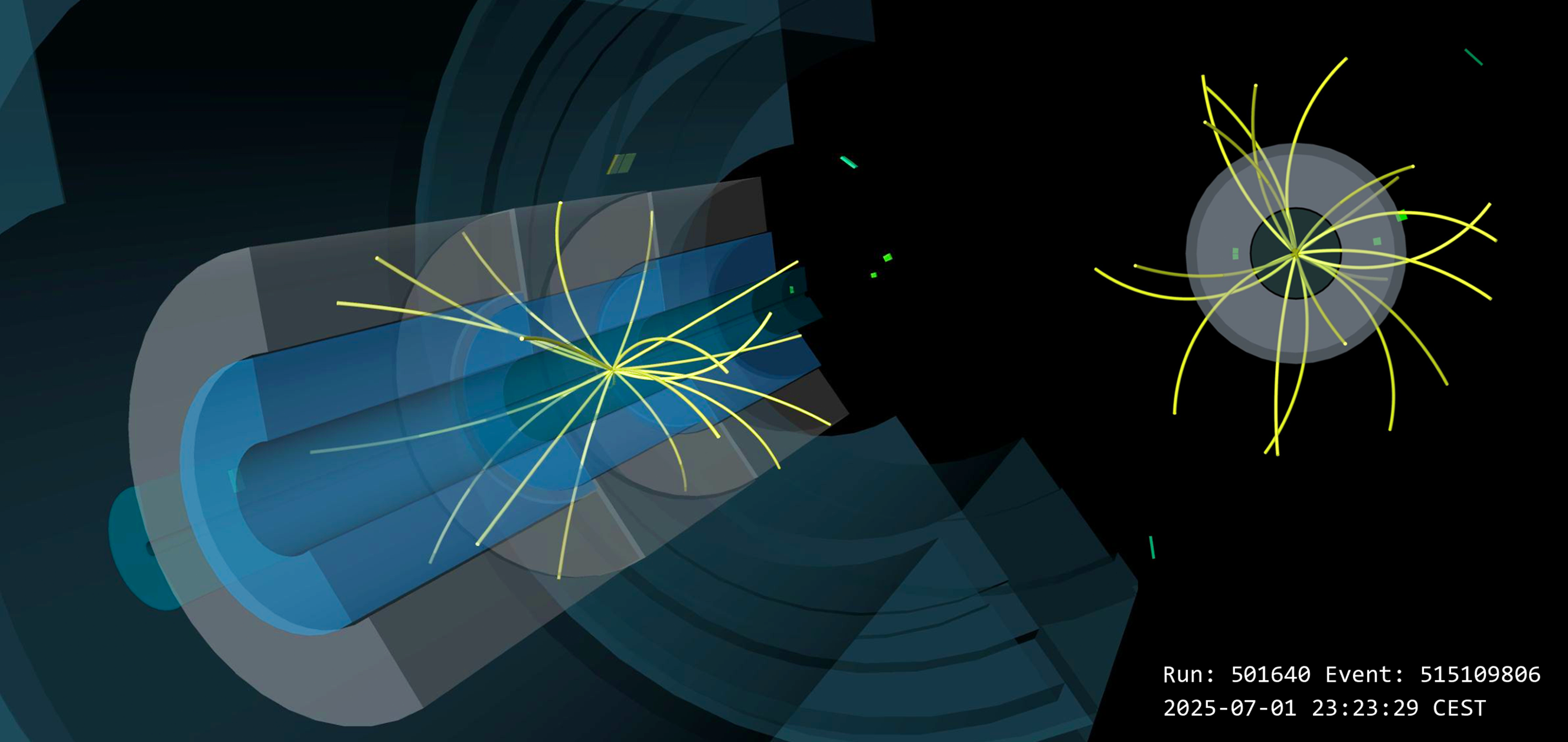
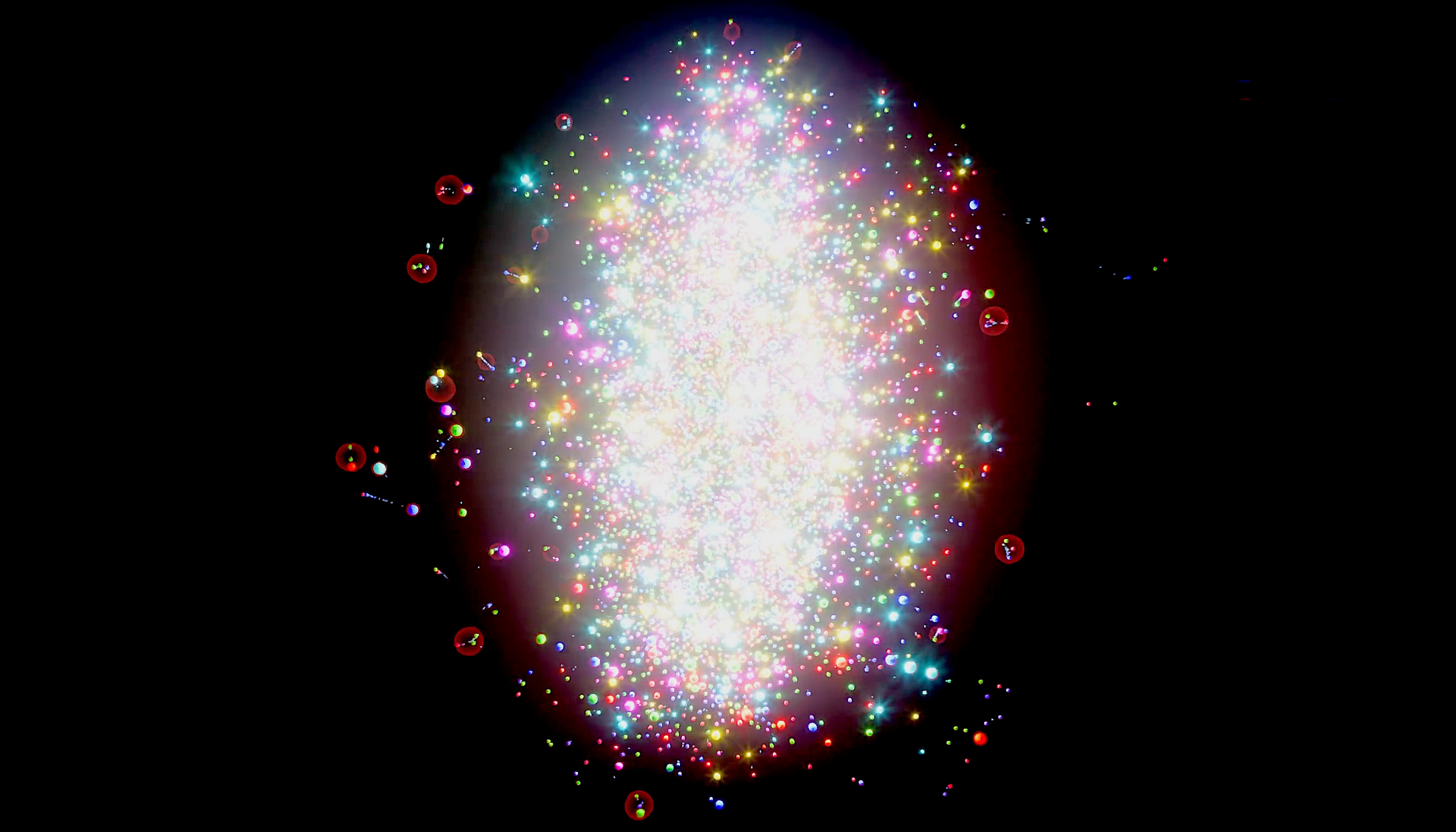
During this special run, physicists accelerated oxygen nuclei and protons to almost the speed of light and then smashed them together. This replicated what would happen if an interstellar cosmic ray with a million times more energy than those from our Sun slammed into a stationary oxygen atom. We then recorded the number of particles that these collisions created, their energies, and their trajectories. The innermost “camera” of ATLAS allowed us to collect millions of close-up portraits of these cosmic collisions, and we recently published our first results in a new research paper.
We thought that our data would help identify the best models for cosmic ray collisions. But surprisingly, we found that none of the models were very good. All the models came with huge error bars that made it very hard to interpret their predictions. Our measurements will help refine these models and reduce the error bars by at least an order of magnitude. These new results are long awaited by the astroparticle community and will greatly help them make sense of the cosmic ray data they collect on Earth. And this, in turn, will help us learn about the secrets these cosmic rays carry from the furthest corners of the universe.
Published in collaboration with Beyond Standard. Banner illustration by Sandbox Studio, Chicago with Olena Shmahalo; digitally edited to fit publication dimensions.