Cheat

Cheat sheet for downloading

Pile-Up

Submitted by Steven Goldfarb on
Sheet Type
Pile-Up

Pile-Up

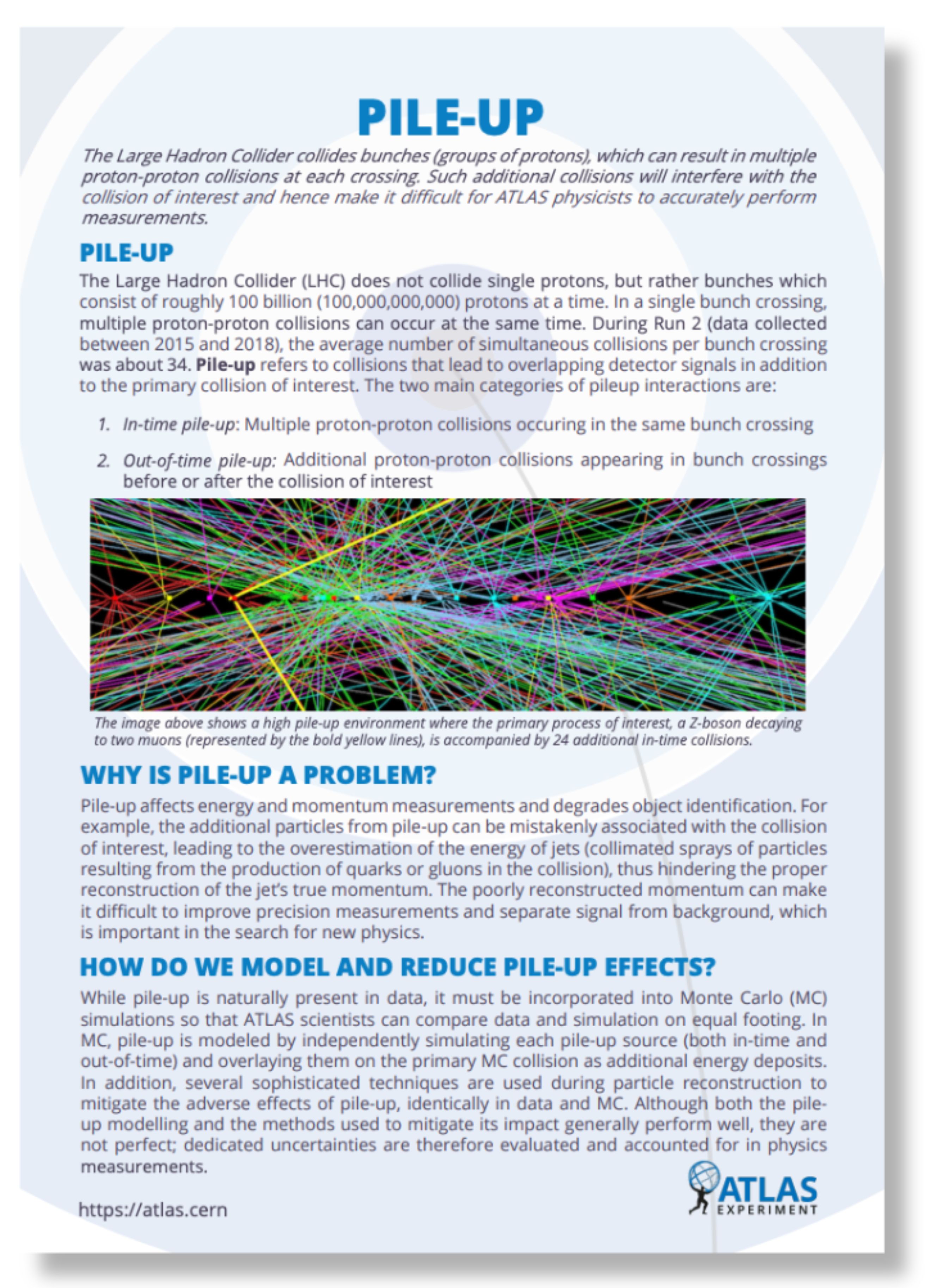
The LHC collides bunches (groups of protons), which can result in multiple proton-proton collisions at each crossing. Such additional collisions are called pile-up.

Listing Priority
5

ATLAS Coordinate System

Submitted by Steven Goldfarb on
Sheet Type
ATLAS Coordinate System

ATLAS Coordinate System

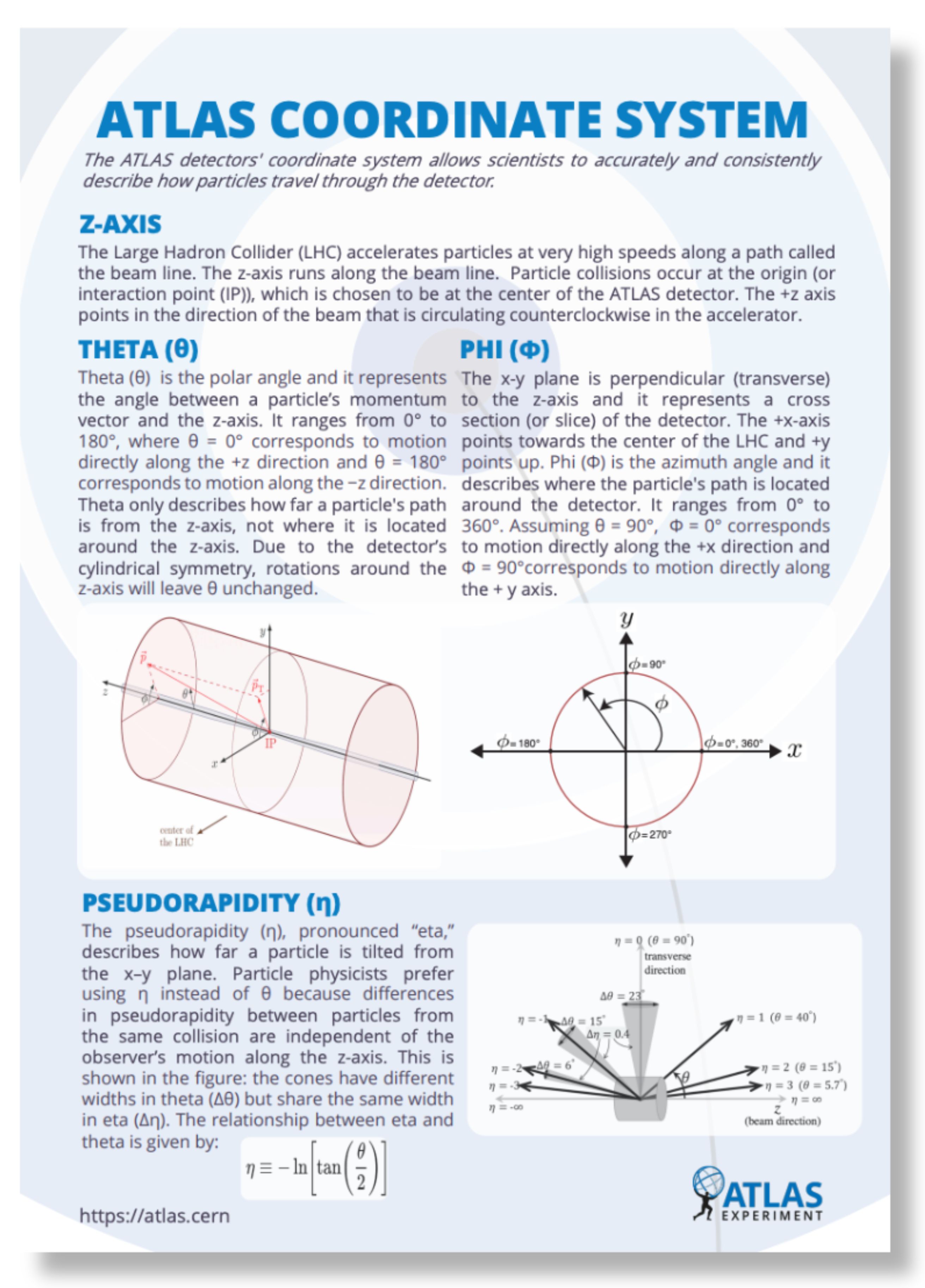
The ATLAS coordinate system allows scientists to accurately and consistently describe how particles travel through the detector.

Listing Priority
5

Inside a Collision

Submitted by Steven Goldfarb on
Sheet Type
Inside a Collision

Inside a Collision

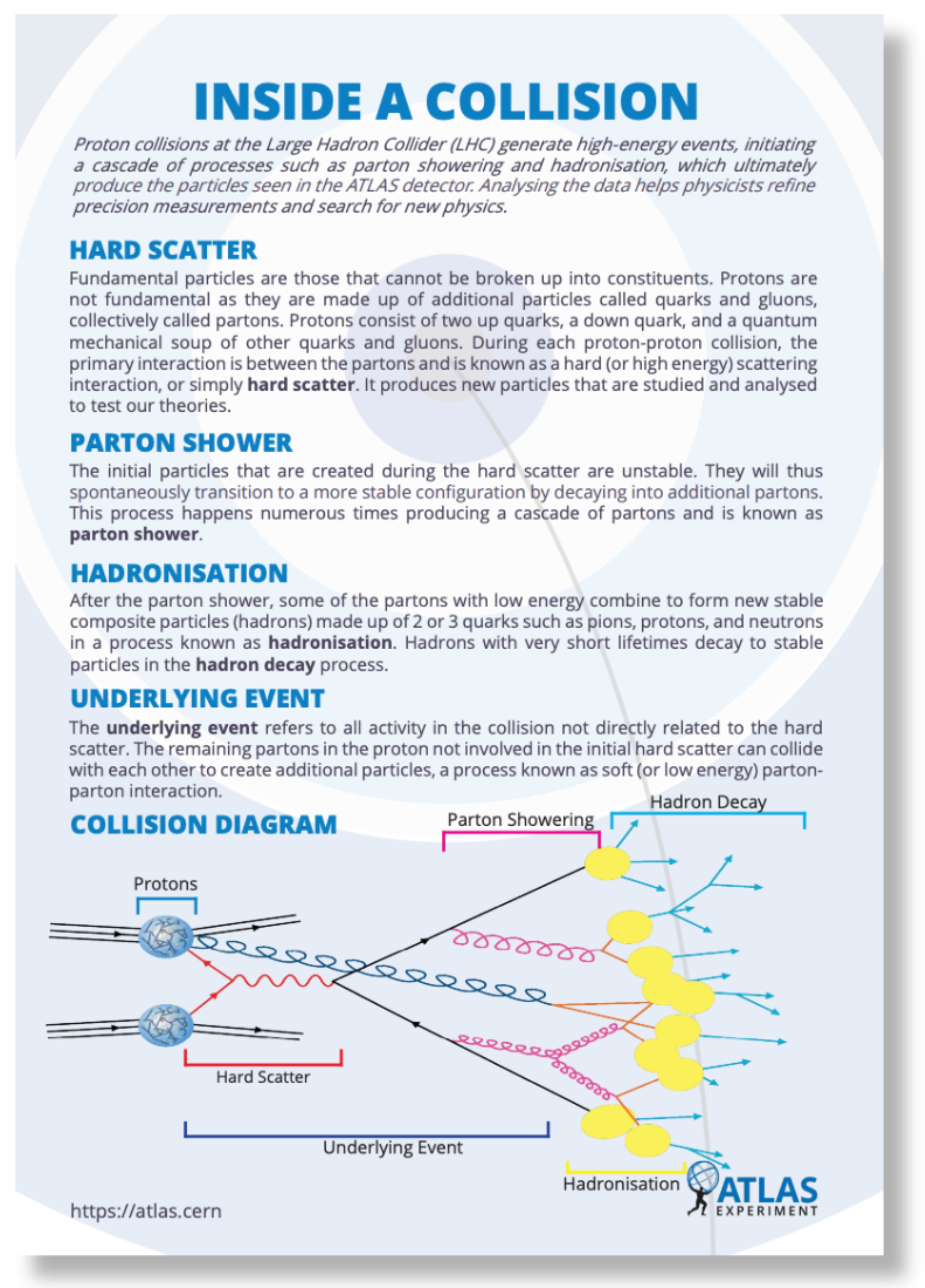
Proton collisions at the LHC generate high-energy events, initiating a cascade of processes, such as parton showering and hadronisation, which ultimately produce the particles seen in the ATLAS detector.

Listing Priority
5

Particle decay, lifetime & width

Submitted by Steven Goldfarb on
Sheet Type
Particle Decay, Lifetime & Width

Particle Decay, Lifetime & Width

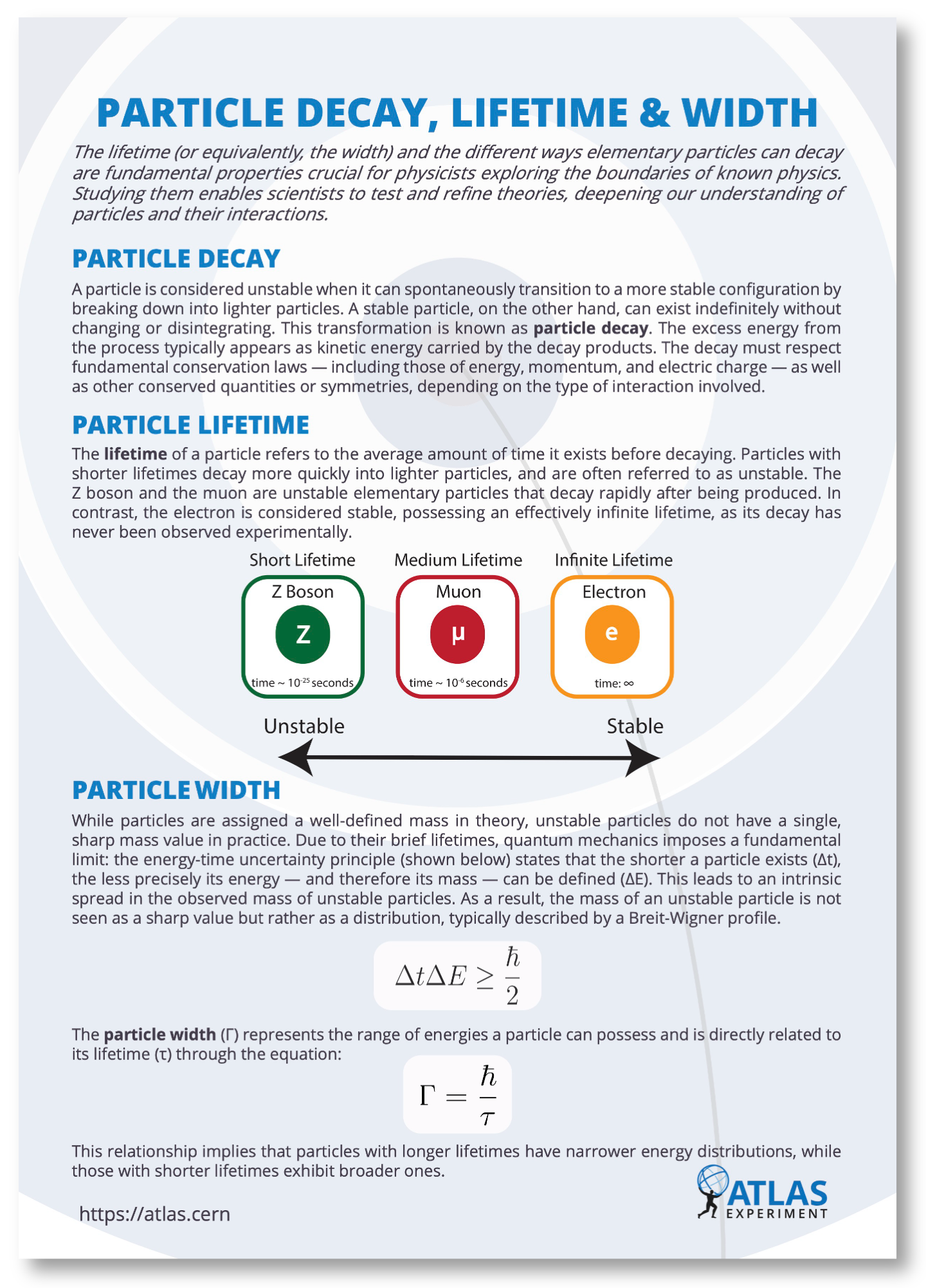
The lifetime (or equivalently, the width) and the different ways elementary particles can decay are fundamental properties crucial for physicists exploring the boundaries of known physics.

Monte Carlo Simulation

Submitted by Steven Goldfarb on
Sheet Type
Monte Carlo Simulation

Monte Carlo Simulation

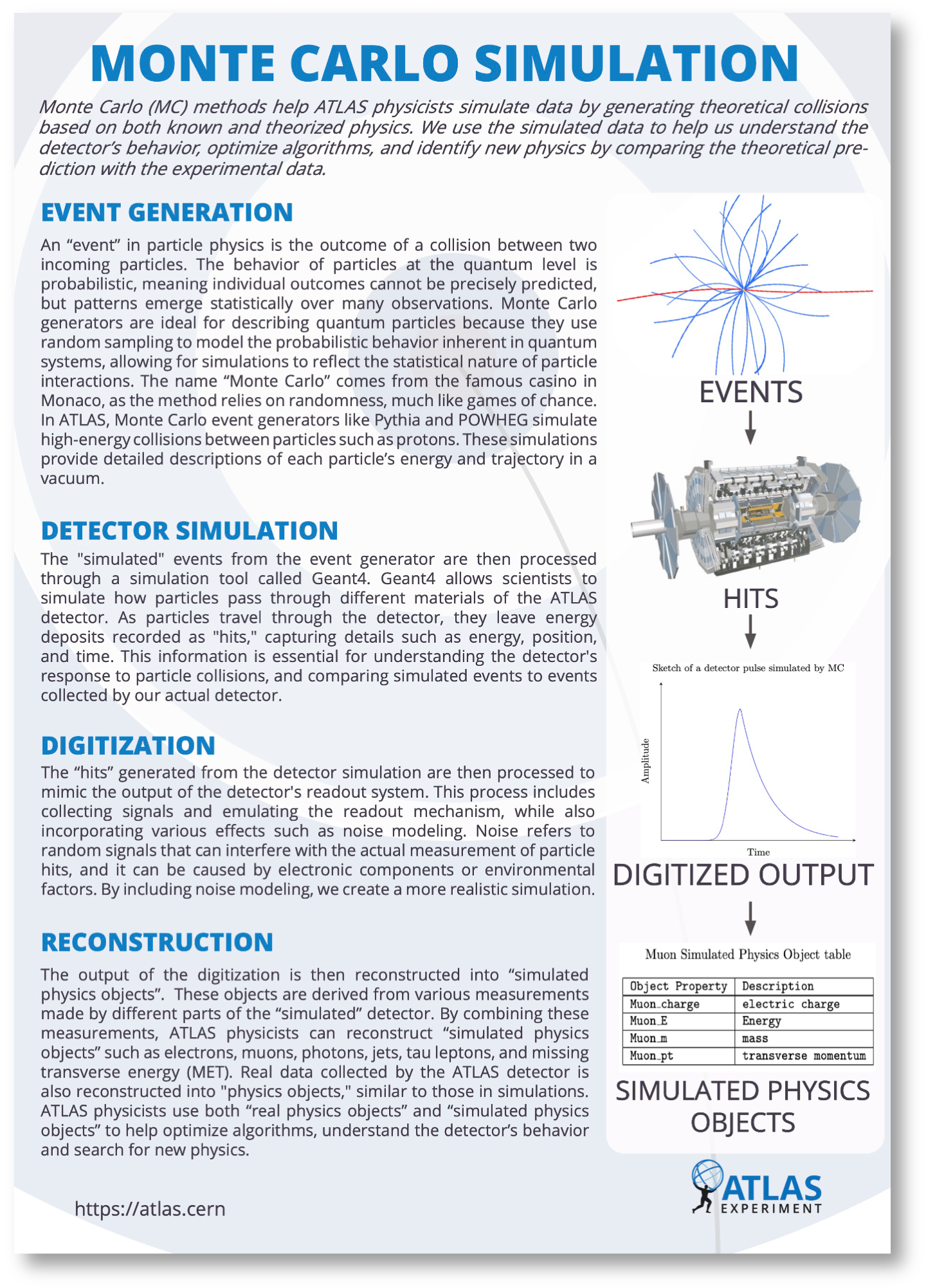
Monte Carlo (MC) methods help ATLAS physicists simulate data by generating theoretical collisions based on both known and theorised physics. We use the simulated data to help us understand the detector’s behaviour, optimise algorithms, and identify new physics.

4-Vectors and Particle Mass

Submitted by Steven Goldfarb on
Sheet Type
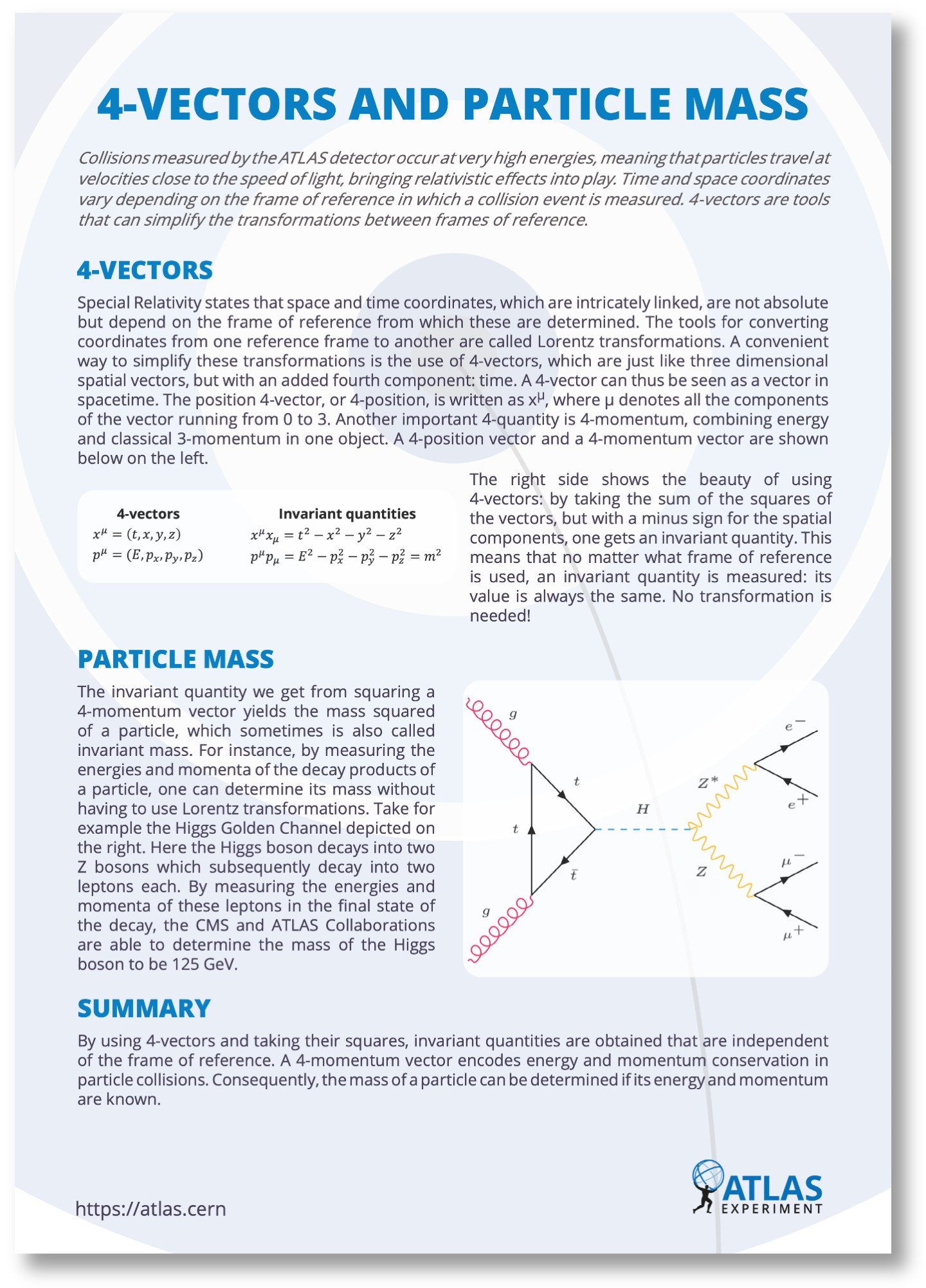
4-Vectors and Particle Mass

4-Vectors and Particle Mass

Time and space ­coordinates vary depending on the frame of reference in which a collision event is measured. 4-­vectors are tools that can simplify the transformations between frames of reference.