ATLAS hunts for a new "soft" signature of the dark sector
12 June 2026 | By
The ATLAS Collaboration releases its first dedicated search for soft unclustered energy patterns (SUEPs) – an elusive possible signature of new physics phenomena. The analysis targets a unique muon-rich experimental signature to substantially extend sensitivity to hidden phenomena beyond previous results.

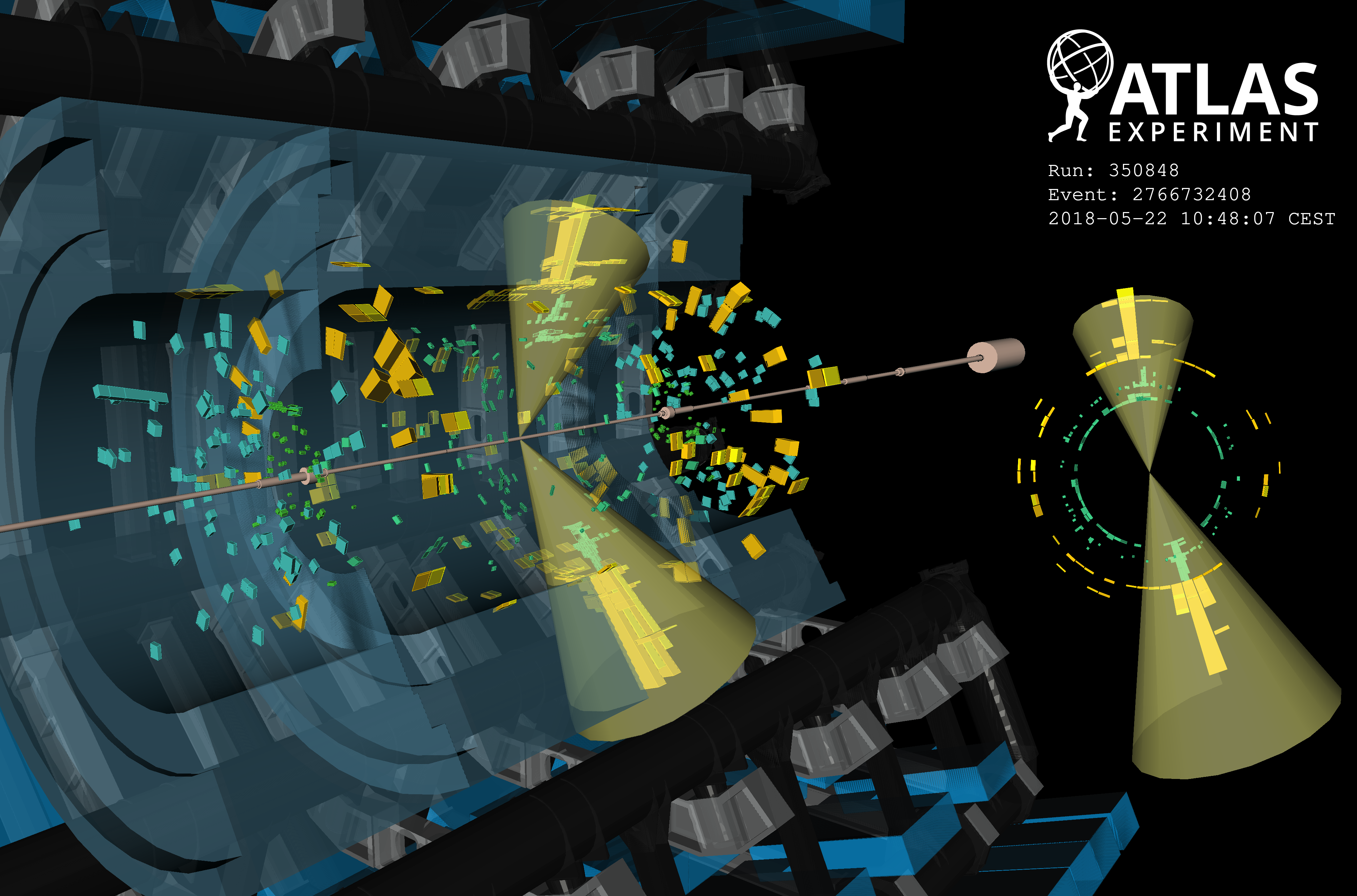
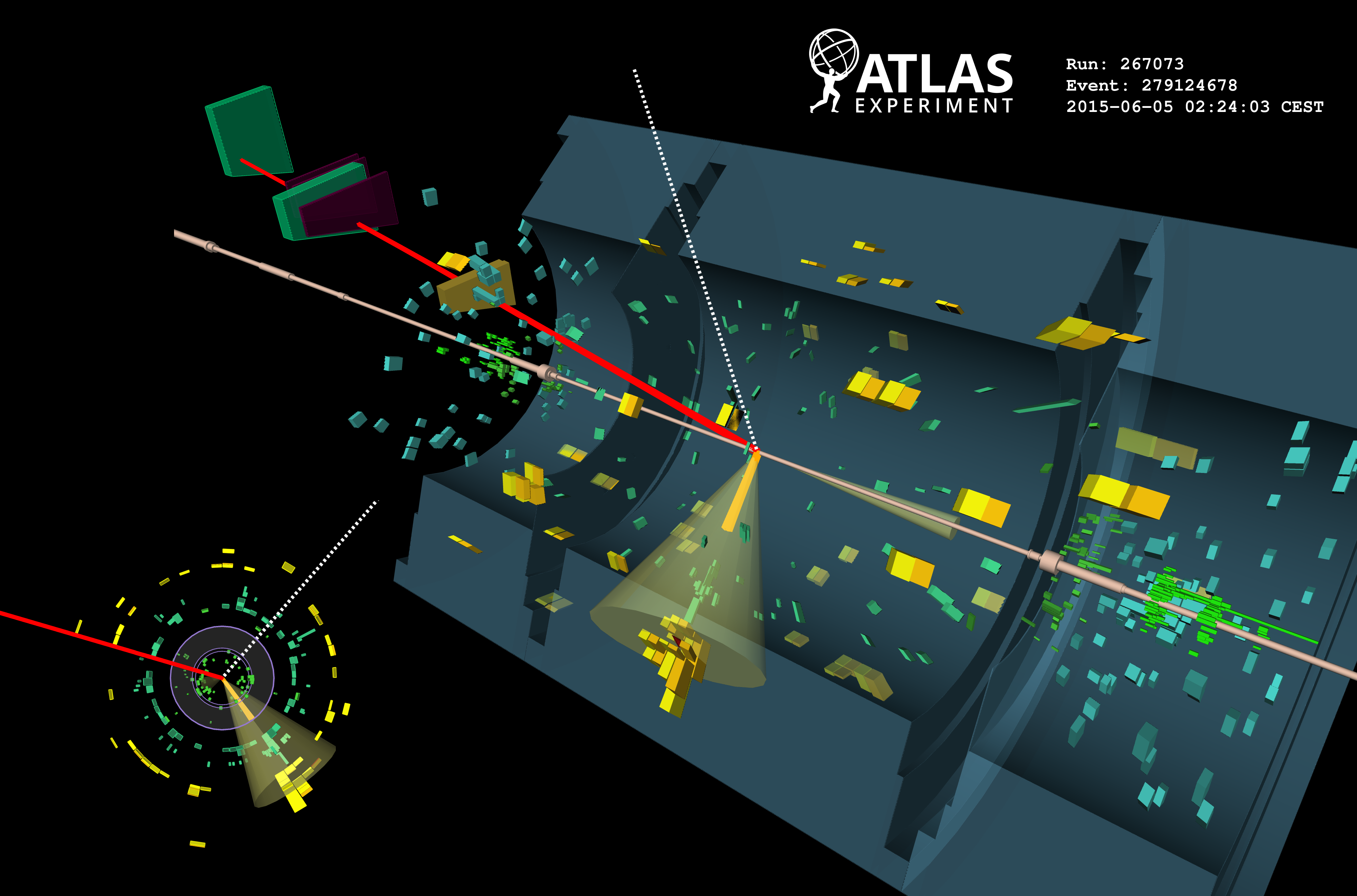
Long-standing tensions between simple theoretical models of Dark Matter and astrophysical observations have motivated physicists to consider more complex theories involving a hidden “dark sector” of particles and forces. Of particular interest is dark QCD – a new force analogous to quantum chromodynamics (QCD), which describes the strong force – that could bind dark-sector quarks into exotic forms of matter. If such a force exists, particles produced in LHC collisions would generate showers of dark-sector particles. These may in turn decay into familiar Standard-Model particles, leaving observable signatures in the ATLAS experiment (see Figure 1).
Previous searches for dark QCD focused on signatures similar to those produced through Standard-Model QCD. In high-energy collisions, energetic quarks and gluons generate branching showers of particles. Due to the way the strong interaction operates, this showering is restricted to small angles relative to the original particle's trajectory, and forms highly collimated sprays known as jets. ATLAS researchers previously searched for dark-QCD signatures based on this picture, focusing on so-called "dark jets", “semi-visible jets” and "emerging jets". But dark-sector showers may not behave this way. They may expand at wider angles and not form jets at all, thus evading those studies. Physicists would instead need to look for a softer, uniformly distributed signature (a SUEP).
This analysis targets a new signature of dark QCD – a hypothetical force analogous to quantum chromodynamics (QCD) that binds dark-sector quarks into exotic forms of matter.


For their search, the ATLAS Collaboration studied the full Run-2 dataset (140 fb-1 of proton–proton collisions at 13 TeV), searching for signs of dark-sector particles decaying into a large number of muons. This signature is more easily distinguishable from Standard-Model processes – due to the unusually large number of muons – and is predicted by many well-motivated new-physics theories. The new analysis also takes the search for SUEPs into a new direction, as previous analyses focused primarily on hadronic final states.

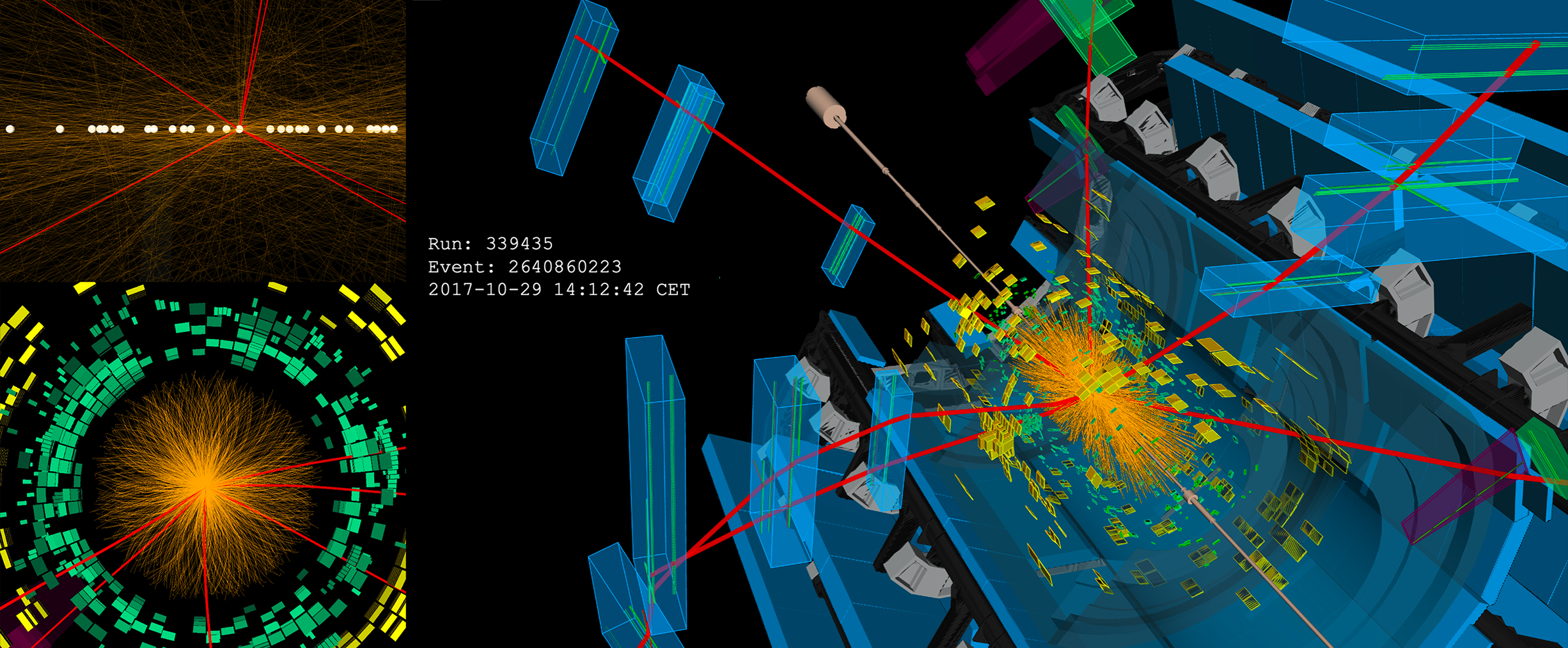
Researchers selected events using specialised multi-muon triggers. They then characterised the data using specific observables sensitive to the unusual topology of SUEP events. Specifically, they looked for a large number of charged particles (high multiplicity) and a highly isotropic distribution of muons (see Figure 2). One of the main experimental challenges came from the large background noise arising predominantly from QCD multi-jet-production processes. To combat this, researchers determined their background prediction directly from the data, carefully extrapolating the behaviour of background processes from neighboring "sideband" regions with similar event topologies.
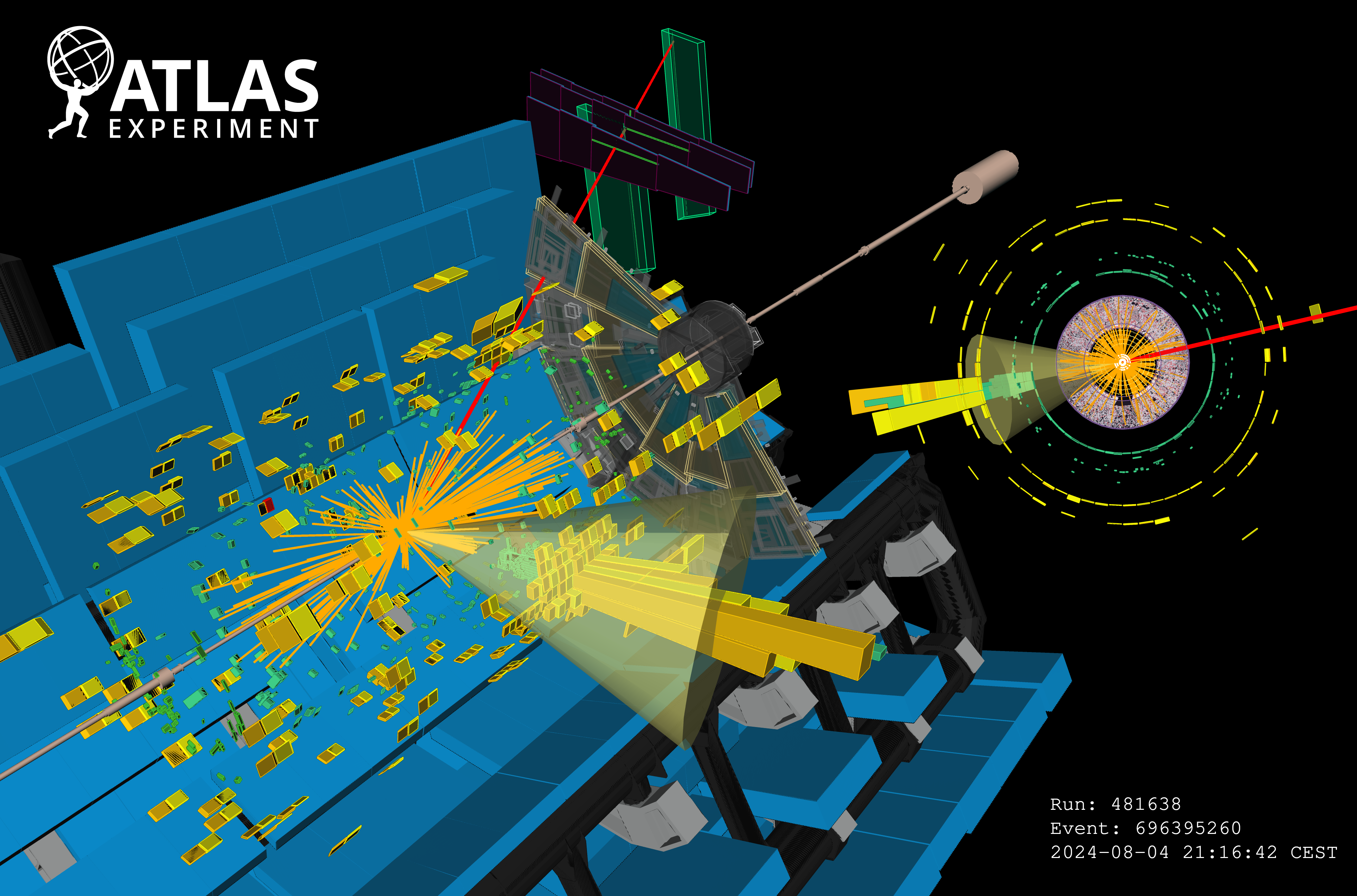
Ultimately, the ATLAS Collaboration recorded two events that strongly resemble the SUEP signatures expected from dark-sector interactions, one of which is shown in the banner event display. However, this event yield is still compatible with Standard-Model background expectations, given that the local significance of the excess is only 1.7 sigma (see Figure 3). Researchers used the data to set limits on the production of scalar mediator particles decaying into SUEPs, excluding cross sections down to 0.05 fb for a mediator mass of 750 GeV. In scenarios where this mediator is identified as the Standard-Model Higgs boson, the analysis restricts its decay probability into SUEPs to approximately 0.2%. These constraints represent a substantial improvement in sensitivity over previous results.
Learn more
- Search for soft unclustered energy patterns containing muons in the final state in proton-proton collisions at 13 TeV with the ATLAS detector (arXiv:2605.20015, see figures)
- Shedding light with jets from the dark side, Physics Briefing, May 2025
- When jets go dark: identifying elusive "dark jets" at ATLAS, Physics Briefing, September 2023
- Not a jet all the way: is dark matter hiding in plain sight? Physics Briefing, May 2023
- CMS Collaboration: Search for soft unclustered energy patterns produced in association with a W or Z boson in proton-proton collisions at 13 TeV (arXiv: 2605.20015)
- CMS Collaboration: Search for Soft Unclustered Energy Patterns in Proton-Proton Collisions at 13 TeV (Phys. Rev. Lett. 133, 191902)