How “odd” are Higgs boson interactions?
27 March 2026 | By
One of the biggest mysteries in physics is why anything exists at all. According to the current understanding of the Big Bang, matter and antimatter should have been produced in equal amounts. Yet the visible Universe today is made almost entirely of matter – so where did all the antimatter go?
The answer may lie in the violation of charge-parity (CP) symmetry. CP symmetry states that the laws of physics should remain unchanged if particles are replaced with their antiparticles and their spatial coordinates are inverted. While CP violation has been observed in quark interactions involving the weak force, the amount predicted by the Standard Model of particle physics is far too small to explain the observed matter-dominated Universe.
At the 2026 Recontres de Moriond conferences, physicists from the ATLAS Collaboration presented new searches for additional sources of CP violation linked to the Higgs-boson interactions with W and Z bosons (carriers of the weak force collectively known as vector bosons). In the Standard Model, this interaction is expected to be CP-even, meaning its interactions conserve CP symmetry. Any evidence of CP-odd contributions would be a game-changer, signaling new physics beyond the Standard Model.
The ATLAS Collaboration has released two new searches for new sources of CP violation linked to Higgs boson interactions with W and Z bosons.

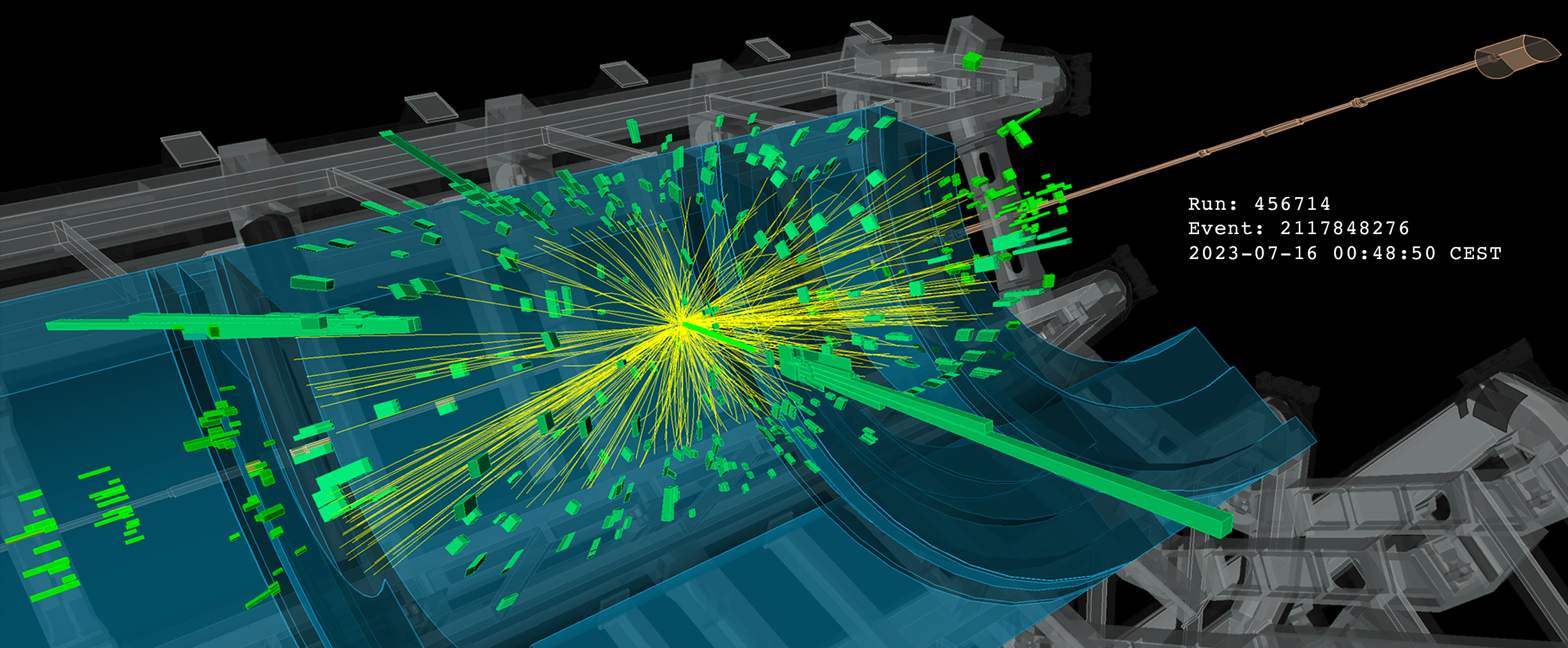
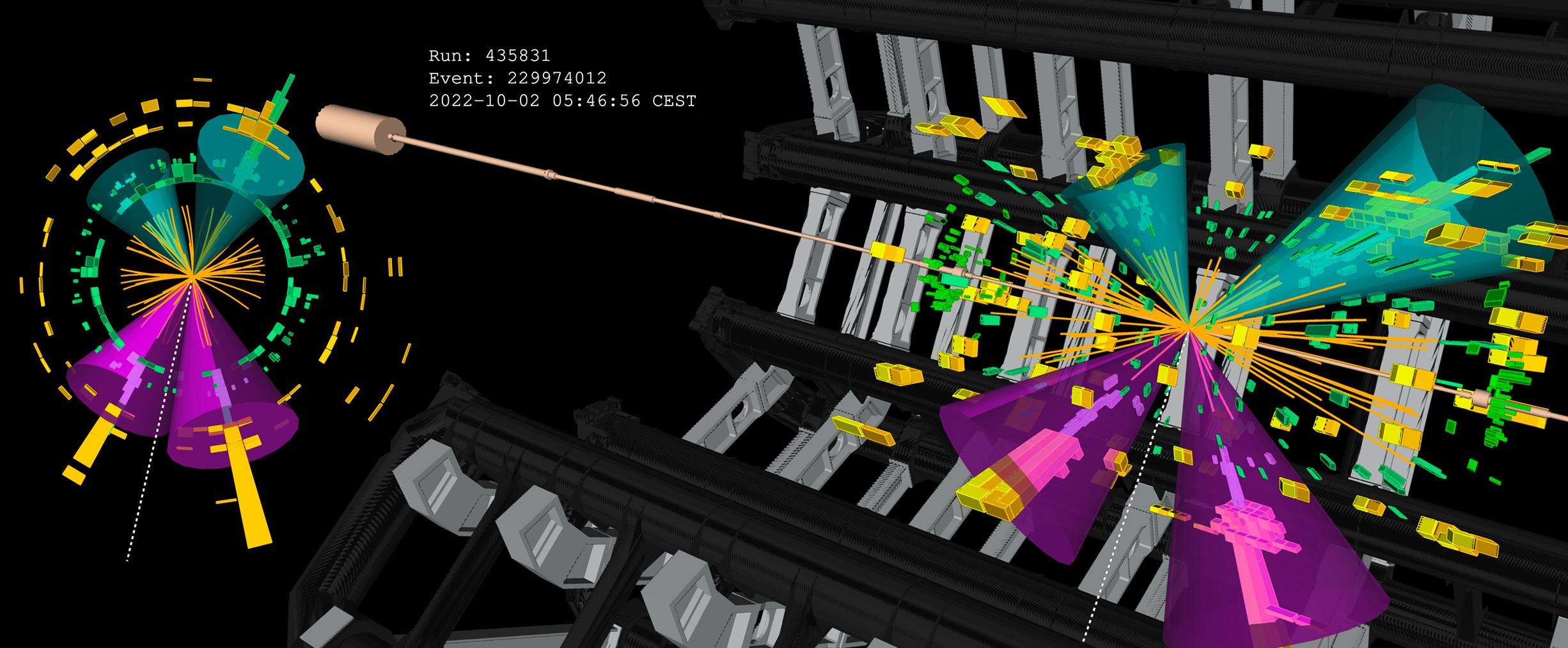
To explore this possibility, ATLAS physicists studied the point where the Higgs boson and vector bosons meet: the HVV vertex. This can be examined in several processes, including vector boson fusion (VBF), where two quarks emit vector bosons that fuse to produce a Higgs boson and leave particle “jets” in opposite regions of the experiment. This distinctive signature makes VBF studies particularly powerful. The HVV vertex can also be studied in associated production (VH), where a Higgs boson is produced alongside a vector boson, and in Higgs-boson decays to a vector-boson pair (see Figure 1).
But how can physicists search for signs of new physics in this interaction? The answer lies in Effective Field Theories (EFTs), which provide a framework to describe how new particles – too heavy to be produced directly at the LHC – could still influence measurements through subtle quantum effects. In this framework, additional parameters modify Higgs-boson interactions and change the shapes of certain observable distributions, such as the angle between the two jets in VBF events. One such parameter is the coefficient cHW̃, which would modify the HVV vertex and introduce CP-violating effects.

In a new analysis, ATLAS physicists combined several previous Run-2 measurements of cHW̃, each using 140 fb-1 of proton-proton collision data at 13 TeV centre-of-mass energy. These include studies of VBF Higgs-boson decays to photons, tau leptons, and W or Z bosons, as well as VH Higgs-boson decays to bottom quarks. Assuming an energy scale (Λ) of 1 TeV for these new physics effects, they set the most stringent limits to date on cHW̃, constraining it between −0.14 and 0.49 at the 95% confidence level (see Figure 2). No significant deviation from the Standard Model was observed. Notably, the combined analysis improved sensitivity by more than 40% compared to the best individual measurement – highlighting the immense value of these collaborative and complementary studies.
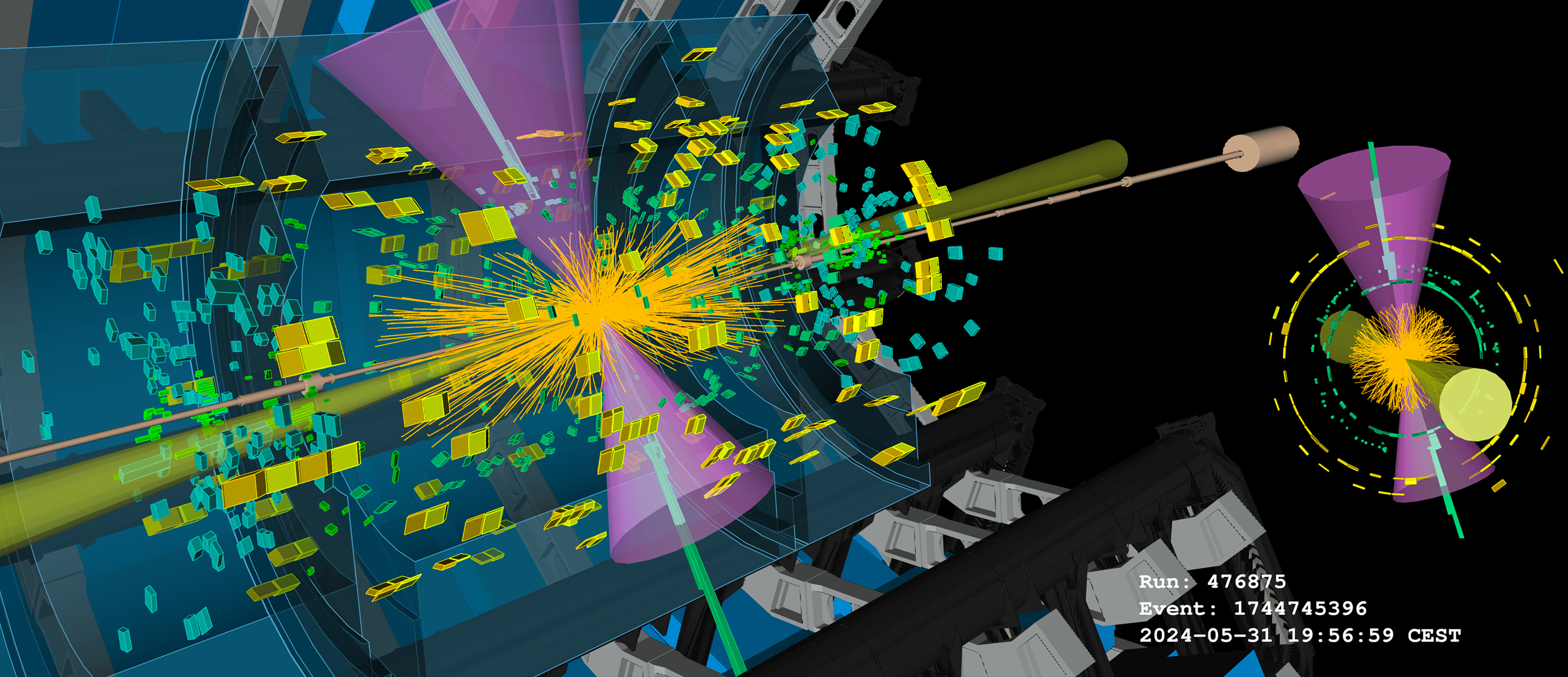
In a parallel effort, the ATLAS Collaboration performed its first search for CP-violating effects in the Higgs sector using LHC Run-3 data (164 fb-1 of proton-proton collision data at 13.6 TeV, collected between 2022 and 2024). The study focused on Higgs-boson decays to two photons – a decay channel that accounts for only 0.2% of Higgs decays, yet leaves a crystal-clear signature allowing for very precise measurements. Benefiting from the larger Run-3 dataset and sophisticated machine-learning techniques to better isolate the Higgs signal, researchers achieved a nearly 40% improvement in sensitivity over the previous ATLAS study of this channel (see Figure 2).
This is the first ATLAS result to rely entirely on the new, high-speed detector simulation AtlFast3. Its success demonstrates that this tool can deliver world-class physics results, marking a significant step towards a more ecologically and economically sustainable computing model for future LHC analyses.
Learn more
- Combination of measurements of CP properties of Higgs boson interactions with vector bosons using Run 2 proton–proton collisions at 13 TeV with the ATLAS detector (arXiv:2603.20117, see figures)
- Search for anomalies in vector-boson fusion production of the Higgs boson in H(→γγ)jj events using 164 fb–1 of proton-proton collision data collected at 13.6 TeV with the ATLAS detector (arXiv:2603.20087, see figures)
- Moriond EW presentation by Lailin Xu: Recent single Higgs measurements with ATLAS