The hunt for quantum black holes ventures into the energy frontier
24 September 2026 | By
One of the deepest puzzles in modern physics is why gravity is so extraordinarily feeble compared with the other fundamental forces – the so-called hierarchy problem. One class of solutions proposes that space has extra dimensions beyond the four we experience, into which gravity alone can spread. This could lead to the formation of short-lived, microscopic "quantum" black holes (QBH) during proton–proton collisions at the LHC.
Unlike astrophysical black holes – which are formed from collapsing stars and are thought to evaporate slowly through Hawking radiation over vast timescales – QBHs are much more confined and would decay almost instantly into just two particles. One of the cleanest QBH decay modes at the LHC produces a lepton-quark pair, characterised by a high-energy lepton recoiling against a “jet” of hadrons in the ATLAS experiment.
Using 164 fb⁻¹ of proton-proton collision data recorded during Run 3 of the LHC (2022–2024) at a record collision energy of 13.6 TeV, the ATLAS Collaboration has performed its most sensitive search yet for QBHs decaying into a lepton and a quark. Although this analysis uses a dataset comparable in size to that of the previous search using Run 2 data (2015–2018), it sets the strongest limits on QBH production to date. This improvement stems from a distinctive feature of QBH production: the production probability rises steeply with the accelerator centre-of-mass energy. The modest increase from 13 TeV in Run 2 to 13.6 TeV in Run 3 boosted the expected signal rate by up to an order of magnitude for the heaviest QBHs considered.
The production cross section of quantum black holes rises steeply with the collider’s centre-of-mass energy, thereby allowing significantly higher signal masses to be studied.
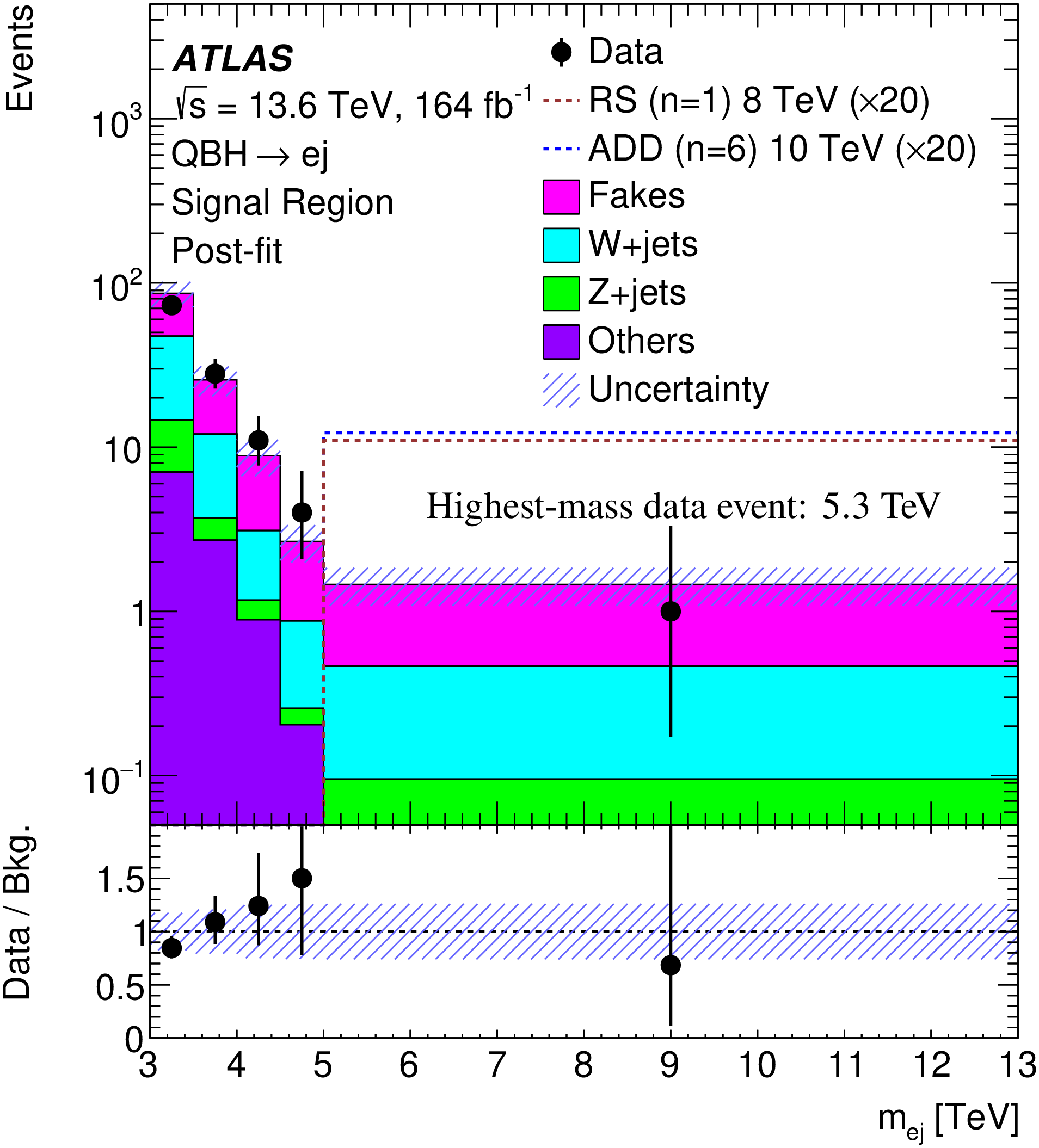
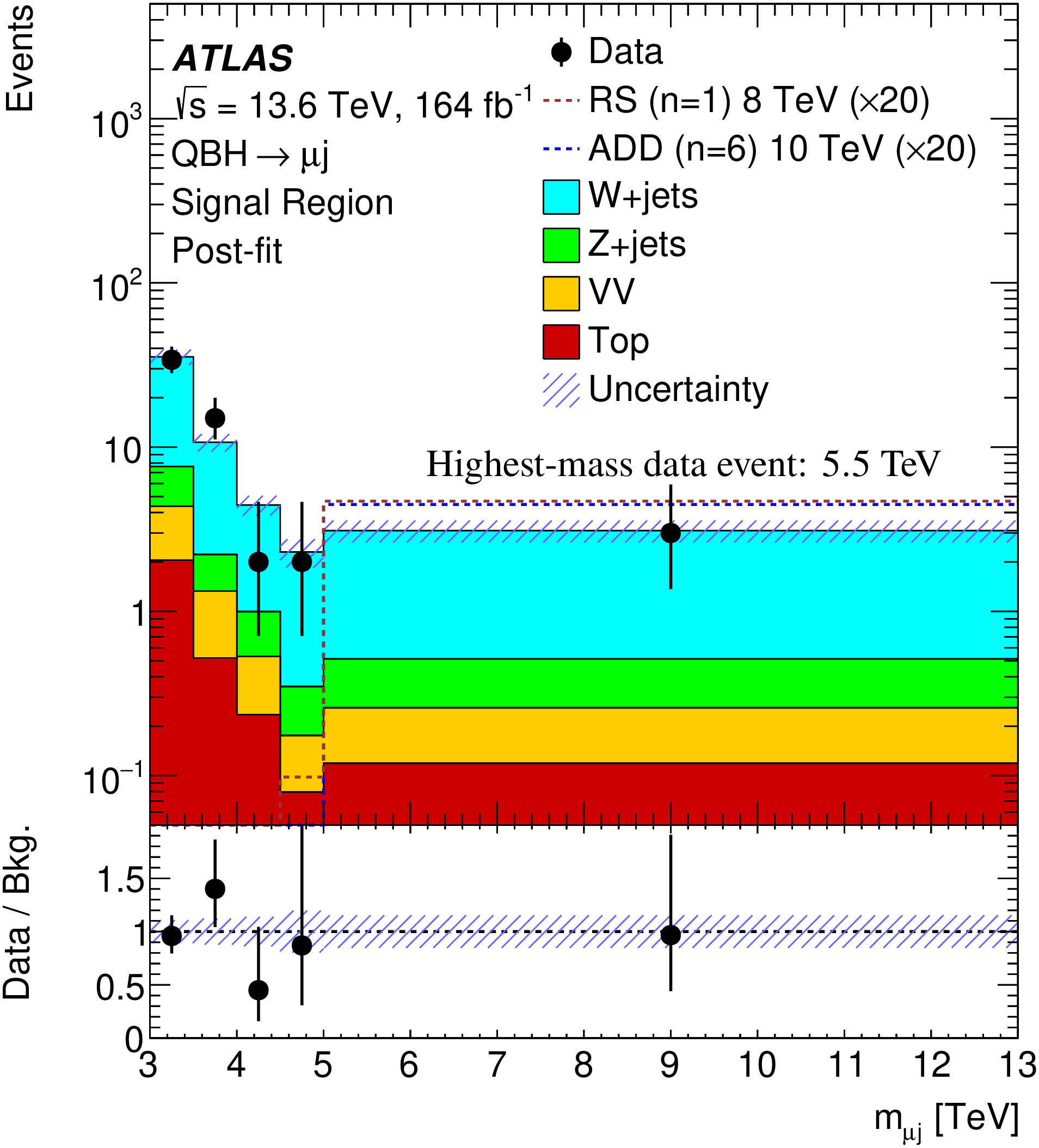
ATLAS researchers looked for an excess of events containing a high-momentum electron or muon and jet, where the combined lepton and jet invariant mass is in the multi-TeV range. Since such signals were previously excluded below 8.6 TeV, they are expected to lie above that, near the very edge of what the LHC can produce. In this region, Standard Model backgrounds are tiny but must be modelled with great care because, even if the signal exists, it must be tiny as well. The team considered the electron+jet and muon+jet channels separately. The electron channel, with its much better resolution at high momentum, achieves nearly three times the sensitivity of the muon channel.
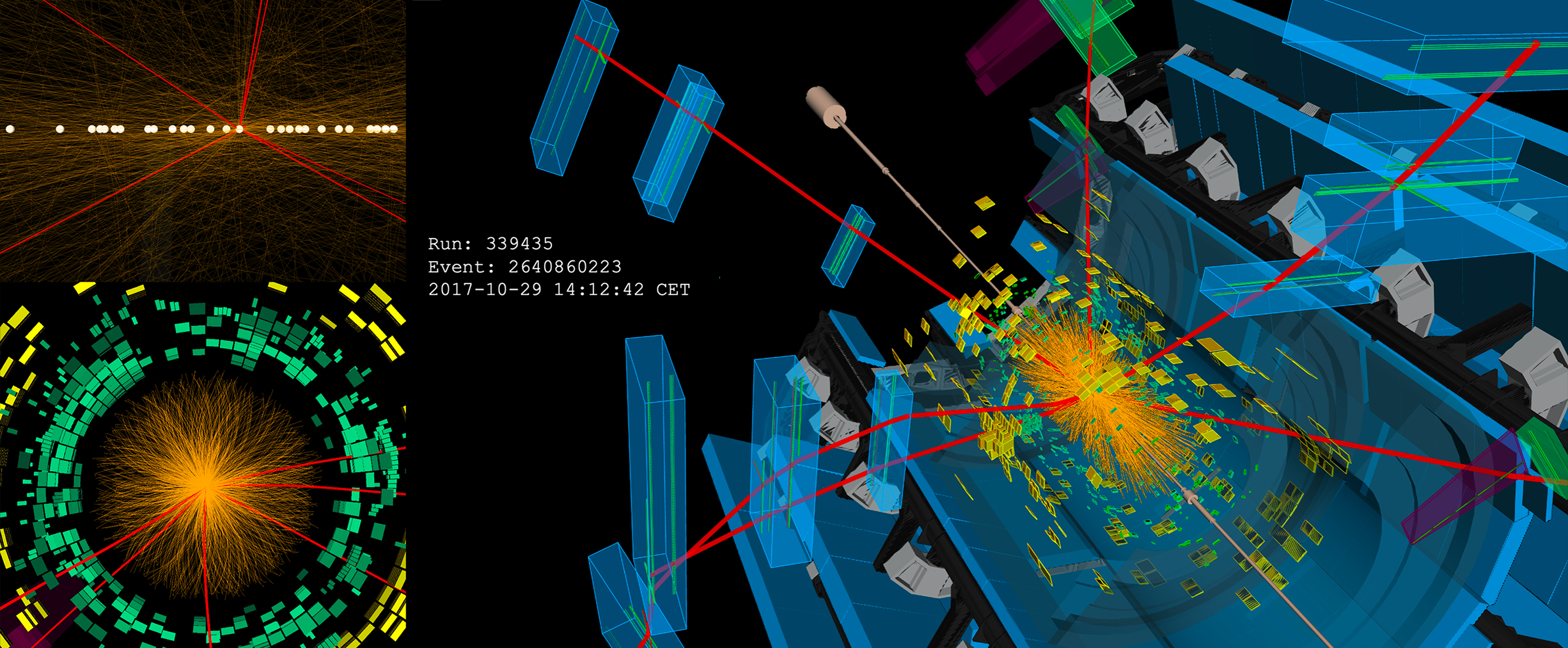
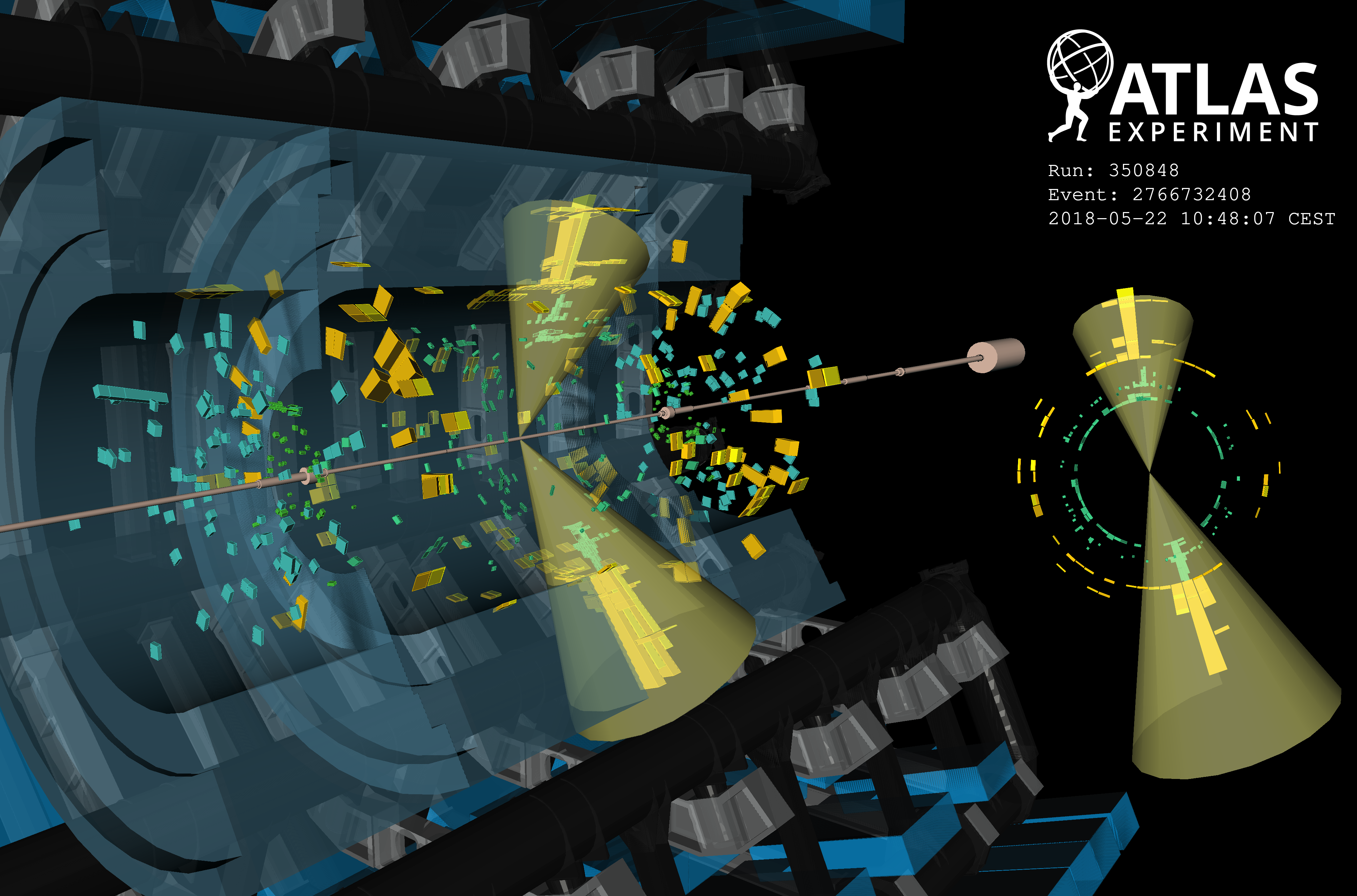
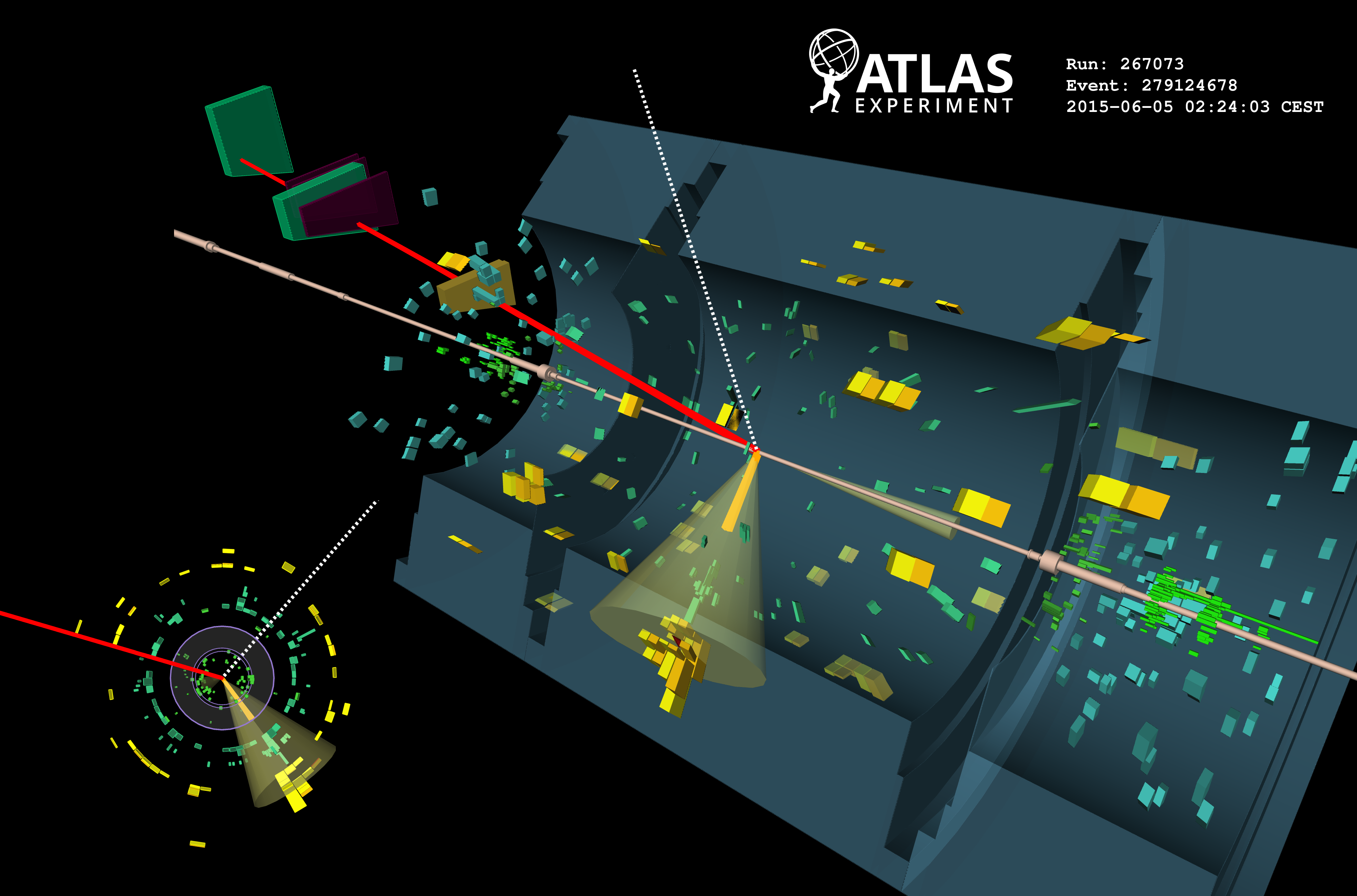
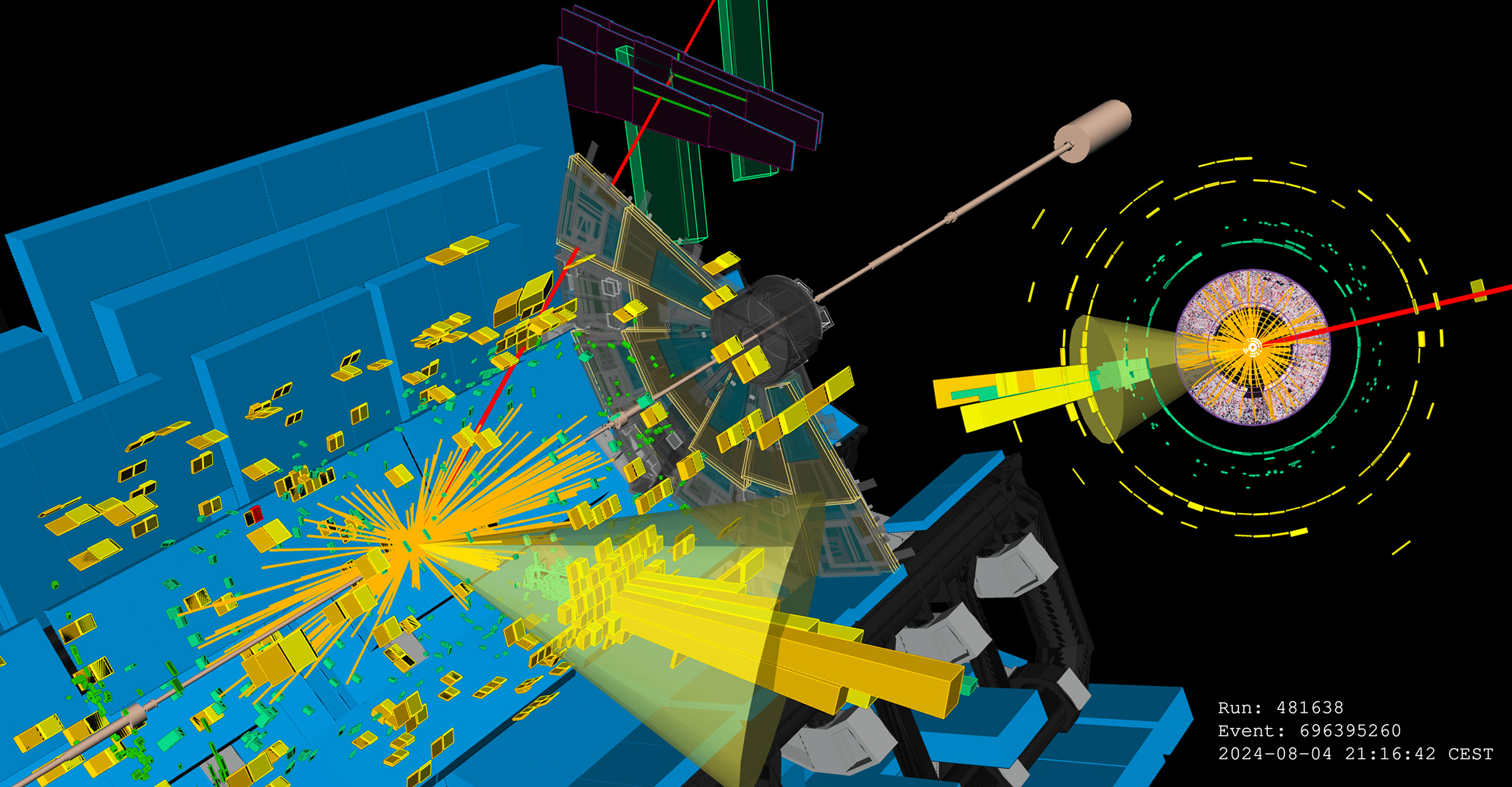
No significant excess above the Standard Model expectation was found in either channel (Figure 1). The highest-mass events recorded reached 5.3 TeV in the electron+jet channel and 5.5 TeV in the muon+jet channel; one such striking event is displayed in the banner image. The ATLAS Collaboration set 95% confidence-level upper limits on the QBH production probability, excluding models with threshold masses up to 9.4 TeV – the world’s best to-date.
This result firmly establishes the ATLAS Collaboration's reach into the multi-TeV frontier, where gravity and quantum mechanics might meet. It also demonstrates a broader lesson: as the High-Luminosity LHC pushes to higher energies and larger datasets, searches like this one will push ever deeper into the unknown.
Explore the interactive event display
Learn more
- Search for quantum black holes in lepton+jet final states using proton-proton collisions at 13.6 TeV with the ATLAS detector (Phys. Lett. B 881 (2026) 140849, arXiv:2604.19495, see figures)
- ICHEP 2026 presentation by Ewan Hill: Searches for Exotic Heavy Resonances with the ATLAS detector
- Search for quantum black hole production in lepton+jet final states using proton-proton collisions at 13 TeV with the ATLAS detector (Phys. Rev. D 109 (2024) 032010, arXiv:2307.14967, see figures)