2024 Thesis Award Winners

ATLAS Year

The ATLAS Thesis Award winners for 2024 are:

See the News Article on the 2024 Awards.

Monte Carlo Simulation

Submitted by Steven Goldfarb on
Sheet Type
Monte Carlo Simulation

Monte Carlo Simulation

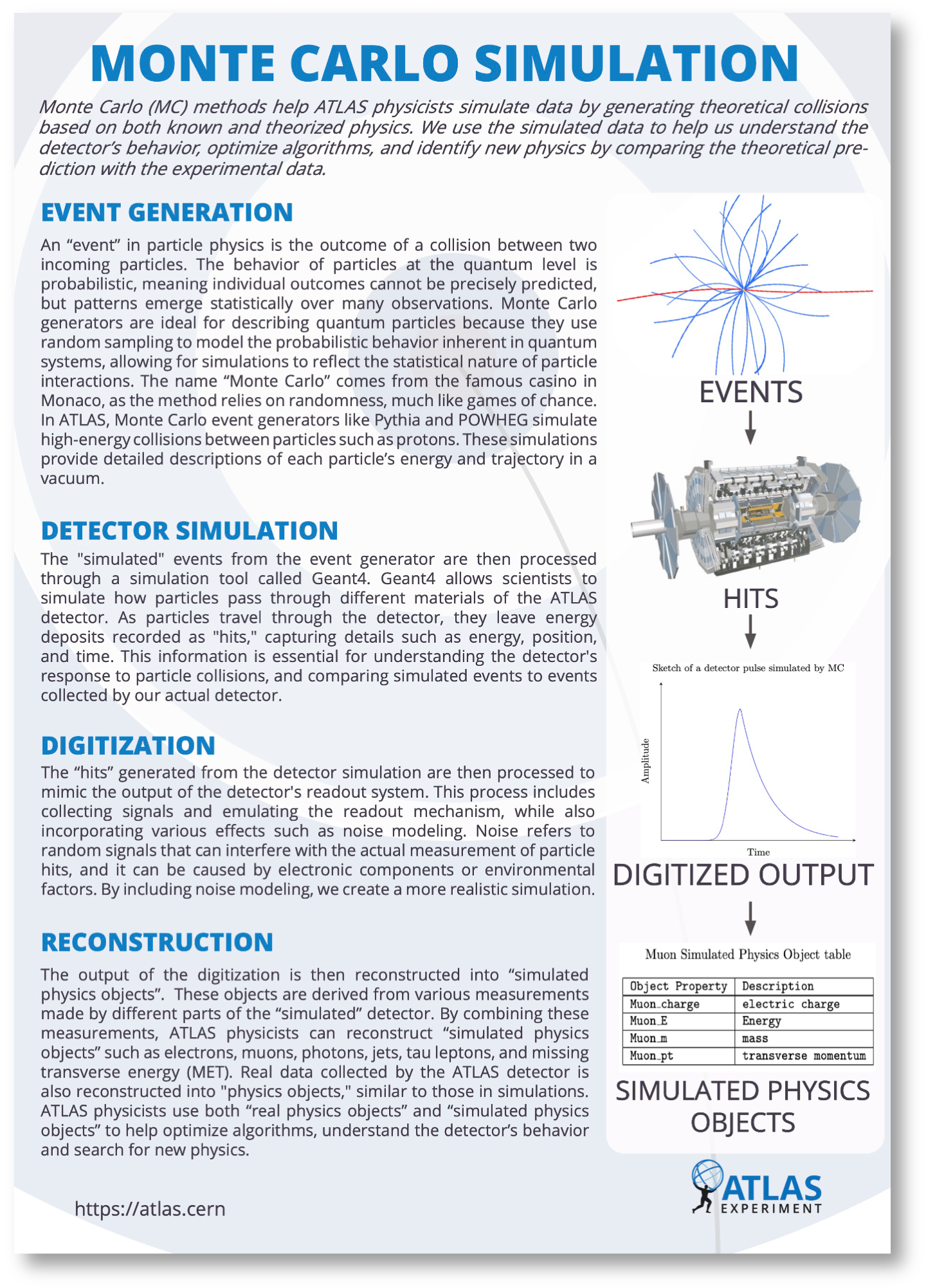
Monte Carlo (MC) methods help ATLAS physicists simulate data by generating theoretical collisions based on both known and theorised physics. We use the simulated data to help us understand the detector’s behaviour, optimise algorithms, and identify new physics.

4-Vectors and Particle Mass

Submitted by Steven Goldfarb on
Sheet Type
4-Vectors and Particle Mass

4-Vectors and Particle Mass

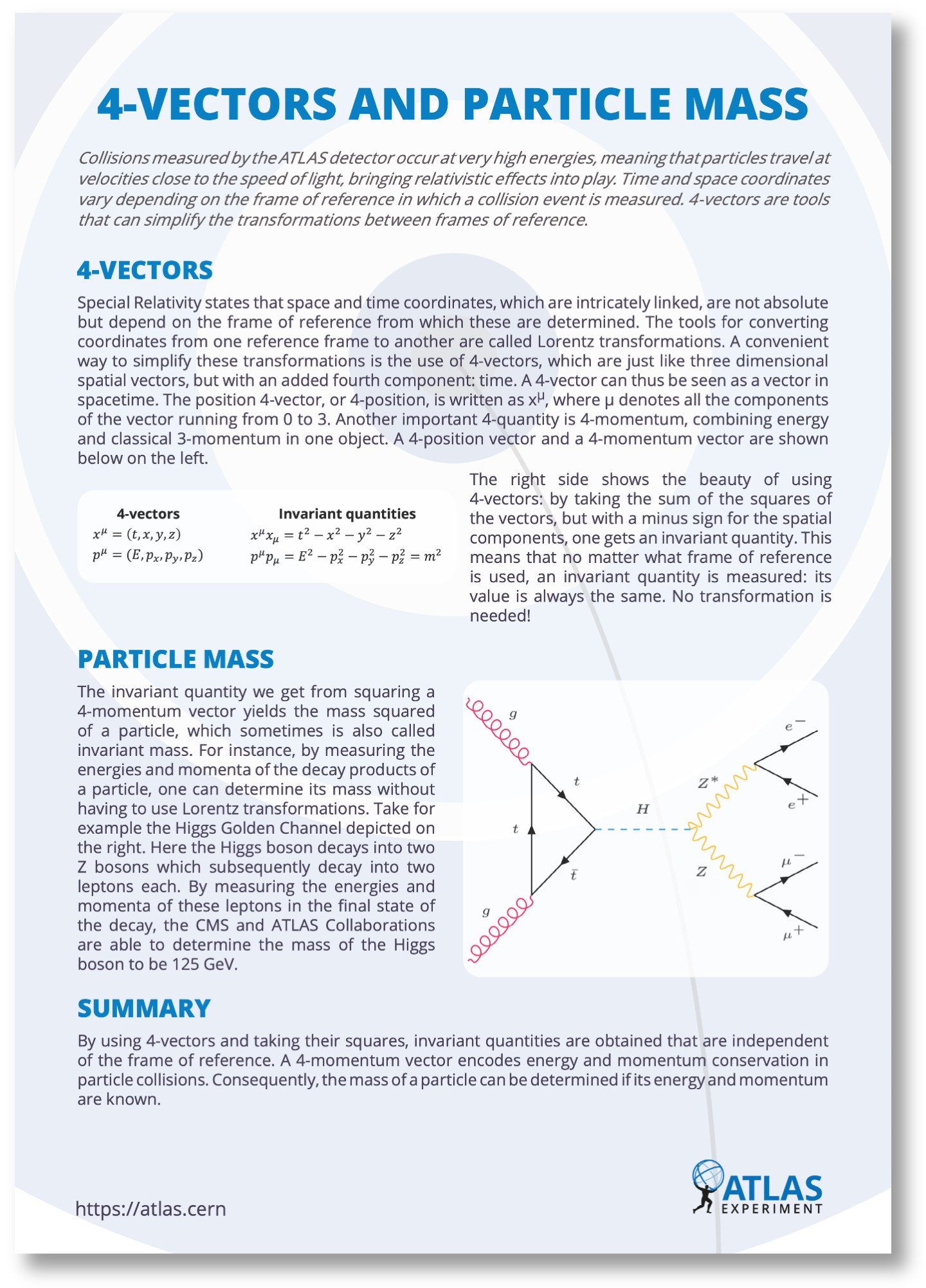
Time and space ­coordinates vary depending on the frame of reference in which a collision event is measured. 4-­vectors are tools that can simplify the transformations between frames of reference.

ATLAS 3D Printed Model

Submitted by Steven Goldfarb on
3d model

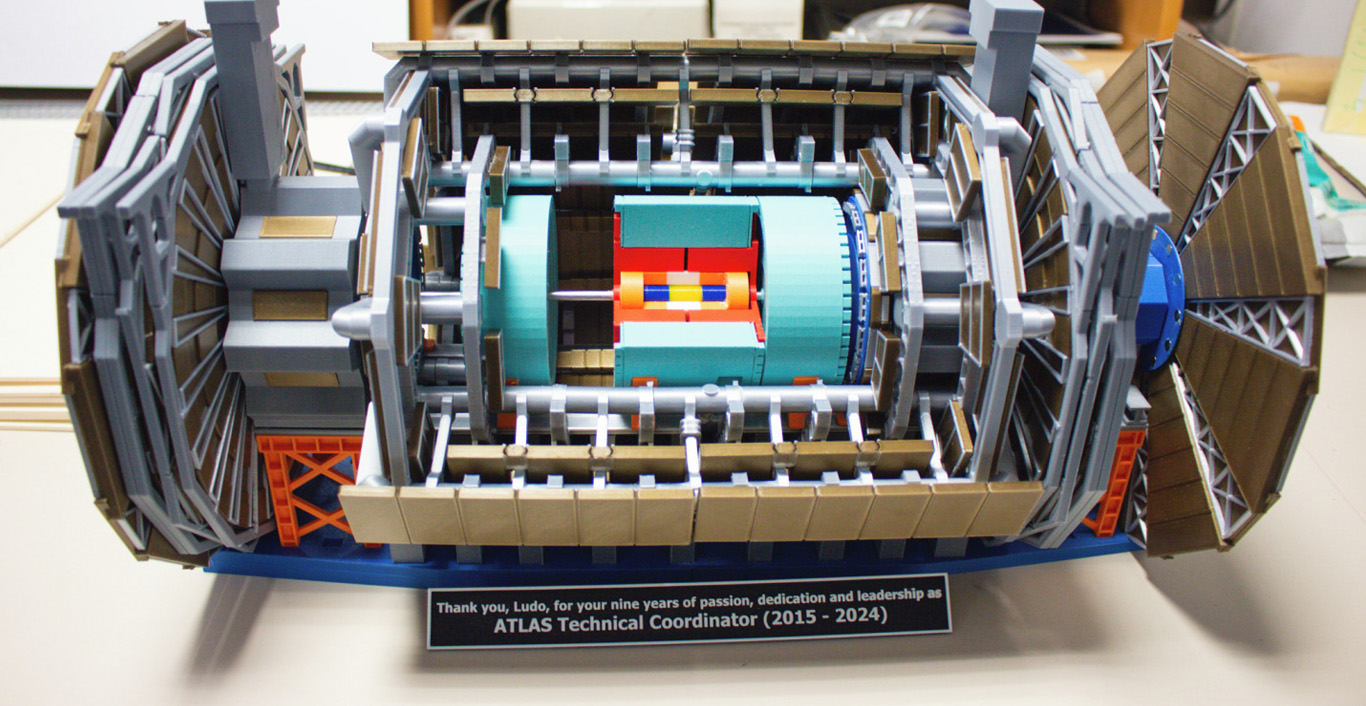
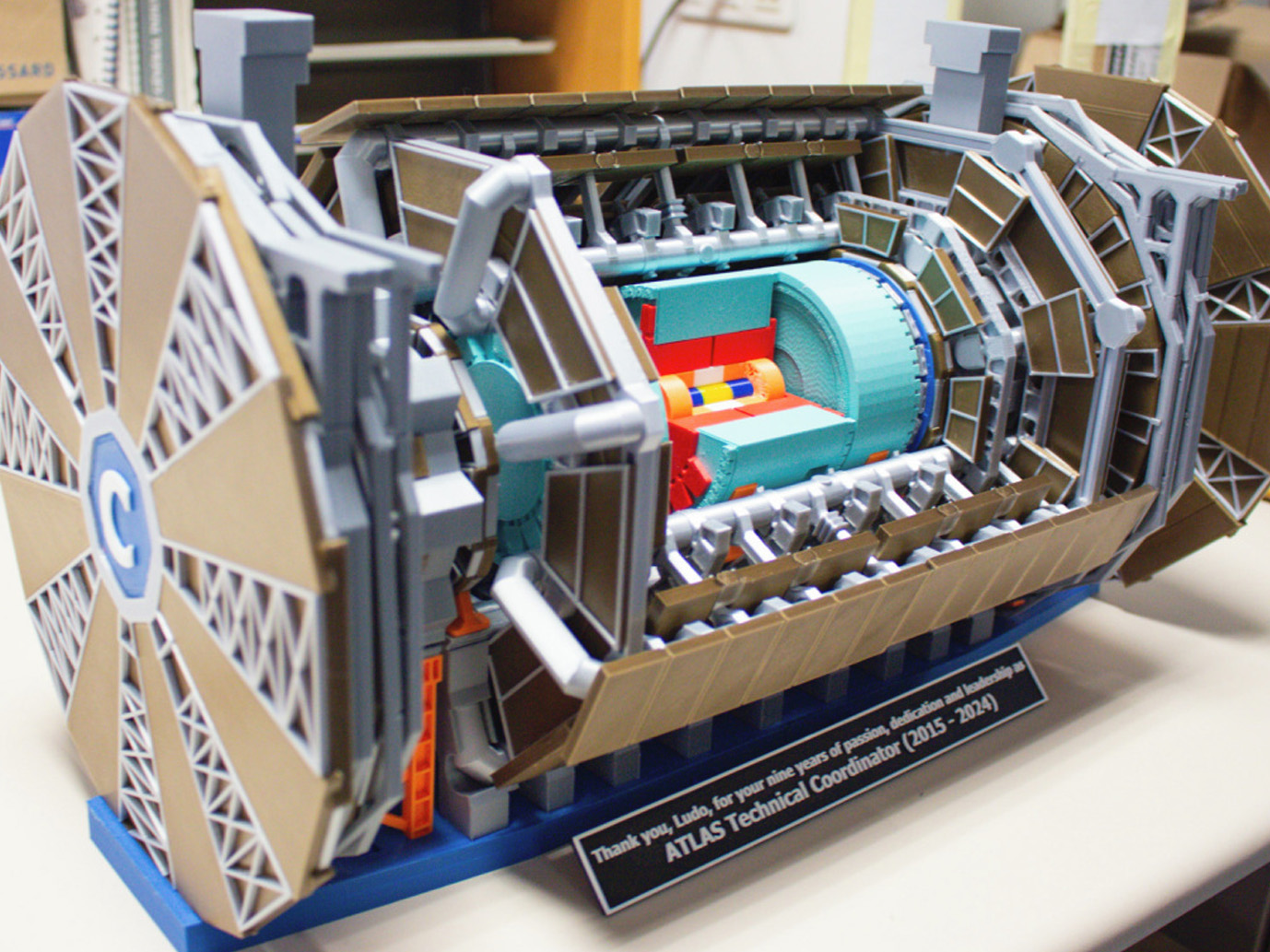
Recreate the iconic ATLAS experiment using 3D printing! This 1:100 scale, highly detailed model was designed by physicist Jan Brajer to capture the complexity and beauty of the experiment. Designed for easy printing, with the detector divided into smaller parts each representing individual detector systems.

Resource Category
2 - Education
Resource Format
Activity
Audience Type
Primary Students
Secondary Students
University Students
Anyone
Tags
detector
Priority
2 - high

ATLAS 3D Printed Model

3D Model

Create your own ATLAS Experiment with 3D Printing

Recreate the iconic ATLAS experiment using 3D printing! This 1:100 scale, highly detailed model was designed by physicist Jan Brajer to capture the complexity and beauty of the experiment. The model is divided into smaller parts, each representing individual detector systems.

Get the files here and start printing!

2024 Outstanding Achievement Award Winners

ATLAS Year

The ATLAS Outstanding Achievement Award winners for 2024 are:

  • Luca Canali (CERN) for outstanding contributions to the ATLAS database infrastructure.

  • Jackson Barr (University College London), Alexander Froch (Albert-Ludwigs-Universität Freiburg), Philipp Gadow (CERN), Dan Guest (Humboldt University Berlin), Nilotpal Kakati (Weizmann Institute of Science), Dmitrii Kobylianskii (Weizmann Institute of Science), Nikita Ivvan Pond (University College London), Samuel Van Stroud (University College London) for outstanding contributions to heavy flavour tagging algorithms based on Graph Neural Networks.

  • Liang Guan (Michigan), Ioannis Mesolongitis (University of West Attica), Michelle Solis (University of Arizona), Aaron White (Harvard University) for understanding the problem of randomly dropping e-links in the NSW and for finding a very effective mitigation for this problem.

  • Jakub Kremer (DESY), Agnieszka Ogrodnik (Charles University), Martin Rybar (Charles University) for outstanding contributions to the Heavy Ions operation and trigger.

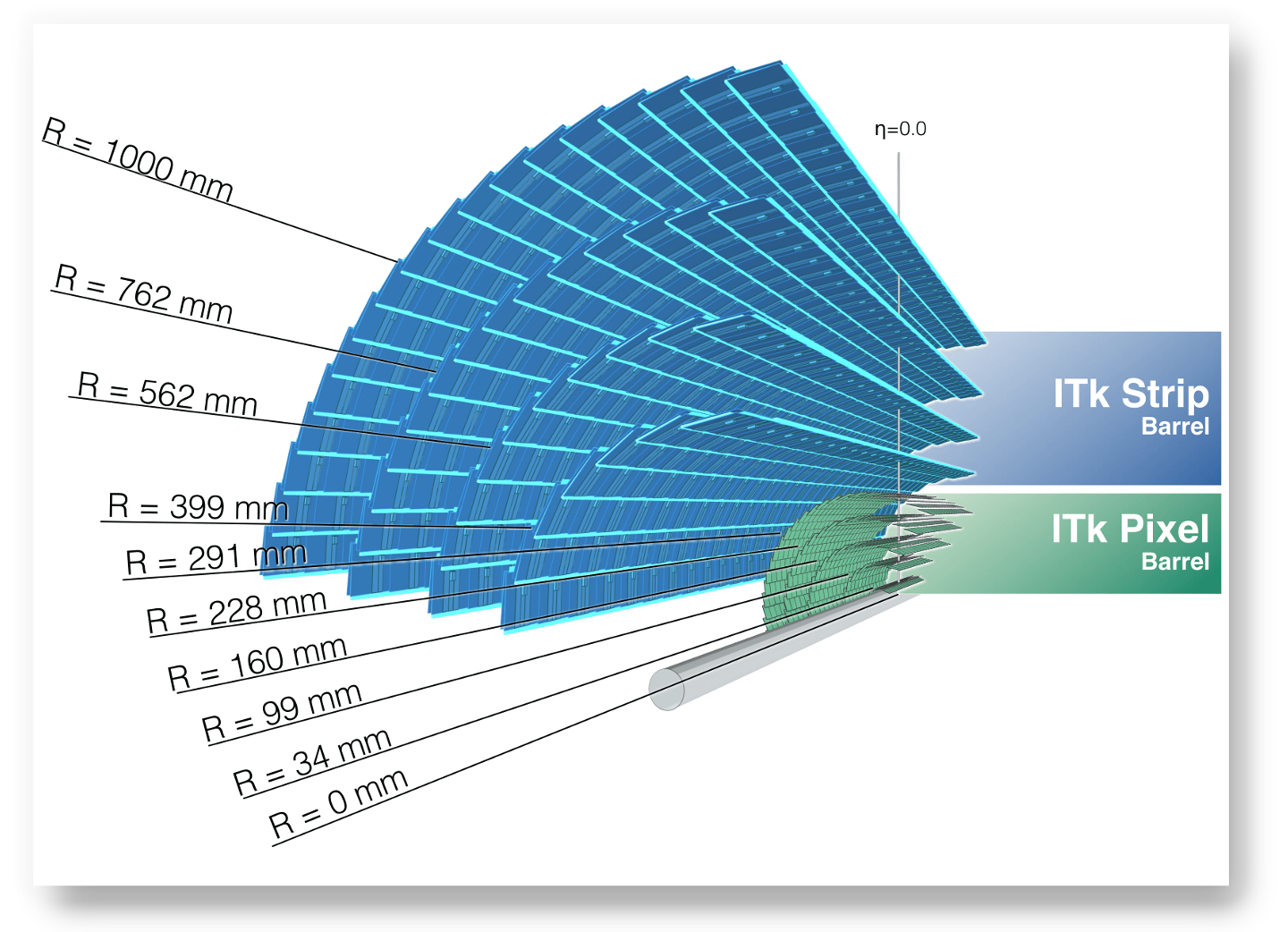
  • Koji Nakamura (KEK), Hideyuki Oide (KEK), Manabu Togawa (KEK) for outstanding contributions to the ITk Pixel project in sensor production, hybridisation and module assembly.

  • Johannes Junggeburth (University of Massachusetts Amherst), Patrick Scholer (Carleton University) for outstanding contributions to the Run 3 muon software.

  • Sara Alderweireldt (University of Edinburgh), Rafal Bielski (University of Oregon), Francesco Giuli (CERN), Ralf Gugel (University of Mainz), Claudia Merlassino (University of Udine), Stefanie Morgenstern (CERN), Gabriel Palacino (Indiana University), Aleksandra Poreba (CERN), Antonia Strubig (Stockholm University), Daniele Zanzi (Albert-Ludwigs-Universität Freiburg) for outstanding contributions to the Trigger operation.

  • Julien Maurer (Bucharest IFIN-HH) for outstanding contributions to the ATLAS prompt reconstruction operation.

  • Anthony Affolder (UC Santa Cruz), Ian Dyckes (Berkeley LBNL), Vitaliy Fadeyev (UC Santa Cruz), Cole Helling (University of British Columbia, Vancouver), Jacob Wayne Johnson (UC Santa Cruz), Matthew Kurth (Beijing IHEP), Masahiro Morii (Harvard University), Peter Phillips (Rutherford Appleton Laboratory), Luise Poley (TRIUMF), Craig Sawyer (Rutherford Appleton Laboratory) for outstanding contributions to the identification of the vibrational source of cold noise on ITk Strip modules.

See the News Article on the 2024 Awards