Natural Units
Natural Units
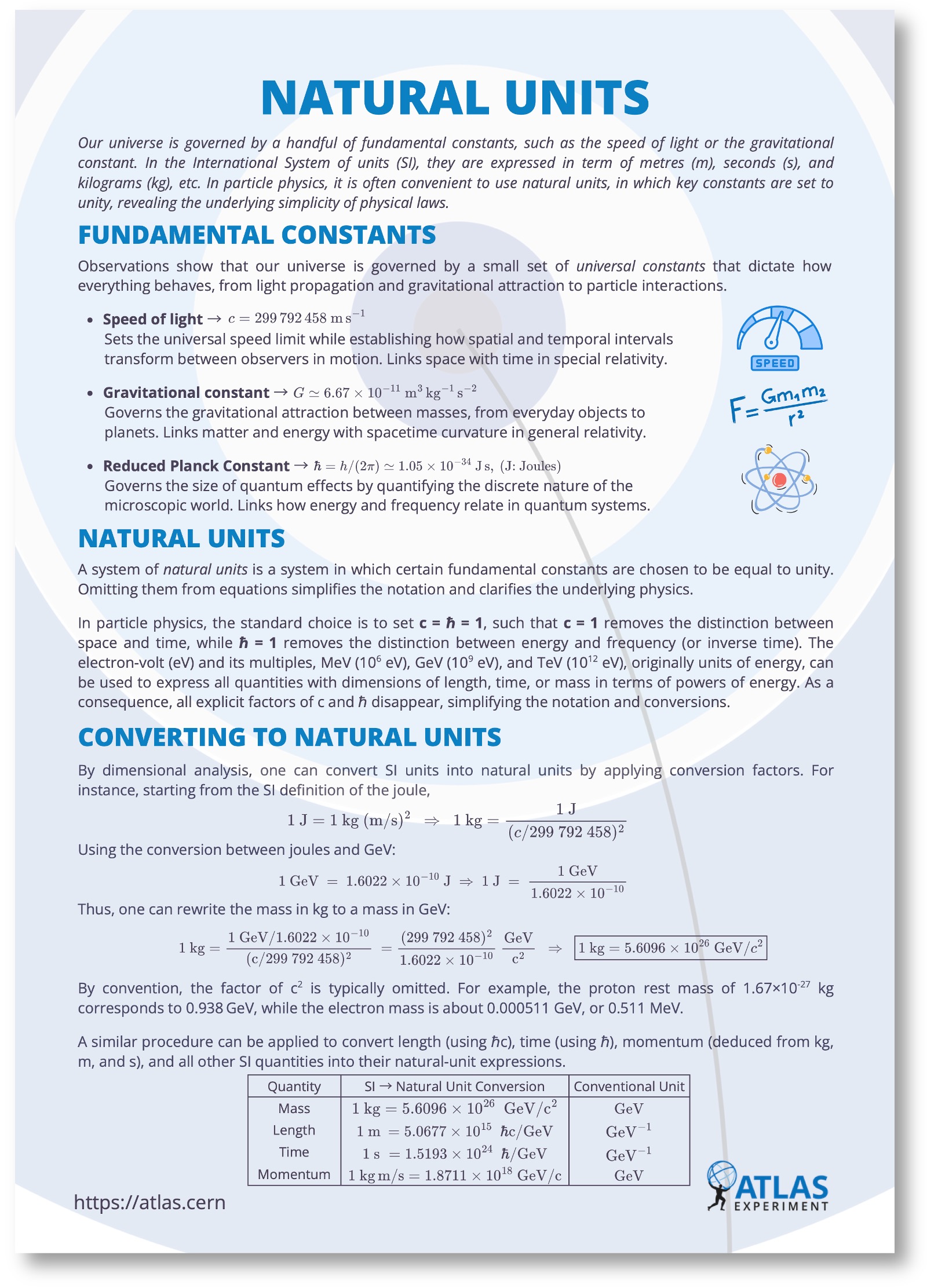
Our universe is governed by a handful of fundamental constants, such as the speed of light or the gravitational constant. In particle physics, it is often convenient to use natural units, in which key constants are set to unity, revealing the underlying simplicity of physical laws.
2025 Thesis Award Winners
The ATLAS Thesis Award winners for 2025 are:
- Takumi Aoki (University of Tokyo, Japan): Search for the Slepton Cascade Decay using Final States with Opposite or Same Sign Three Leptons in the LHC-ATLAS experiment
- Kartik Deepak Bhide (Albert-Ludwigs-Universität Freiburg, Germany): Illuminating the tau lepton with the ATLAS detector: A study of ɣɣ→ττ scattering in ultra-peripheral Pb+Pb collisions, and constraints on the tau lepton electromagnetic dipole moments
- Antonio Jesús Gómez Delegido (Universitat de València, Spain): Unveiling the Higgs sector with tau-leptons: differential cross-section measurements and searches for lepton-flavor-violating decays with the ATLAS detector
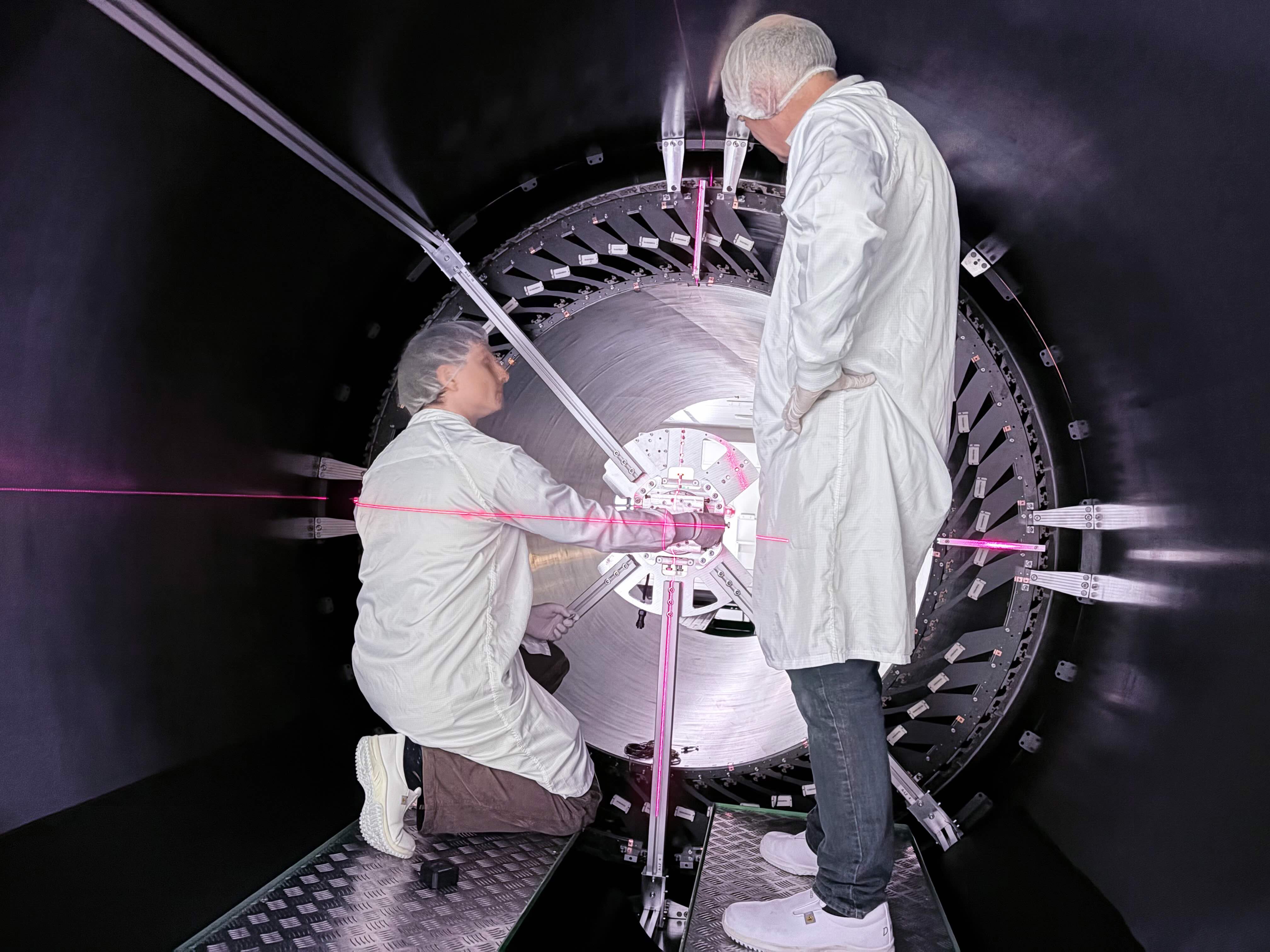
- Simon Florian Koch (University of Oxford, UK): Measurements of ATLAS, measurements with ATLAS: Construction and characterisation of ITk Pixel detector structures, and a search for leptoquarks in events with di-tau final states
- Elena Mazzeo (Università degli studi di Milano, Italy): Shedding light on Higgs boson self-interactions in the bbɣɣ channel. Photon and b-jet calibrations, and searches for Higgs boson pairs with the ATLAS experiment
- Ryan Roberts (University of California, Berkeley and Lawrence Berkeley National Laboratory, USA): Observation of Four-Top Quark Production and Measurement of Off-shell Higgs Boson Interactions with Top Quarks with ATLAS
- Stephen Nicholas Swatman (University of Amsterdam, Netherlands): Charged Particle Track Reconstruction Algorithms for Massively Parallel Systems
- Elliot Watton (University of Glasgow and Rutherford Appleton Laboratory, UK): Measurement of the top-quark mass with the ATLAS detector using ttbar events with a boosted top quark
See the News Article on the 2025 Awards.
ATLAS Open Virtual Visit
Join us for an Open ATLAS Virtual Visit, hosted by ATLAS physicists Christian Appelt and Despoina Sampsonidou.
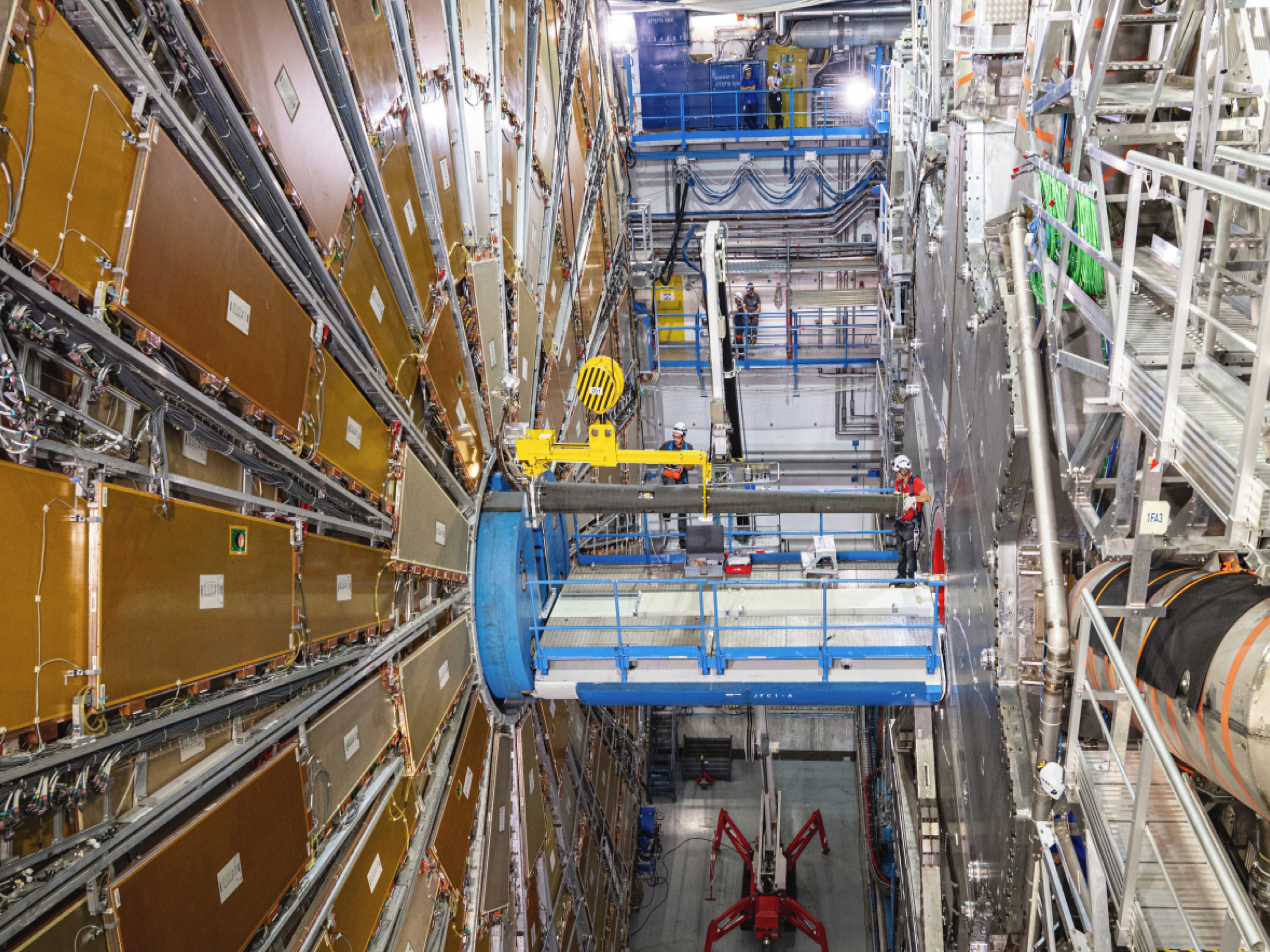
This live virtual event will take you inside the ATLAS cavern at CERN, offering a rare opportunity to see the ATLAS detector up close before the cavern is closed for LHC operation. From 100 meters underground, the hosts will guide you around one of the world’s largest and most sophisticated scientific instruments.
Pile-Up
Pile-Up
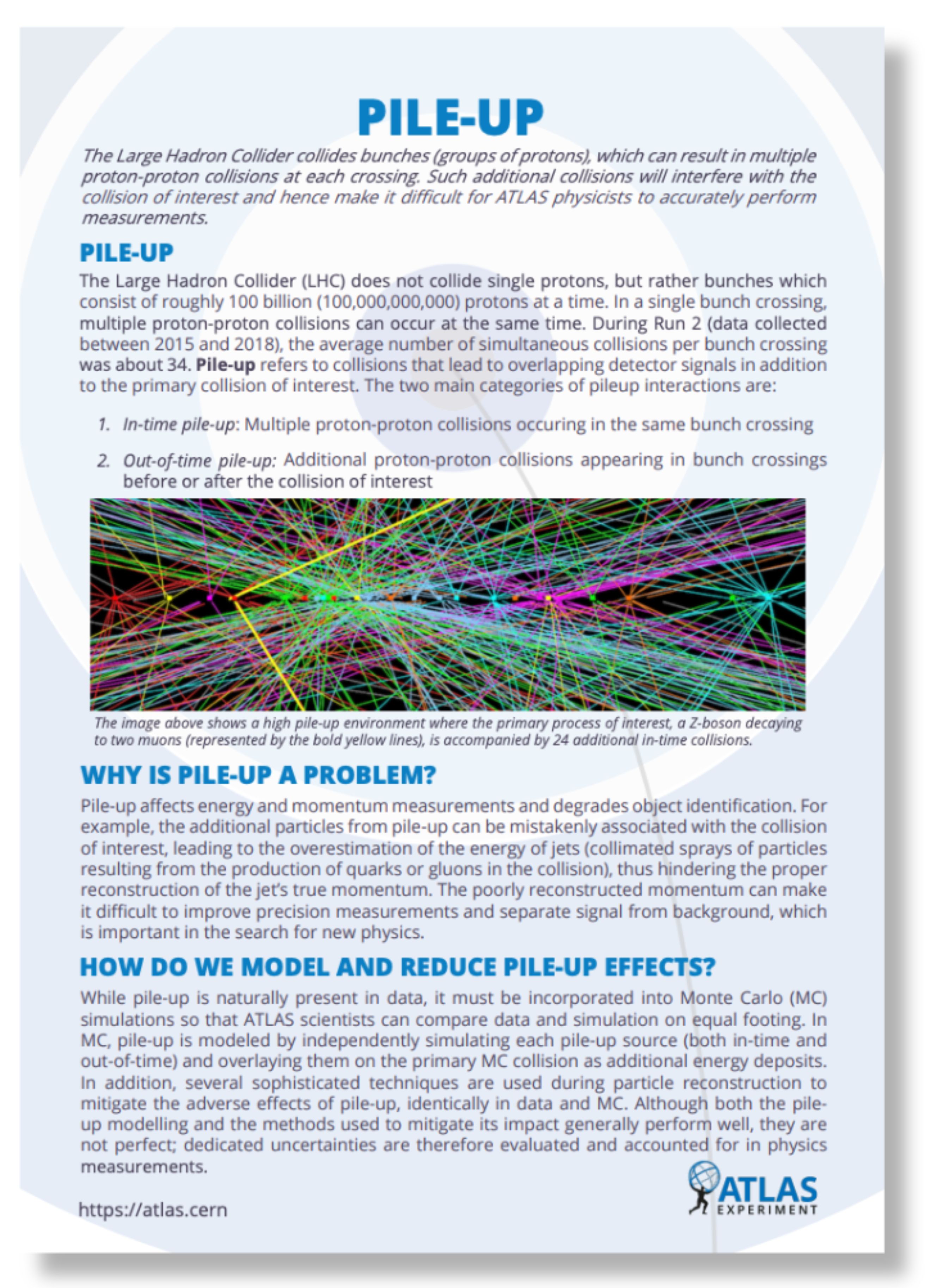
The LHC collides bunches (groups of protons), which can result in multiple proton-proton collisions at each crossing. Such additional collisions are called pile-up.
ATLAS Coordinate System
The ATLAS coordinate system allows scientists to accurately and consistently describe how particles travel through the detector.