DeParTing from tradition: AI sharpens quark vs gluon tagging
30 July 2026 | By
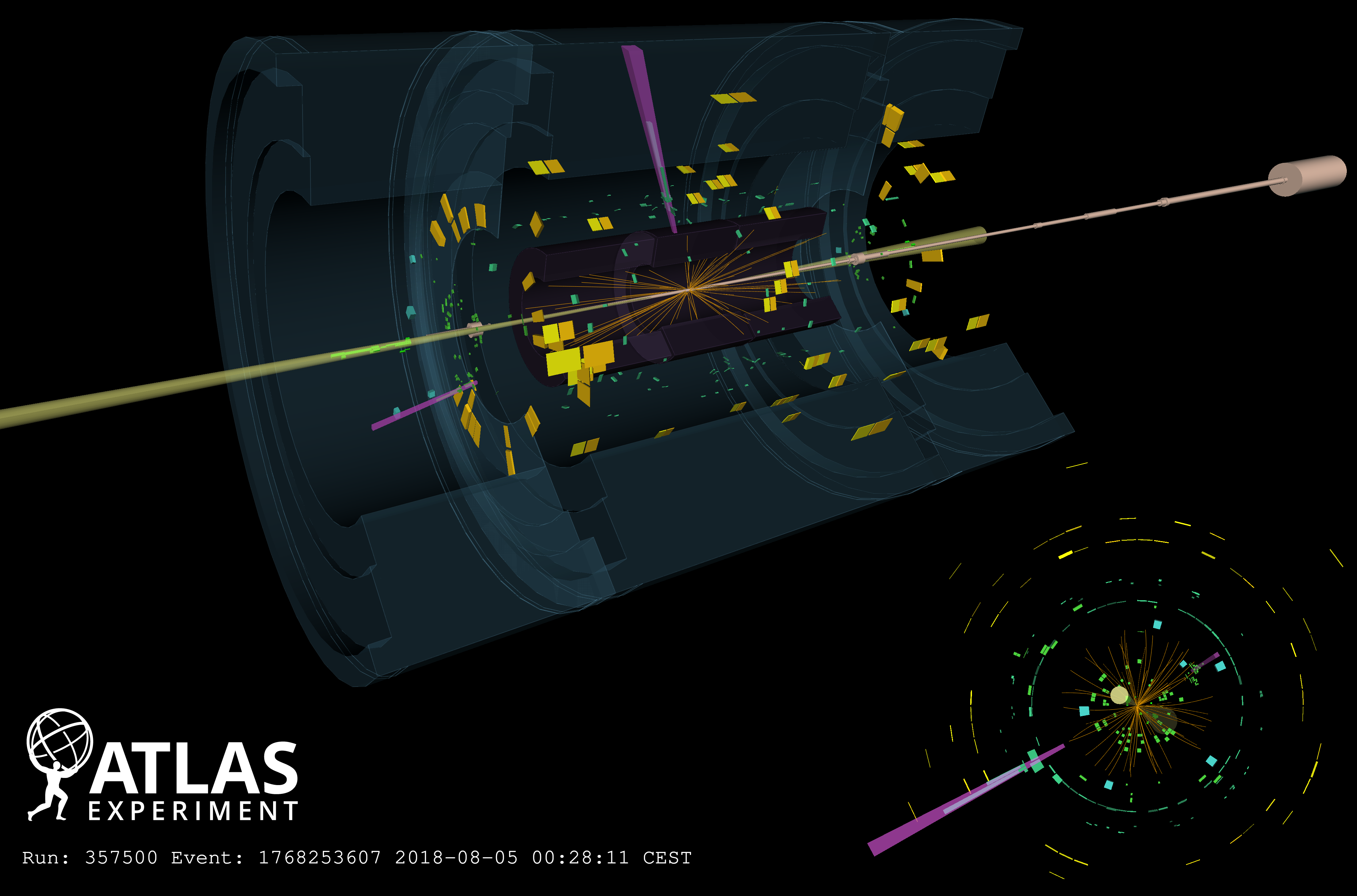
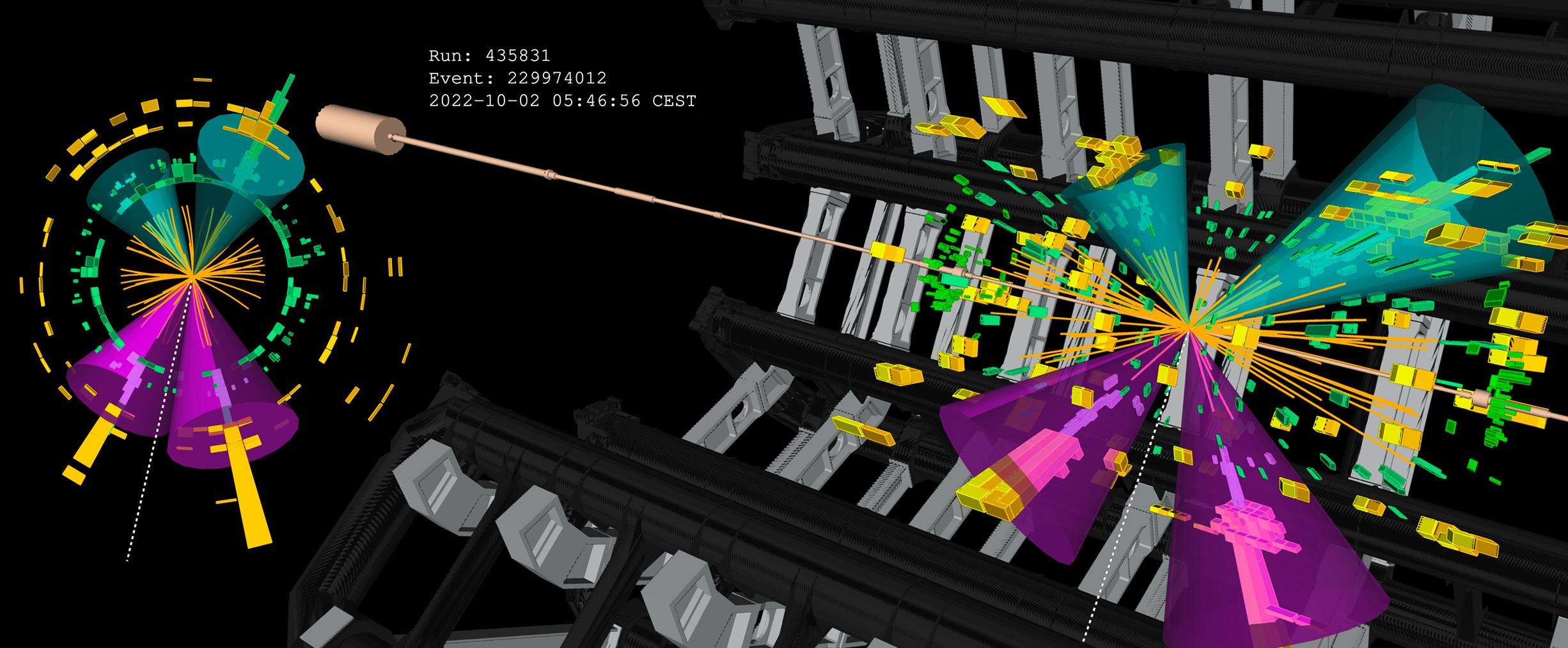
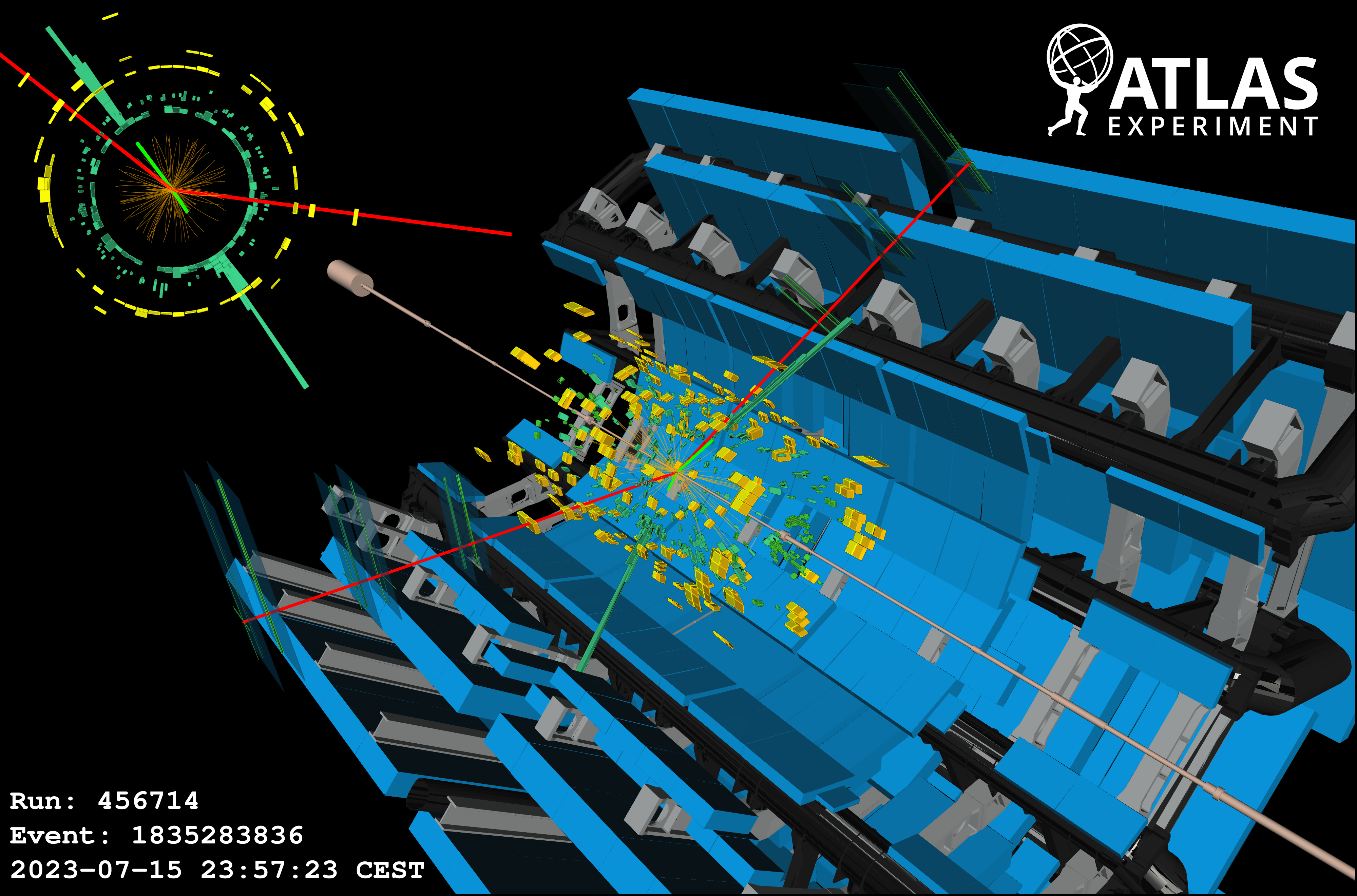
Quarks and gluons are the most common particles produced in the ATLAS experiment – and some of the hardest to tell apart. When produced in collisions at the Large Hadron Collider (LHC), they instantly dress themselves in a spray of hadrons known as a jet. At first glance, these jets can seem nearly identical. Look closer, however, and small but persistent differences emerge.
Gluon jets tend to be wider, busier and more uniform in how they share their energy among their constituents. Quark jets, by contrast, are typically narrower and more focused. Those small differences have a big impact. Distinguishing between quark and gluon jets is essential for many ATLAS measurements, from studies of the Higgs boson, notably produced via vector-boson fusion with associated quark jets, to searches for new particles that preferentially decay into quarks, as well as precision measurements that rely on accurate jet-energy calibration.
The ATLAS Collaboration has now introduced DeParT, a new quark/gluon discriminator (or “tagger”) built on the same transformer architecture that powers today's most familiar AI tools. Previous ATLAS quark/gluon taggers reduced each jet to a handful of summary variables, like its width or charged-particle multiplicity, before inputting them into a neural network for classification. DeParT skips that step and examines the jet directly. Using information about the jet's constituent particles – including momenta, angular position and and their relationship with each other – it decides for itself which features most effectively distinguish quark jets from gluon jets.
DeParT was trained on more than 100 million simulated jets and achieves sensitivity across an unusually wide phase space. It can identify differences between quark and gluon jets with transverse momenta as low as 20 GeV, where the two types of jets look most alike because they carry few constituent particles. It is also able to identify jets that fly out almost parallel to the LHC beam pipe, where detector information is sparse.
DeParT joins a wave of transformer-based tools now reshaping how the ATLAS Collaboration reconstructs and identifies the signals recorded by the experiment.
Knowing how well DeParT performs in simulation is one thing; knowing how well it performs on real data is another. Measured jets, of course, don't come stamped with "quark" or "gluon". To get around this, ATLAS researchers harnessed a feature of Standard Model multijet production: up and down quarks dominate at high momenta. As a result, jets emerging closer to the beam pipe (with higher pseudorapidity) are statistically more quark-like, while central jets contain a larger fraction of gluon jets. Treating these samples as different mixtures of quark and gluon jets allowed researchers to "unmix" them, extracting the underlying tagger-score distributions directly from data (Figure 1).


Two demixing methods were used: the established matrix method, which relies on simulation to set the quark and gluon fractions in each sample; and the new jet topics method, a technique originally proposed for collider physics in 2018 and introduced here for the first time at ATLAS. Similar to how the “topics” of a text arise directly from the text itself, the jet topics method determines the quark and gluon fractions directly from data, with only minimal reliance on simulation. Both methods gave consistent results, but the jet topics approach reduced systematic uncertainties by up to a factor of 2 in some regions of phase space (Figure 2).
At a working point that selects 50% of quark jets while rejecting up to 95% of gluon jets, correction factors used to account for differences between data and simulation land between 0.88 and 1.30 for quark jets and between 0.61 and 1.05 for gluon jets, where a value of 1 corresponds to perfect agreement between data and simulation. The associated uncertainties range from ten to several tens of percent depending on momentum and pseudorapidity. Run 2 and Run 3 results agree within their uncertainties, demonstrating that DeParT behaves consistently across data-taking conditions and detector upgrades.
DeParT joins a wave of transformer-based tools now reshaping how the ATLAS Collaboration reconstructs and identifies the signals recorded by the experiment. Alongside GN2 for heavy-flavour tagging, these new tools provide a sharper view of one of the LHC’s most ubiquitous signatures and expand the sensitivity of the many future analyses that will depend on them.
Learn more
- Performance and efficiency of a transformer-based quark/gluon jet tagger in the ATLAS experiment (Submitted to EPJC., arXiv:2512.03949, see figures)
- Performance and calibration of quark/gluon-jet taggers using 140 fb⁻¹ of proton-proton collisions at 13 TeV (Chin. Phys. C 48 (2024) 023001, arXiv:2308.00716, see figures)
- Constituent-Based Quark Gluon Tagging using Transformers with the ATLAS detector (ATL-PHYS-PUB-2023-032).
- Metodiev & Thaler, On the Topic of Jets: Disentangling Quarks and Gluons at Colliders (Phys. Rev. Lett. 120, 241602 (2018), arXiv:1802.00008)
- ICHEP26 presentation by A. Sopio: Classifying hadronic objects in ATLAS with ML/AI algorithms
- BOOST26 presentation by Samuel Jankovych: Calibration of a Transformer-Based Quark/Gluon Tagger in ATLAS
- ATLAS enters a new era of jet flavour tagging – powered by AI, Physics Briefing, July 2025