High-Luminosity ATLAS

Upgrading the experiment for the HL-LHC Era (2030–2041)

After years of foundational discoveries, the ATLAS Experiment is preparing for its most ambitious phase yet: the High-Luminosity Large Hadron Collider (HL-LHC or HiLumi LHC) upgrade. Scheduled to run from 2030 to 2041, the HL-LHC will dramatically increase the collider's intensity, or “luminosity”. Around 200 proton-proton collisions are expected every time the proton beams cross, providing immense statistical power to explore the structure of matter and its fundamental interactions.

The ATLAS Experiment will be transformed with next-generation detector technologies in order to record data in this dense collision environment. Across ATLAS institutes around the world, researchers have spent years designing, constructing and testing the next generation of detector technologies that will now begin making their way to CERN for installation. Highlights of the upgrade activities can be found below.

General HL-LHC resources:

HL-ATLAS
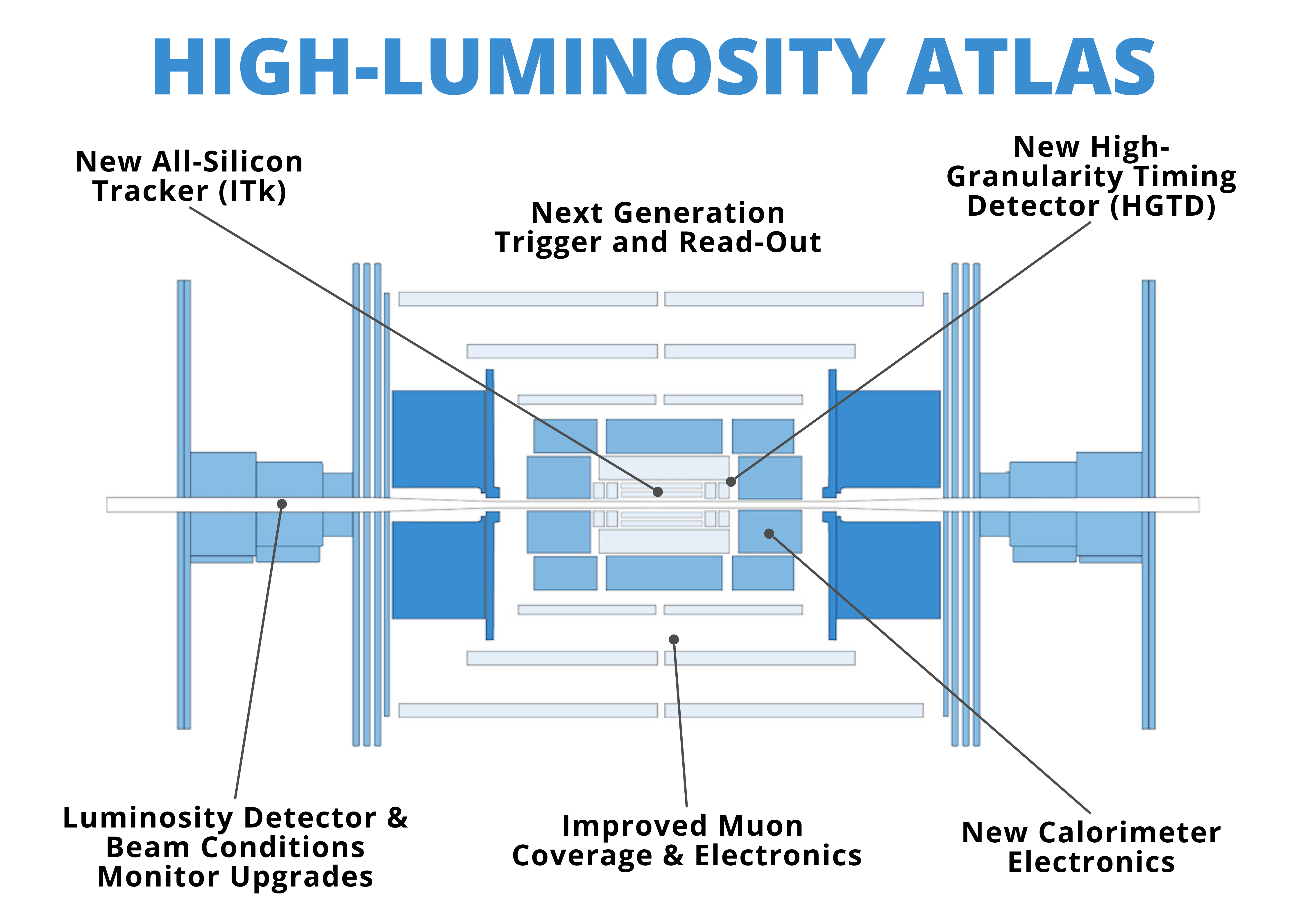
Overview of upgrade projects underway at the ATLAS experiment during the LS3 (Long Shutdown 3) upgrade period. (Image: CERN)

The New All-Silicon Inner Tracker (ITk)

Sitting at the heart of the upgraded ATLAS experiment will be the new Inner Tracker (ITk) — a massive, all-silicon tracking system designed to map the trajectories of charged particles with micrometre precision.

The tracker is split into two specialized systems to handle different tracking requirements: the ITk Pixel detector, operating just 33 mm from the HL-LHC beam, and the ITk Strip detector, which surrounds the Pixel detector over a volume. This combination of dense, high-resolution pixel tracking and extended strip coverage provides the massive increase in granularity needed to isolate individual particle paths out of the dense HL-LHC collision environment.

Key Numbers

  • 13 square metres of silicon pixel detector with over 5 billion readout channels
  • 165 square metres of silicon strip detector with 60 million readout channel

Learn more

ATLAS,ITk,tracker,Detectors
Staves are the building blocks of the ATLAS Inner Tracker (ITk) Strip Barrel. Here, members of the ITk team conduct a test insertion of a stave into the detector's barrel at CERN. (Image: P. Traczyk/CERN)

High-Granularity Timing Detector

The new High-Granularity Timing Detector (HGTD) adds a crucial fourth dimension to particle tracking: time.

When hundreds of collisions occur at once, particle tracks can overlap and appear to come from the same point. By measuring the arrival time of charged particles with picosecond precision, the HGTD separates tracks using tiny differences in timing, suppressing pile-up and helping identify particles from the collision of interest.

HGTD

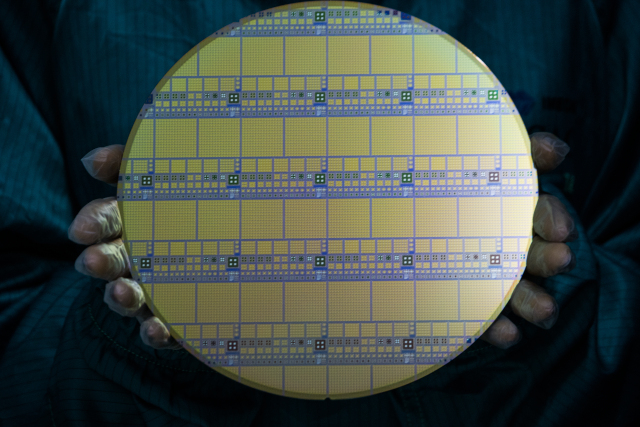
Low-Gain Avalanche Detector (LGAD) sensors for the ATLAS High-Granularity Timing Detector.

The HGTD consists of two 2-metre-diameter disks mounted on either side of the new ITk. It uses ultra-thin Low-Gain Avalanche Diode (LGAD) silicon sensors to deliver the timing precision needed to distinguish particles separated by just a few tens of trillionths of a second.

Key numbers

  • 50 µm thin silicon sensors
  • 3.6 million readout channels
  • 6.4 m² of silicon sensors
  • 30 to 50 picoseconds of timing resolution per track

Learn more

Next-Generation Trigger and Data Acquisition

With the HL-LHC pushing collision rates to unprecedented levels, the ATLAS Trigger and Data Acquisition (TDAQ) system is evolving to keep pace through next-generation electronics and cutting-edge computing architectures.

A new hardware-based trigger relies on modern, large-scale Field Programmable Gate Arrays (FPGAs) to run advanced filtering algorithms in real time. This system will perform the initial event selection, preserving events that are interesting for study while reducing the data rate. The software-based High-Level Trigger (HLT) is also being restructured to utilise multi-threaded frameworks, allowing it to efficiently process computationally heavy tasks like real-time particle tracking.

Key numbers

  • 1 MHz first-level hardware trigger rate, 10 times higher than LHC era
  • 10 kHz of refined data passed to storage
  • 3 to 5 times more data volume than previous runs

Learn more

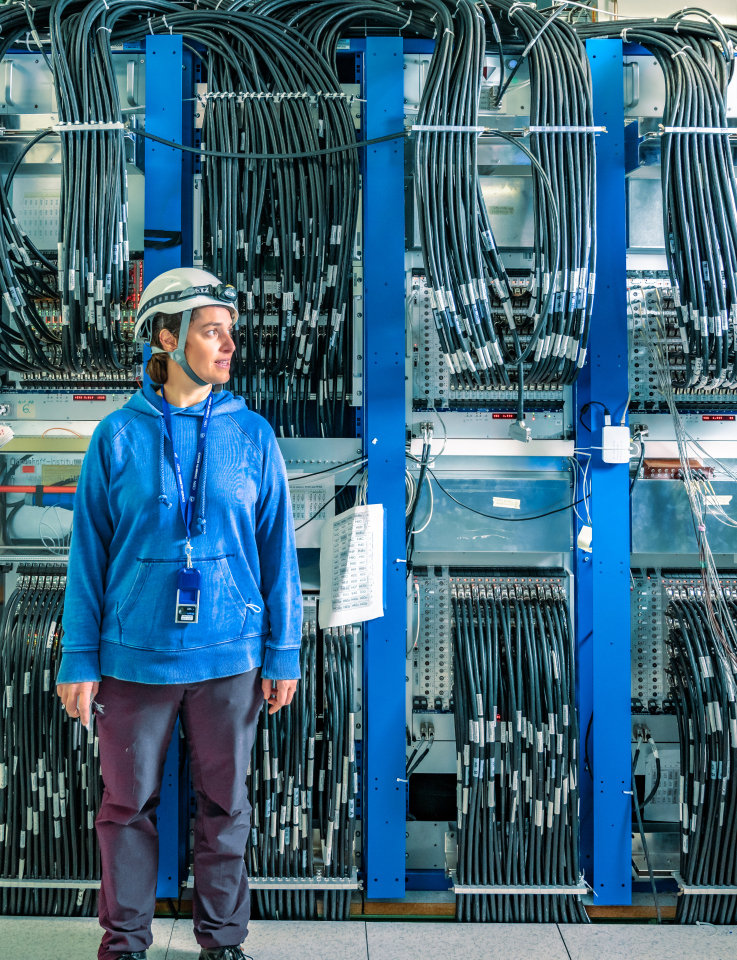
Member of the ATLAS trigger group (Silvia Franchino) in front of the trigger racks located in a service hall adjacent to the ATLAS experiment cavern. (Image: N. Caraban Gonzalez/CERN)

Upgrading Legacy Detectors

Many of the legacy detectors of the ATLAS experiment will continue to play a vital role in the High-Luminosity LHC era through extensive upgrades with new detector systems, state-of-the-art electronics, and enhanced radiation tolerance.

smdt
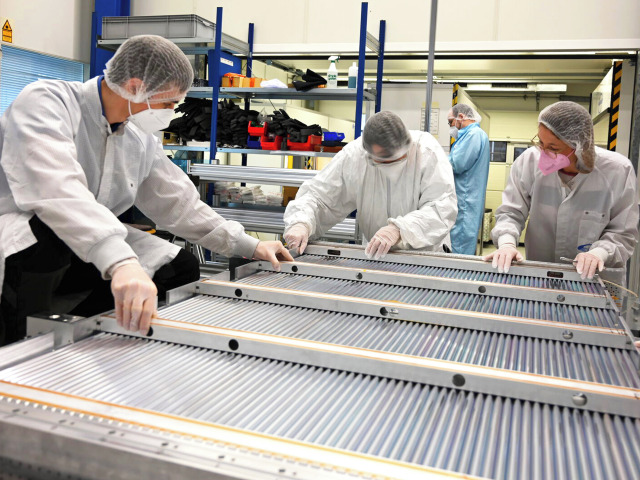
Assembly of a new small Muon Drift Tube (sMDT) to be added to the ATLAS Experiment's Muon Spectrometer.

New resistive plate chambers (RPC) in the inner layer of the barrel muon spectrometer, partly accompanied by new small-diameter monitored drift tubes, will improve the fast online muon acceptance. Further, new on-detector and off-detector electronics will be added to the calorimeters and muon systems to accommodate the higher trigger rates and enhance overall performance. These upgrades will also improve the radiation hardness of the experiment.

Precise knowledge of the luminosity is key for the ATLAS physics programme. ATLAS will also upgrade the LUCID (Luminosity Cherenkov Integrating Detector) detector, a luminometer that is sensitive to charged particles produced at the interaction point. In the forward region, the Zero-Degree Calorimeter, which is particularly important for determining the centrality in heavy-ion collisions, is also being redesigned for HL-LHC running.

Key numbers

  • 40 MHz high-precision readout from new calorimeter electronics

Learn more

More Upgrade Multimedia

Testing,Milestones,Technology,Detectors,ATLAS
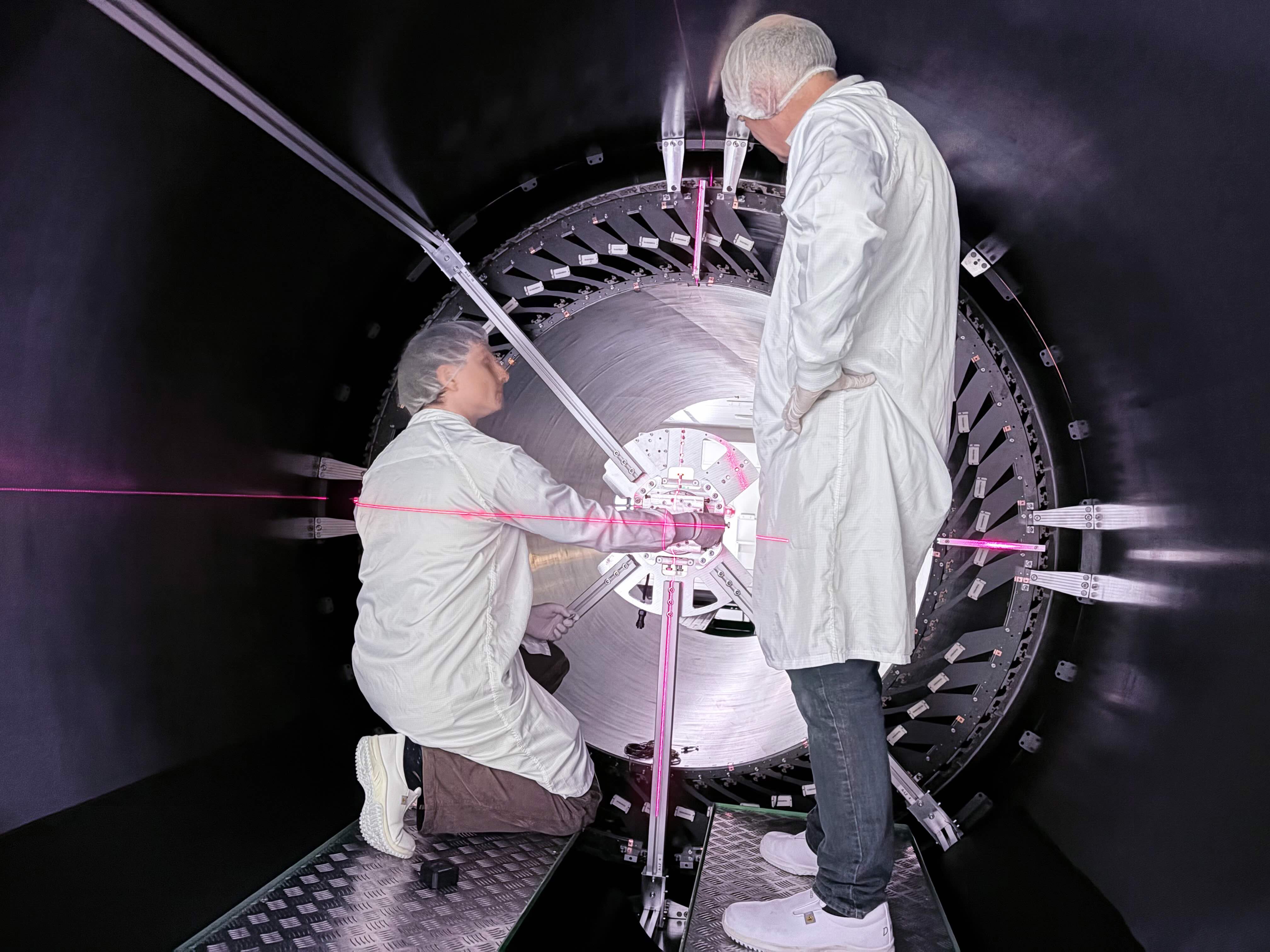
Alignment check in the Inner Tracker (ITk) barrel prior to the practice insertion of an ITk Strips stave. (Image: A. Barr/ATLAS Collaboration)
ATLAS
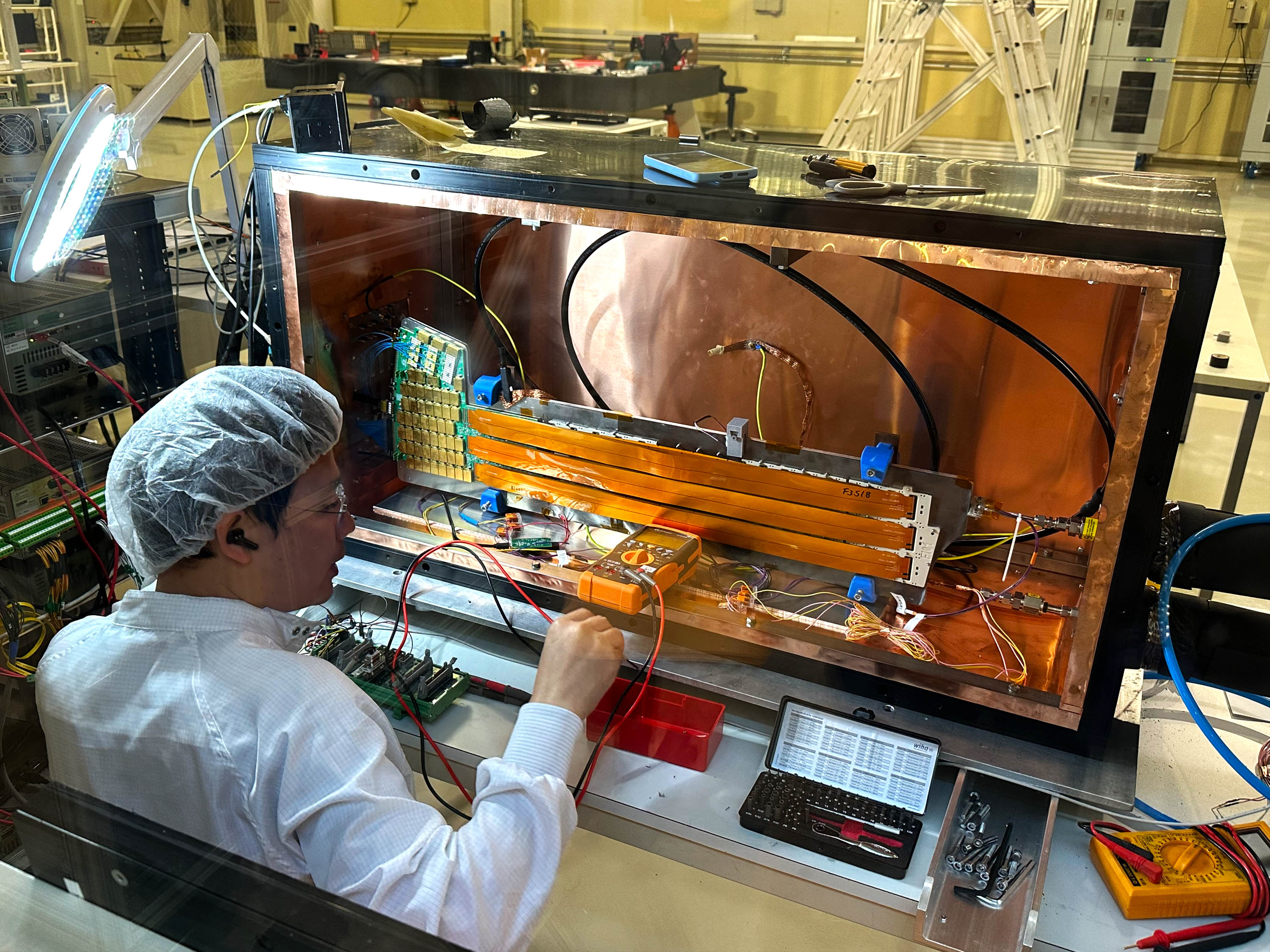
Testing of the HGTD demonstrator at CERN. (Image: S Guindon and Z. Ge/ATLAS Collaboration) (Image: CERN) Testing of the HGTD demonstrator at CERN. (Image: S Guindon and Z. Ge/ATLAS Collaboration)
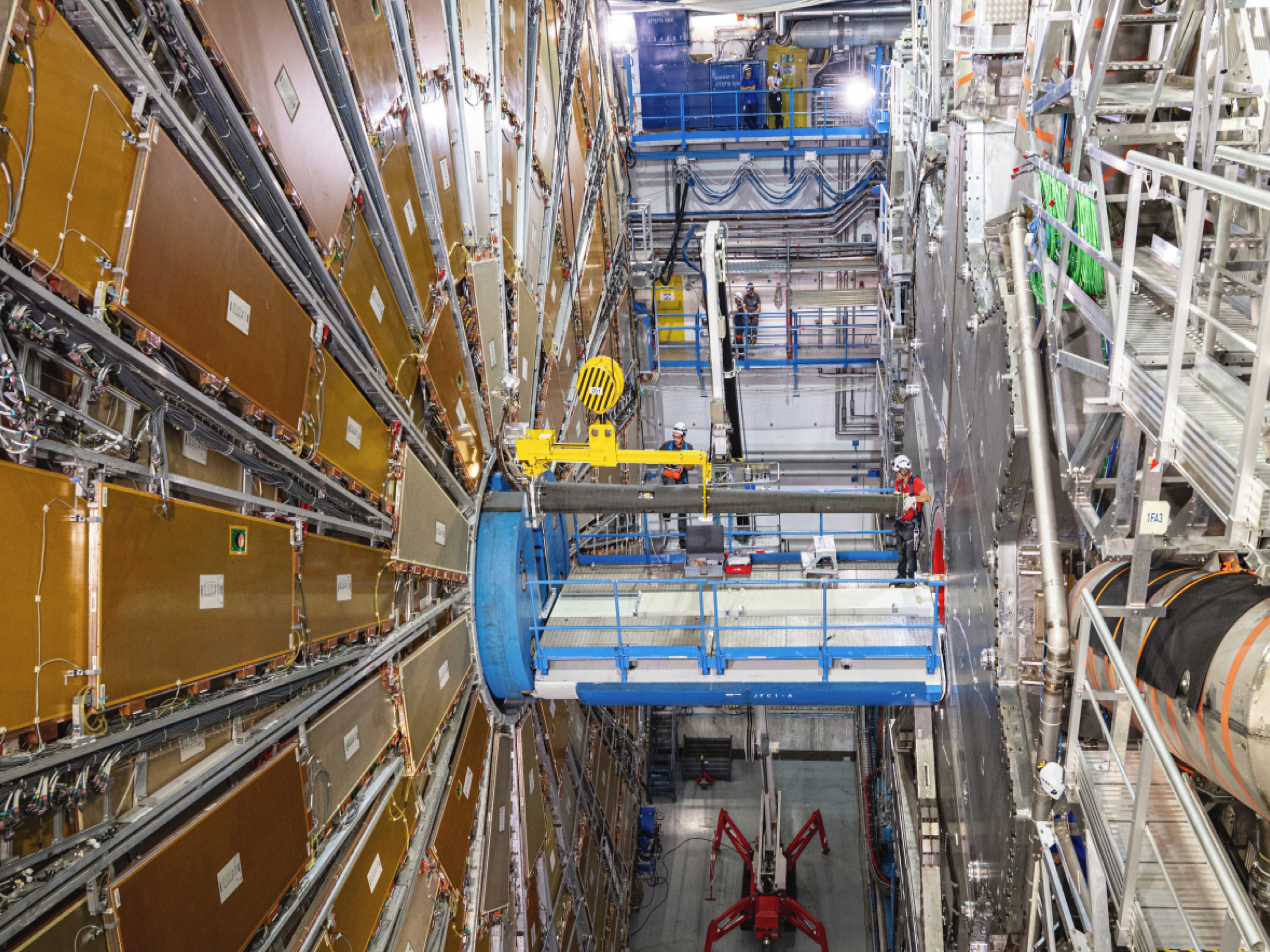
Removal of beam vacuum assembly from ATLAS, which includes the LUCID detector.
ITk team
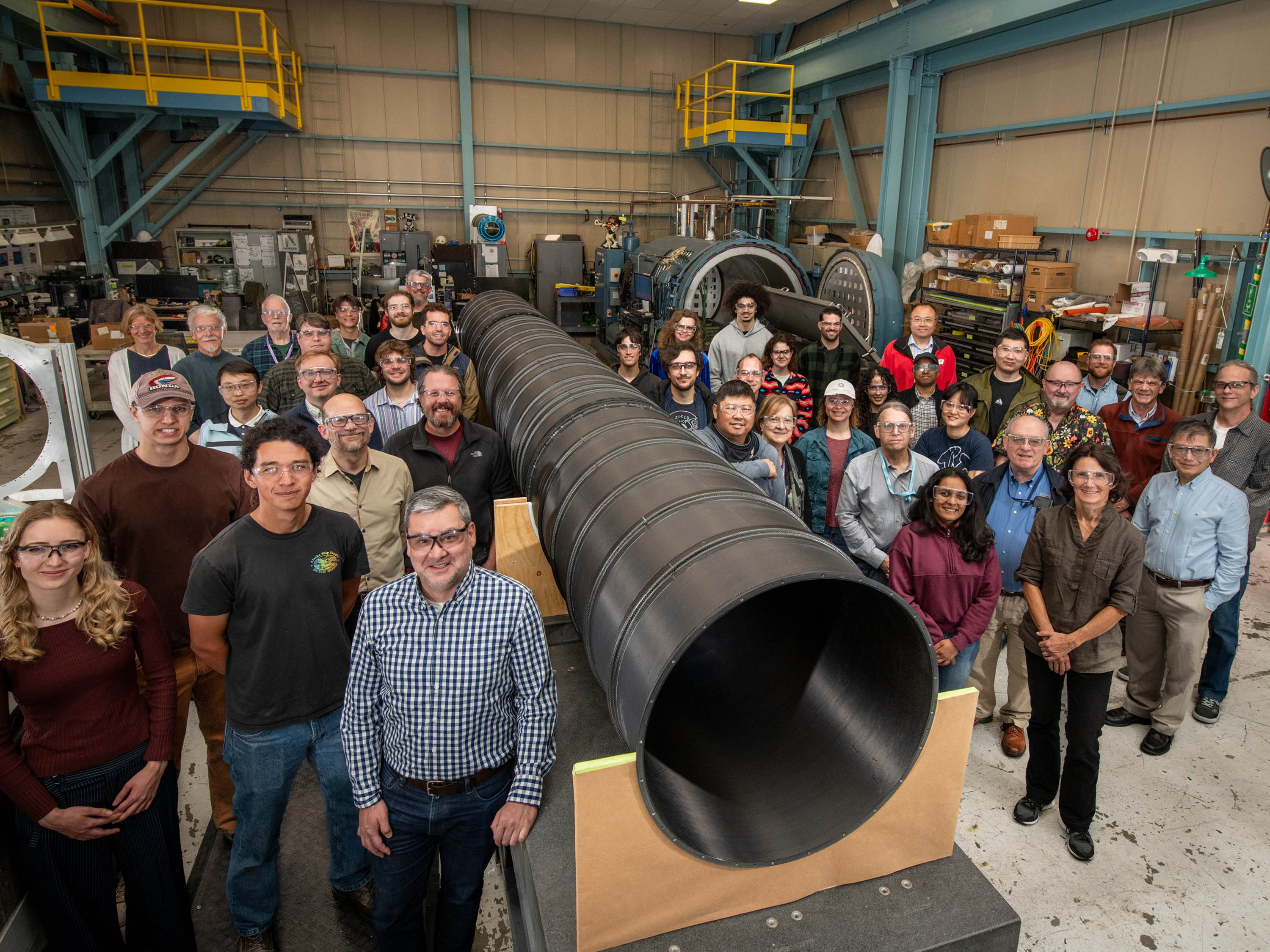
ATLAS members pose next to the Pixel Support Tube at Berkeley Lab. (Image: The Regents of the University of California, Lawrence Berkeley National Laboratory)

Natural Units

Submitted by Steven Goldfarb on
Sheet Type
Natural Units

Natural Units

Our universe is governed by a handful of fundamental constants, such as the speed of light or the gravitational constant. In particle physics, it is often convenient to use natural units, in which key constants are set to unity, revealing the underlying simplicity of physical laws.

Listing Priority
5

Spin & Polarisation

Submitted by Steven Goldfarb on
Sheet Type
Spin and Polarisation

Spin and Polarisation

Spin is a fundamental property of particles, corresponding to their intrinsic angular momentum. Polarisation describes how the spin of a particle is oriented.

2025 Thesis Award Winners

ATLAS Year

The ATLAS Thesis Award winners for 2025 are:

See the News Article on the 2025 Awards.

ATLAS Open Virtual Visit

Submitted by Muhammad Alhroob on

Join us for an Open ATLAS Virtual Visit, hosted by ATLAS physicists Christian Appelt and Despoina Sampsonidou.

This live virtual event will take you inside the ATLAS cavern at CERN, offering a rare opportunity to see the ATLAS detector up close before the cavern is closed for LHC operation. From 100 meters underground, the hosts will guide you around one of the world’s largest and most sophisticated scientific instruments.
Pile-Up

Submitted by Steven Goldfarb on
Sheet Type
Pile-Up

Pile-Up

The LHC collides bunches (groups of protons), which can result in multiple proton-proton collisions at each crossing. Such additional collisions are called pile-up.

Listing Priority
5

ATLAS Coordinate System

Submitted by Steven Goldfarb on
Sheet Type
ATLAS Coordinate System

ATLAS Coordinate System

The ATLAS coordinate system allows scientists to accurately and consistently describe how particles travel through the detector.

Listing Priority
5